Wednesday, January 26, 2022

Just Watch Me

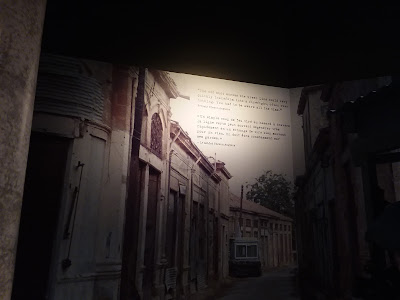
 The Cyprus mission was one of risk for peacekeepers. A quote from one of the Canadians is placed within a large photograph.

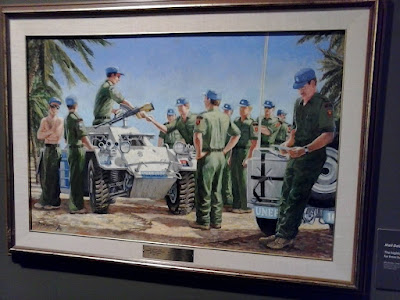
This beautiful painting always catches my eye. Paphos Gate, C-73, Observation Post, Cyprus is by Real Gauthier.
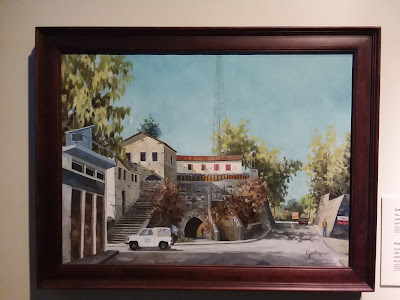
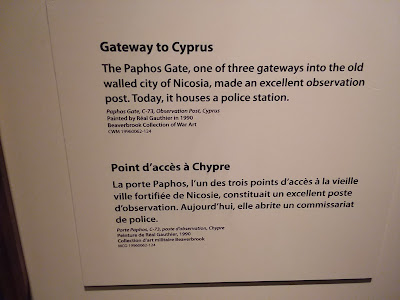
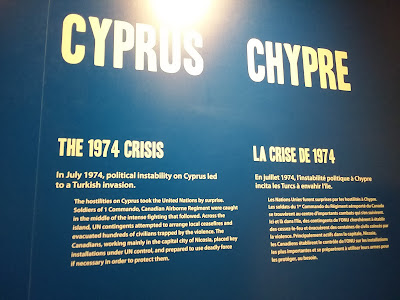
Tensions blew up in 1974 and resulted in the Turks invading. Canadians were caught in the middle of it all as part of the peacekeeping force.
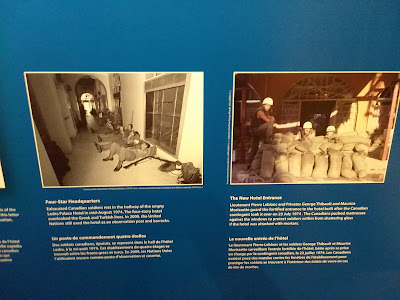
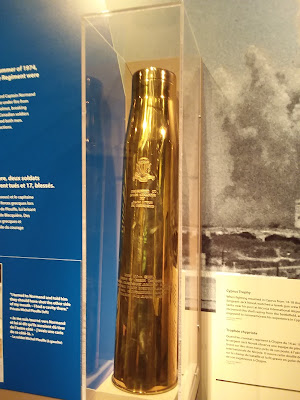
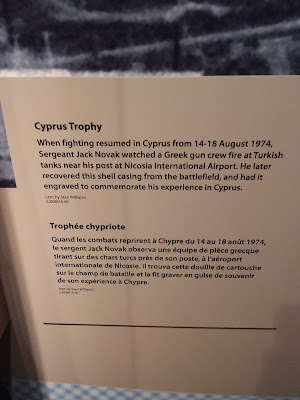
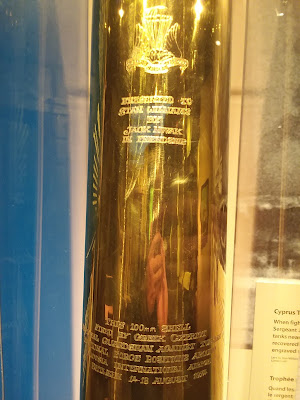
A shell casing is a souvenir brought home from Cyprus.
Terrorism reared its ugly head in the 1960s in Canada, with the rise of the FLQ in Quebec and the carrying out of bombings. It came to a climax with the October Crisis of 1970 and the kidnapping of a British diplomat, James Cross and a provincial cabinet minister, Pierre Laporte. Cross was later released, while Laporte was murdered.

Prime Minister Pierre Trudeau invoked the rarely used War Measures Act during the Crisis. A video clip features him speaking with a reporter. When asked how far he was willing to go to bring things to an end, Trudeau replied, "Just watch me."
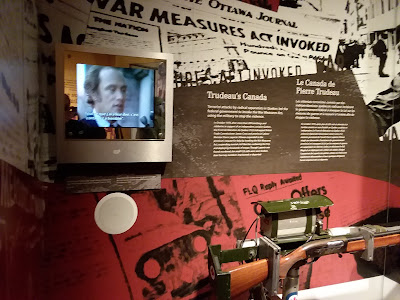

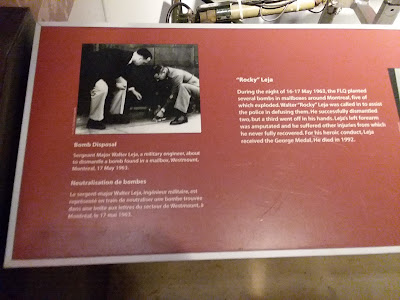
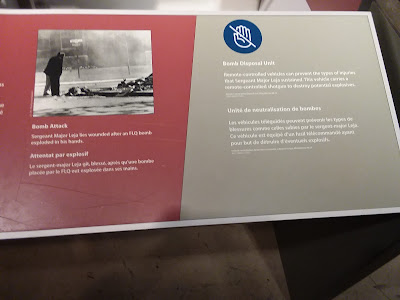
A remote controlled vehicle with a mounted shotgun is seen above. It was a standard tool used for bomb disposal. Sergeant Major Walter Leja was badly wounded during bomb disposal work of FLQ bombs on May 17th, 1963.
Tuesday, January 25, 2022

Peacekeepers

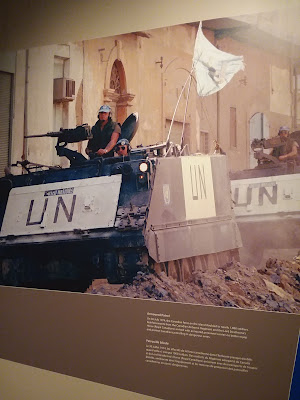
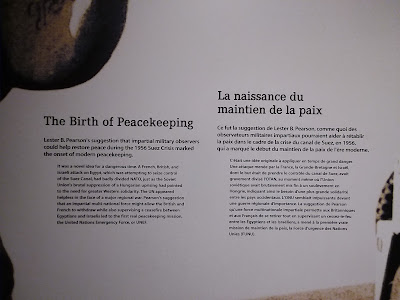
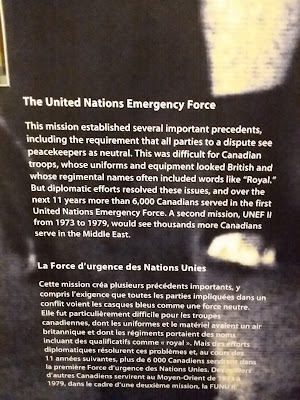
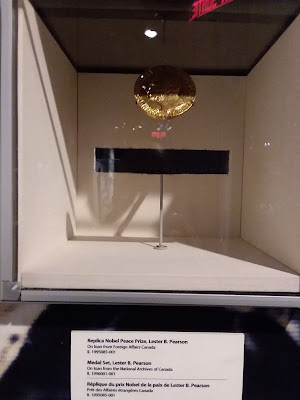
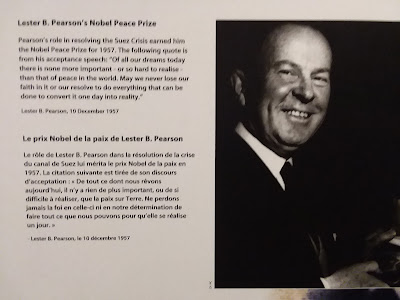
I left off yesterday with the concept of soldiers as peacekeepers. It was a Canadian idea, proposed by our foreign minister at the time of the Suez Crisis. Lester Pearson would later be prime minister, and would win the Nobel Peace Prize for his concept. 

This is a replica of his Nobel. The original is kept at the headquarters of the foreign ministry on Sussex Drive.


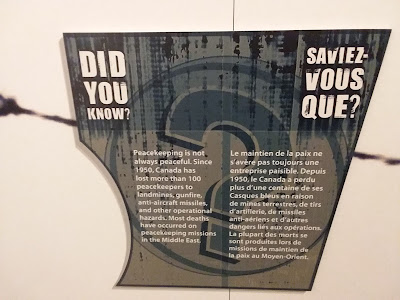
Canadians have served in numerous peacekeeping missions, and it has had its own hazards, with deaths not unheard of in such missions over the decades.


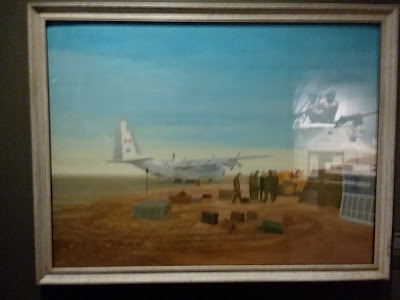
Hercules Aircraft At Ismalia, Egypt 1974 is the title of this painting by Colin Williams, depicting a Canadian transport plane with UN markings delivering supplies to a peacekeeping force.


Mail Delivery- Sinai was painted by Donald Connolly in 1986.


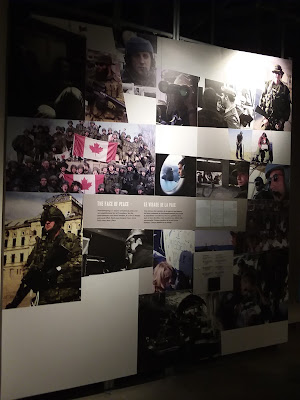
A multitude of photographs from Canadian missions is gathered on this wall.


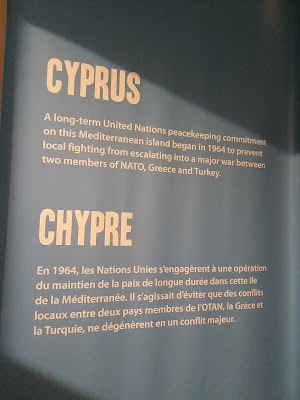
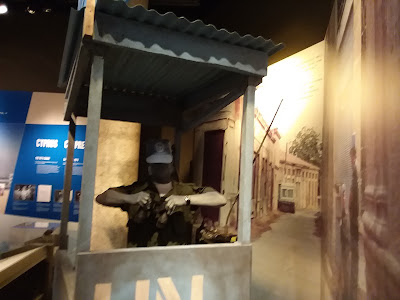
A long lasting UN peacekeeping mission is in Cyprus- begun in 1964 and still active at present- keeping order between the Greek and Turkish populations of the island nation. Canadians have spent time in Cyprus on duty, and at times the mission has been dangerous duty.


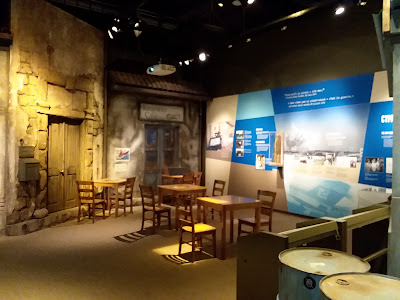
A reproduction of a Cypriot cafe is here, with photographs, panels, and artifacts surrounding it. We'll carry on here tomorrow.

Monday, January 24, 2022

The Crisis

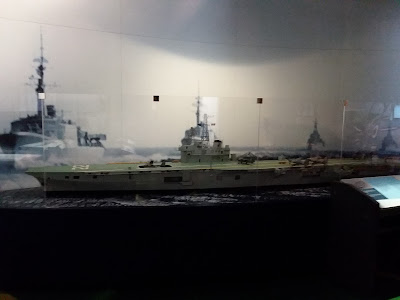
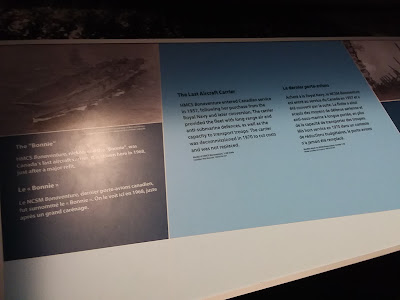
 I start today with a model of H.M.C.S. Bonaventure, the last Canadian aircraft carrier.


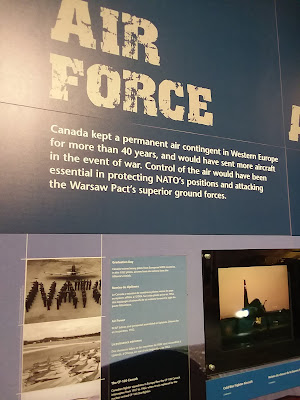
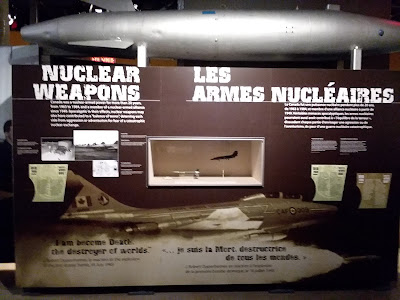
As part of its NATO commitments, Canadian pilots were stationed in western Europe during the Cold War. Their assets included nuclear weapons.


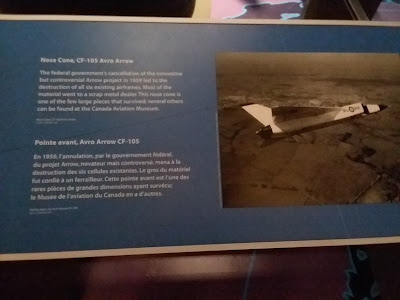
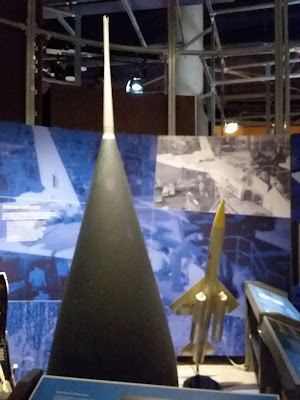
The Avro Arrow was a Canadian designed and built interceptor fighter developed in the 1950s and scrapped by the Diefenbaker government in 1959. A short sighted decision, as the plane itself was an elegant and advanced design. 


Here we have a surviving nose cone of one of them.


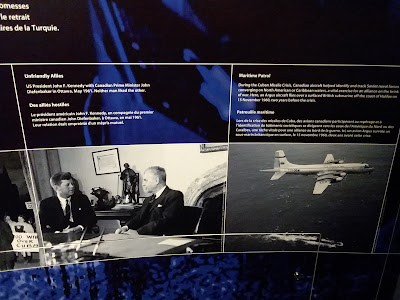
A photograph of two leaders who despised each other: John F. Kennedy and John Diefenbaker, taken in 1961 during a visit by the American president to Ottawa.


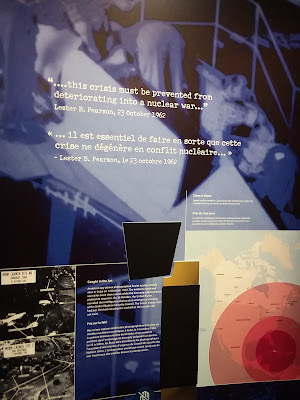
The Cuban Missile Crisis of October 1962 was as close as things got to nuclear war. A quote by Lester Pearson speaks to the profound tensions of the time.


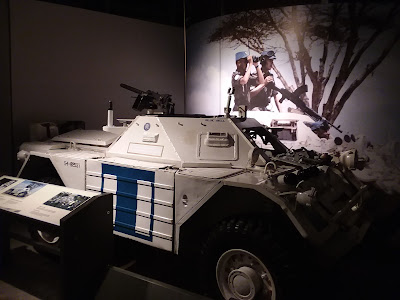
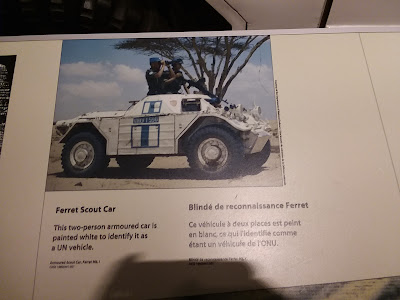
It was Pearson who, years earlier as a foreign minister, would introduce a Canadian innovation for military forces: the idea of peacekeeping. A Ferret scout car is painted largely white to mark it as a UN vehicle, and is among the artifacts in this area.

Sunday, January 23, 2022

Tension

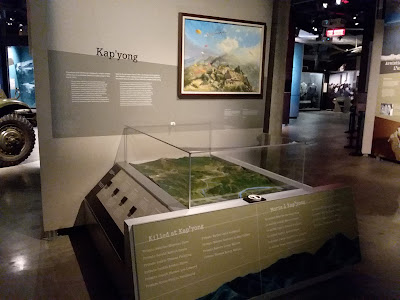
This painting was displayed above the model of Kap'yong as seen in yesterday's post. Holding At Kap'yong is another painting by Ted Zuber.


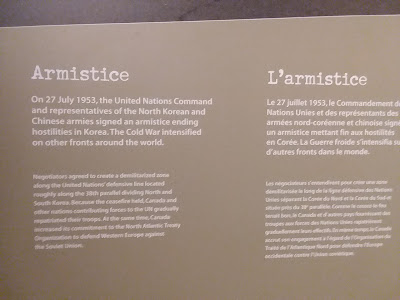
The Korean War would end in an armistice that resulted in two Koreas: a  democratic South Korea and a communist North Korea run, well... as a personal fiefdom and personality cult by a family of insane kleptocrats. To this day that's still the case, with a demilitarized zone and two large military forces still on either side of it.


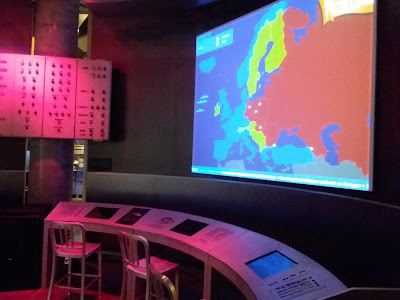
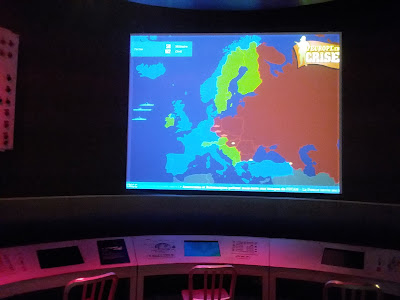
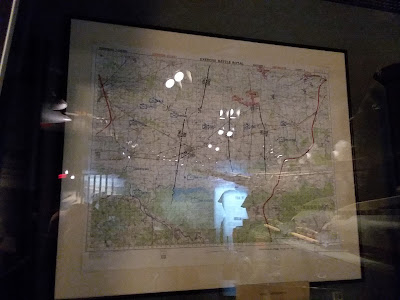
A NATO command centre of the era is reproduced here. On large monitors, scenarios for a hypothetical World War III play out.


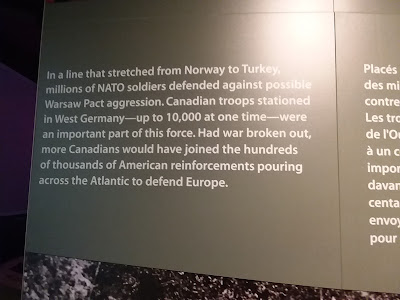
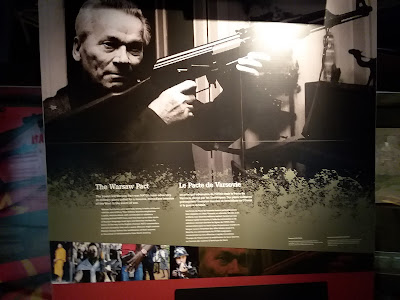
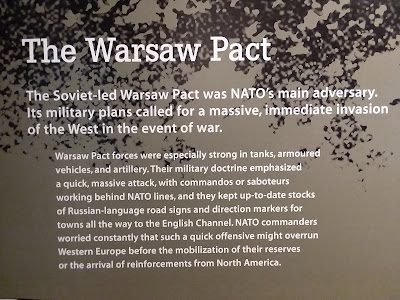
The standoff of NATO and the Warsaw Pact would go on for decades.


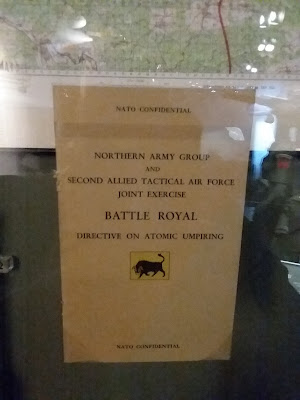
War games- a contradiction in terms, but part of the efforts to work together. Joint exercises were often held (and still are) as part of military training and readiness. Here we have one such example.


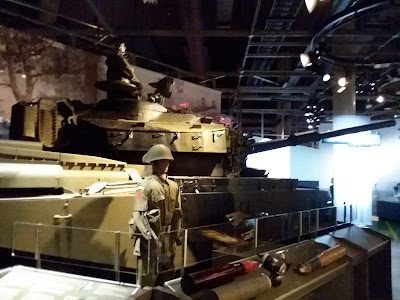
The tanks got bigger.


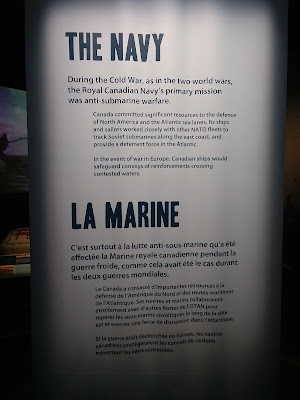
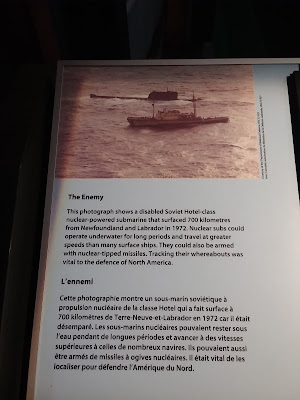
Canadian forces were committed to the ground, the sea, and the air as well. The Canadian Navy spent much of its efforts into anti-submarine work.

Saturday, January 22, 2022

Snipers

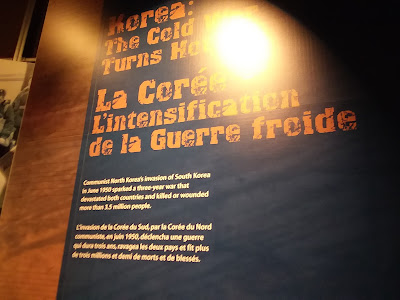
The Korean War from 1950-53 pitted communists in the northern part of the peninsula against those in the south, with China and the Soviets backing their communist counterparts and the West doing the same for the south. Canadian forces would be among the westerners committed to the war as part of a United Nations force.


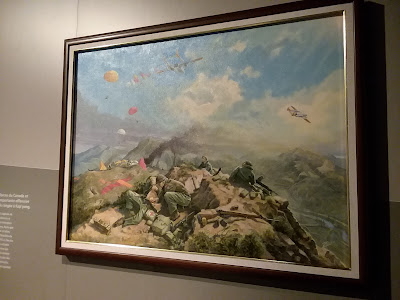
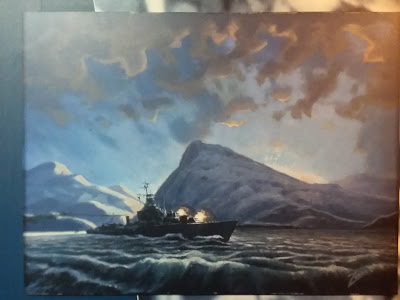
Canadian artist Ted Zuber was a young soldier who fought through much of the war and would later paint his vivid memories onto canvas. Day Break, Gulf Of Korea shows a Canadian destroyer near the coast firing at enemy trains along the coastal railway.


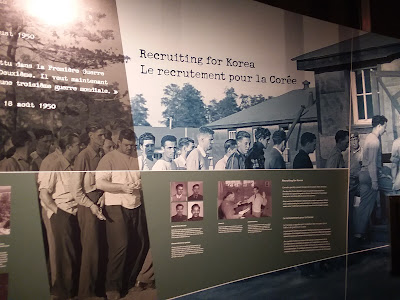
Some veterans of the Second World War joined up. Other recruits were new to combat.


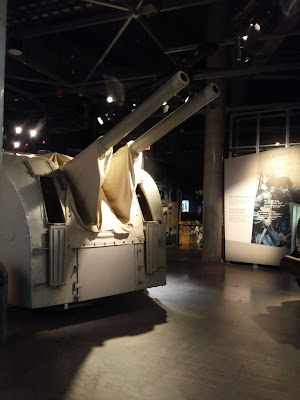
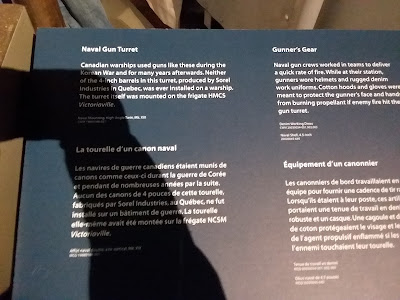
A navy gun turret dominates this space.


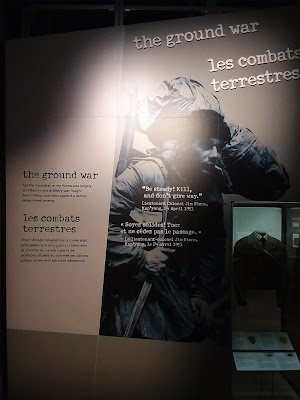
Much of the Canadian experience was on the ground.


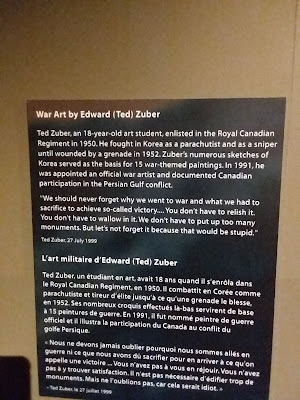
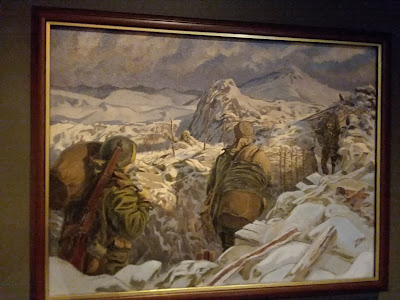
Several of Zuber's paintings are gathered together here. Decades later he would be an officially commissioned war artist and follow the Canadian military to the Persian Gulf for Desert Shield and Desert Storm. 


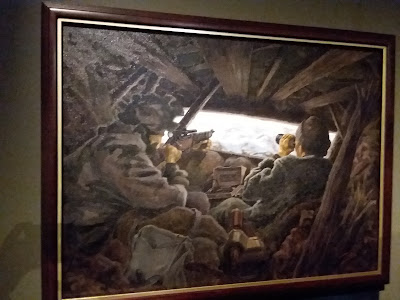
First Kill- The Hook depicts a sniper and scout at work.


Welcome Party is a grisly painting, with a Canadian patrol coming across the skeletal remains of Chinese soldiers.


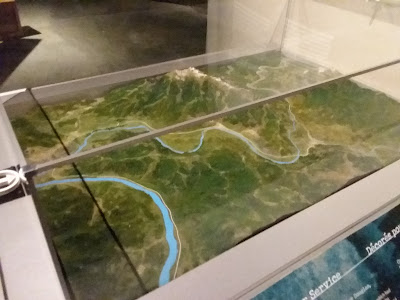
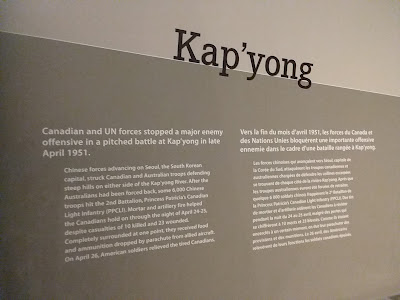
Kap'yong was a pivotal battle involving Canadian soldiers in April 1951.


A 3D physical relief of the mountainous terrain is displayed here.