The permanent galleries at the Canadian War Museum tell the story of Canada's military history in chronological order, from time immemorial to the present, and against the backdrop of global history. Coming along the corridor from the temporary exhibits gallery brings us to this hub, where a map of the galleries is at its heart, and photographs of each section are on the far wall.
Armed conflict was already underway thousands of years ago in North America among First Nations peoples. The first area the visitor walks into examines that.
Here we have a close-up of the weapons and armour a warrior might have used in the pre-Contact era.
This model is of an Iroquois village under attack by a rival tribe.
Contact with Europeans started first with the Vikings a thousand years ago. Several hundred years later the French, and then the English, would make inroads. The museum examines the conflicts that rose up between the two European powers in Canada and elsewhere in North America, such as the Seven Years War, or the French And Indian War as it's also called. That war reached a climax in North America outside the walls of Quebec City in a battle on the Plains of Abraham, a decisive victory for the British that would lead to the end of New France. A model of the battleground, with lines of British and French positions, is found here, with the accompanying panels explaining how the battle unfolded.

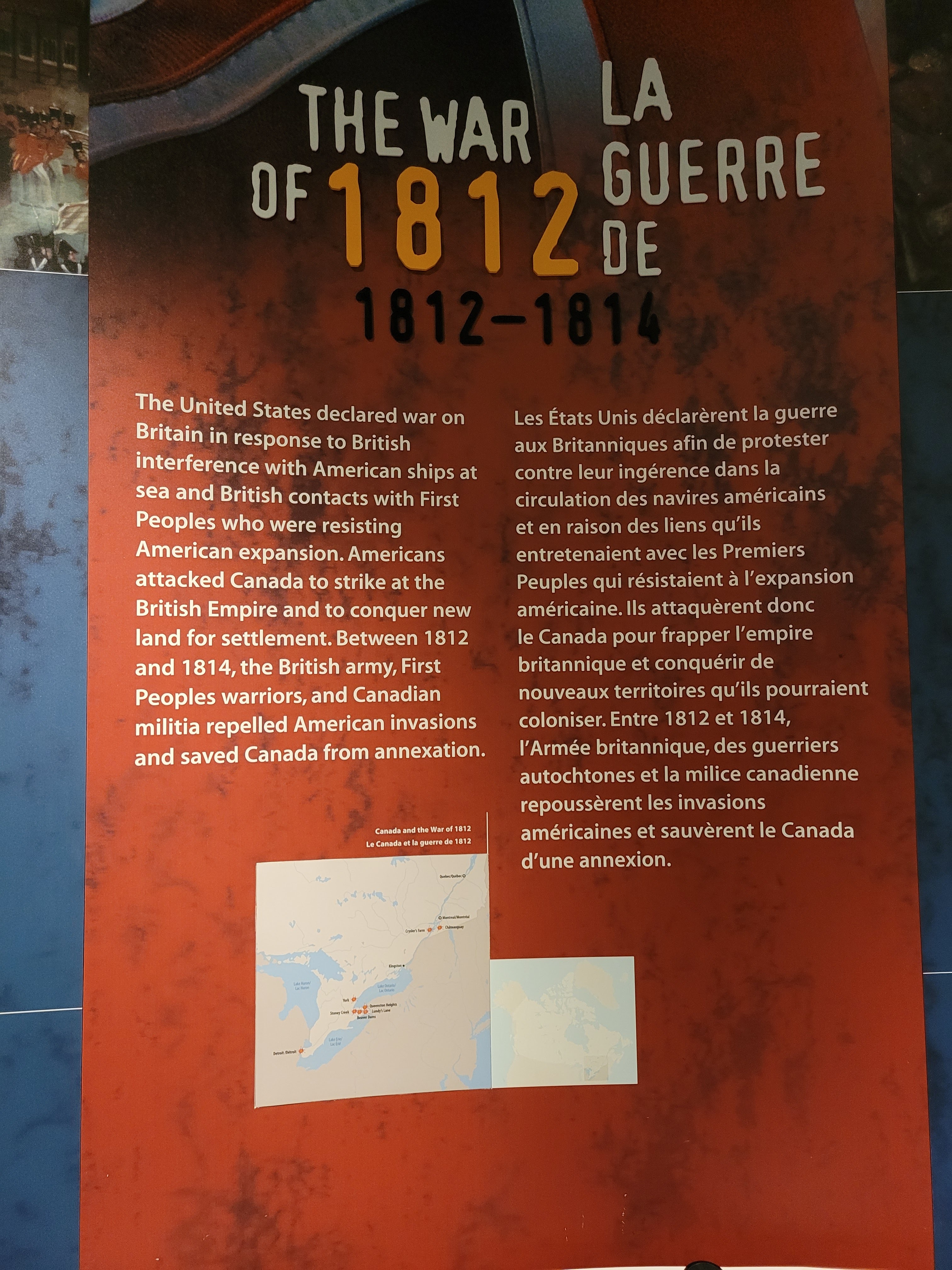
The American Revolution had an impact on Canada, of course, with incursions by Continental Army forces under Richard Montgomery and Benedict Arnold, and the influx of Loyalists into the remaining British North America holdings after the war. A second conflict, the War Of 1812, would rage from that year into 1815 between the Americans, the British, and Canadian colonials. First Nations peoples would find themselves involved, such as Alex Norton (Teyonhokarawan), the Mohawk war chief who led warriors at the Battle of Queenston Heights.
The display case features a portrait of Norton, as well as a musket, wampum belt, medal, club, and axe that would have been among items a warrior might have at the time.
Another figure of the War of 1812 has his portrait across from Norton. Charles de Salaberry was a Quebecois resident who had the distinction of becoming one of the few French speaking officers in the British military during the war, organizing and commanding a French speaking regiment, the Voltigeurs canadiens.


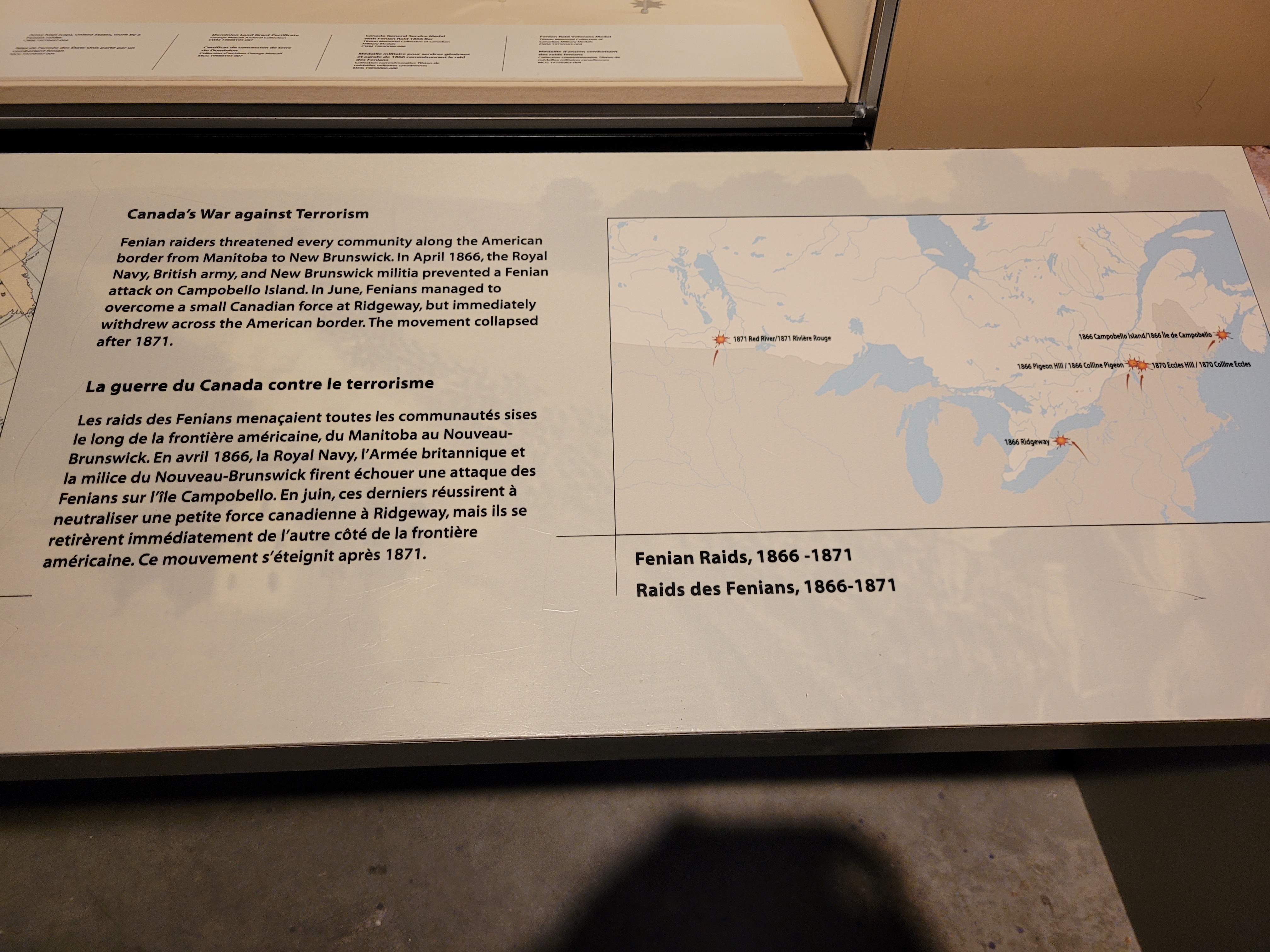
Later in the 19th century, the American Civil War erupted and had its effects on Canada as well. Confederation of Canada in 1867 came about partially because leaders in colonial legislatures were watching what was happening south of their borders with alarm and understood they had to come together or risk annexation. And while the legislatures and the British officially stayed neutral, that didn't stop anywhere from 20 000 to 50 000 Canadians from heading south and fighting in the war, the overwhelming majority of them for the Union. Afterwards for a number of years, Irish-American veterans of the Union army launched a number of raids, the Fenian Raids, into Canada as part of an effort to force the British into getting out of Ireland. Ultimately the raids failed, but their story is examined here.

The display cases include medals for those who responded to the Raids, and a Union army cap worn by one of the raiders, a common sight in many a Civil War photograph. The veterans of one war took elements of their uniform (or the entire uniform itself) and wore them in an unauthorized military action.
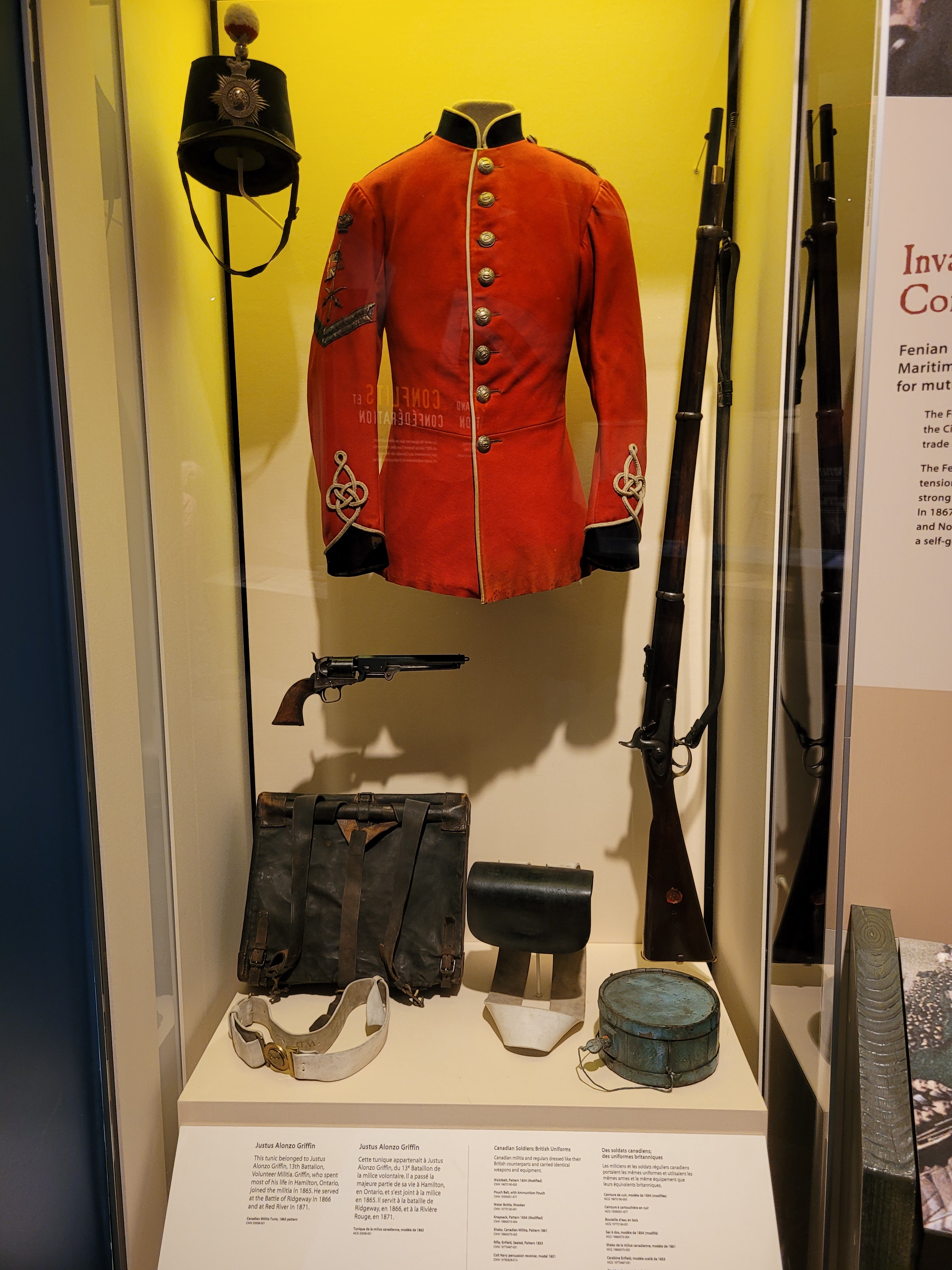
Also displayed is the uniform and other items of one of the soldiers who responded to the Fenian Raids.