Showing posts with label Tom Thomson. Show all posts

Tuesday, April 8, 2025

The Spirit Of The Forest

 We begin today with Ypres, a 1917 painting by A.Y. Jackson, who served in the ranks and then came back as a commissioned war artist during the Great War. Later he would be part of the Group of Seven.


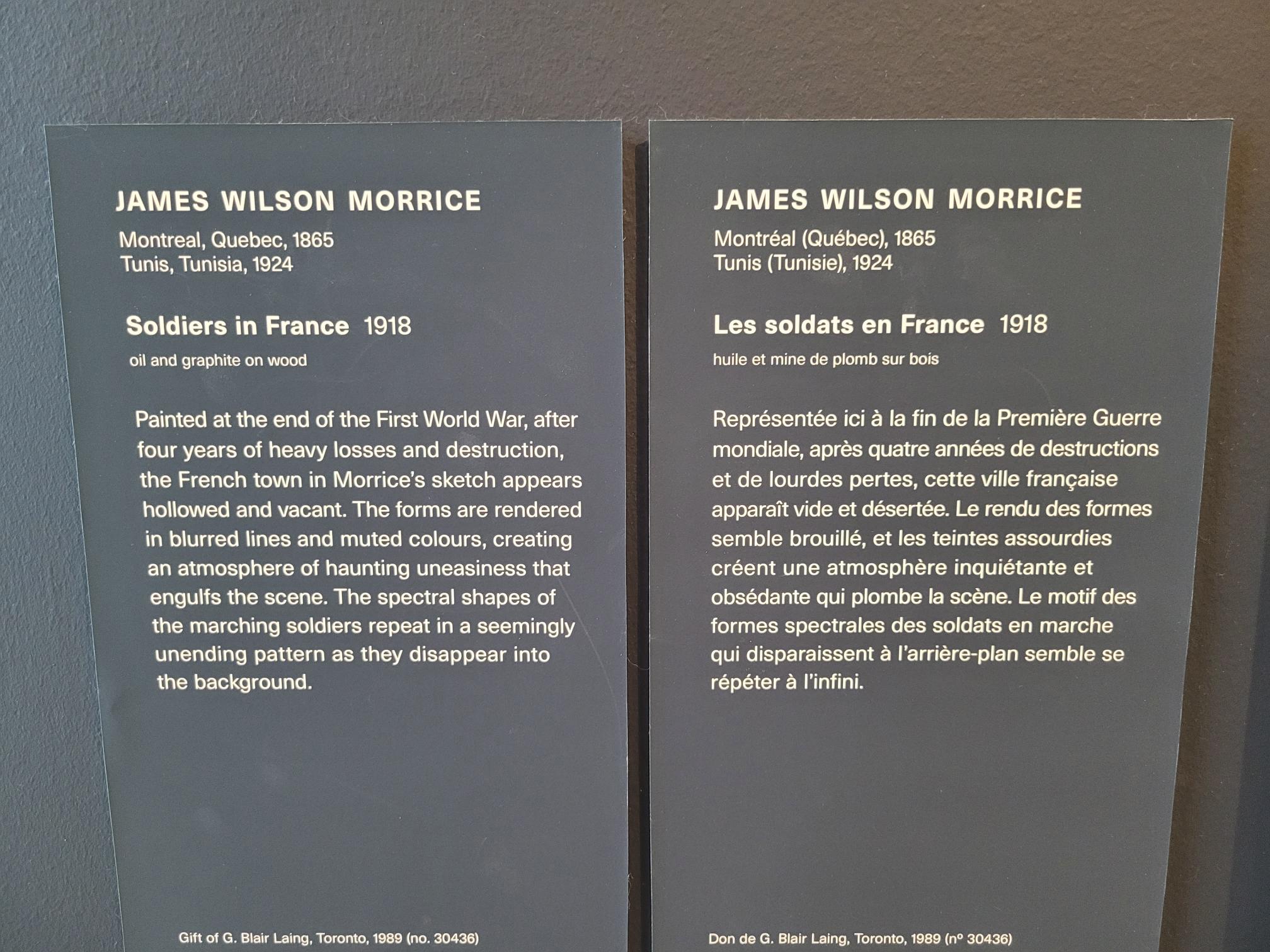
Soldiers In France is a 1918 painting by James Wilson Morrice.

Gleams On The Hills is a 1921 painting by J.E.H. Macdonald of the Group of Seven.


The two field sketches he did for the work are also displayed.


The Pool is by Tom Thomson, done over the winter of 1915-16.


Here we see Spirit Of The Forest- Mother Nature, by John Marston (Qap'U'Luq), a 2013 sculpture.


The Upper Ottawa Near Mattawa is a 1924 painting by Franklin Carmichael of the Group of Seven.


This sculpture is titled Passing Rain, carved in 1929 by Elizabeth Wyn Wood. 


And for today we finish with Autumn In Algoma, another painting by MacDonald.

Monday, April 7, 2025

The Interpreter And Guide

 We begin today with Moonlight, by Tom Thomson, done circa 1913-14.


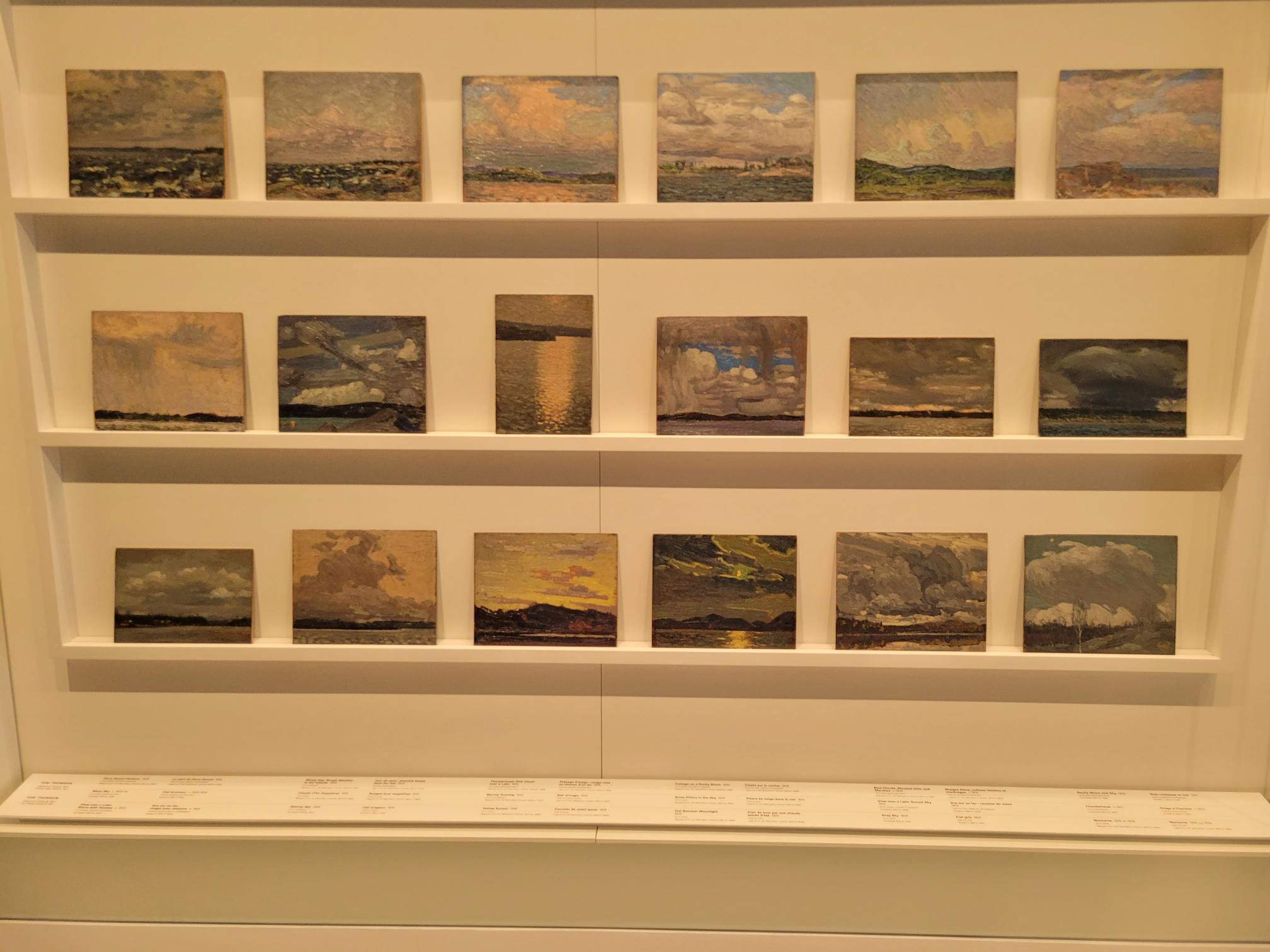
Here is another set of his field sketches.


Untitled (Camp Scene) is a multimedia work on felt by Inuk artist Helen Konek, done before 1994.


Thomson and the Group of Seven were hugely influential on Canadian art. Thomson was fated to die young by drowning, otherwise it would have been the Group of Eight.


Here we have a number of works by indigenous artists at the heart of this room.


A wall of works by Thomson. The quote by A.Y. Jackson of the Group speaks to his influence on them. He was their guide and interpreter, opening their eyes to the wonders of the Canadian landscape.


This is one of his masterpieces. Thomson painted The Jack Pine over the winter of 1916-17.


Two more works by Thomson. At left is MacCallum's Island, a 1914 work. At right is The Breaking Of The Ice, done circa 1916.


And another by Thomson. Burnt Land dates to 1915.


F.H. Varley, another member of the Group of Seven, went to war as a war artist in the First World War. This is his Self Portrait, dated 1918.

Sunday, April 6, 2025

Work Of The Group Of Seven

 I begin today with Stormy Weather, Georgian Bay, a 1921 painting by F.H. Varley of the Group of Seven.


Fire Swept Algoma dates to 1920, and is by Franz Johnston of the Group.


The Solemn Land was painted in 1921 by J.E.H. Macdonald of the Group.


A September Gale, Georgian Bay is a dramatic 1921 work by Arthur Lismer, yet another member of the Group of Seven.


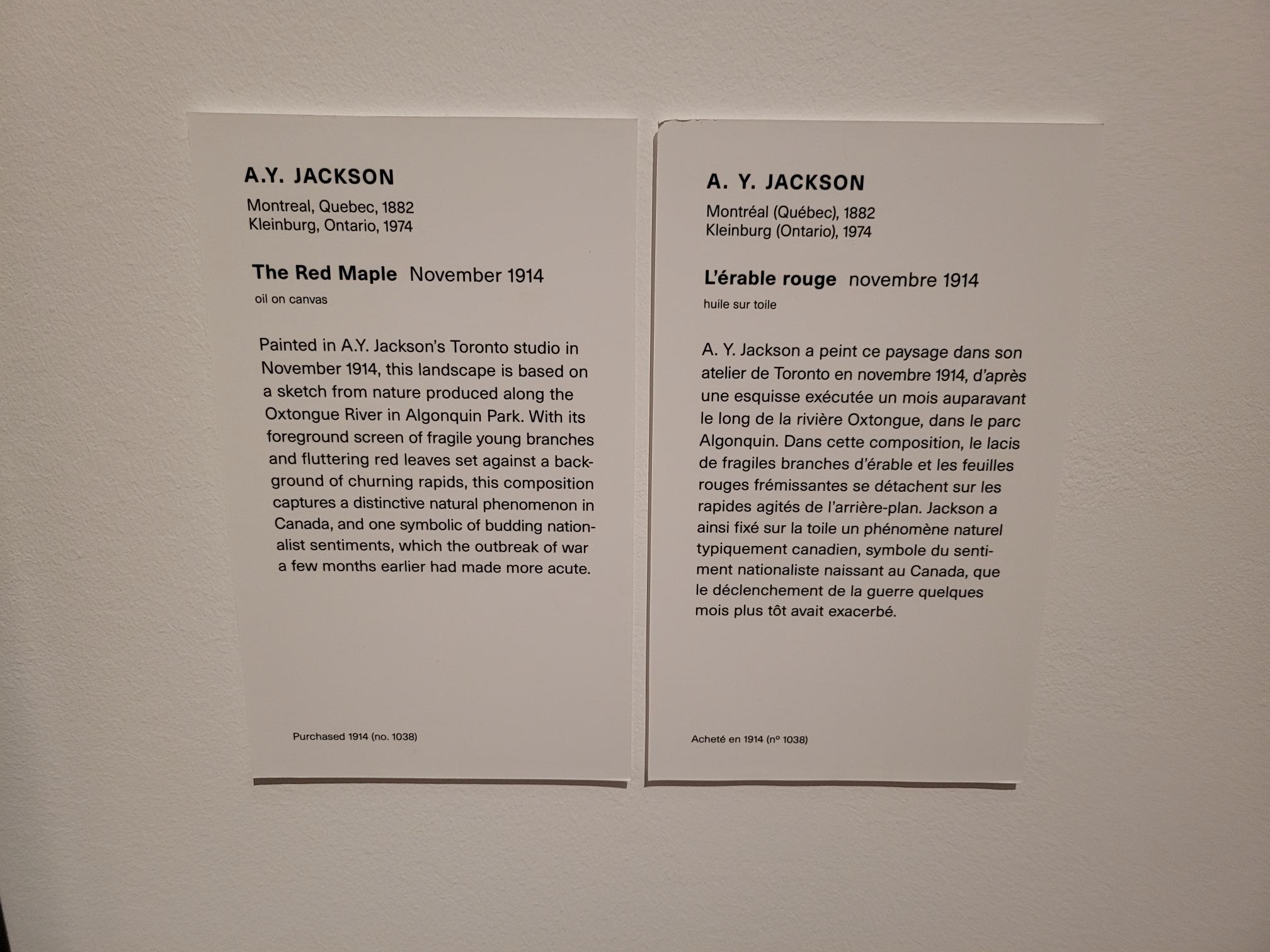
This is one of my favourite works by a member of the Group. A.Y. Jackson painted The Red Maple in 1914.


Not a member of the Group, but certainly a contemporary. David Milne went to war as a soldier and a war artist, painting The Cathedral, Arras in 1919.


This is Bramshott: Interior Of The Wesleyan Hut by Milne, another painting from 1919.


I leave off today with a series of sketches by Tom Thomson, who was such an influence on his friends who would become the Group of Seven. These would be done in the field, not just by Thomson, but the others. The ideas would later get transferred to full canvases.

Friday, April 4, 2025

The Rise Of The Group Of Seven

 We begin today with a parka, dating around 1916, by an unknown Inuit artist.


Lawren Harris was another member of the Group of Seven. This is his 1912 painting The Drive.


Maurice Cullen painted Winter Evening, Quebec around 1905. This looks across the St. Lawrence River to Quebec City, which occupies the high ground.
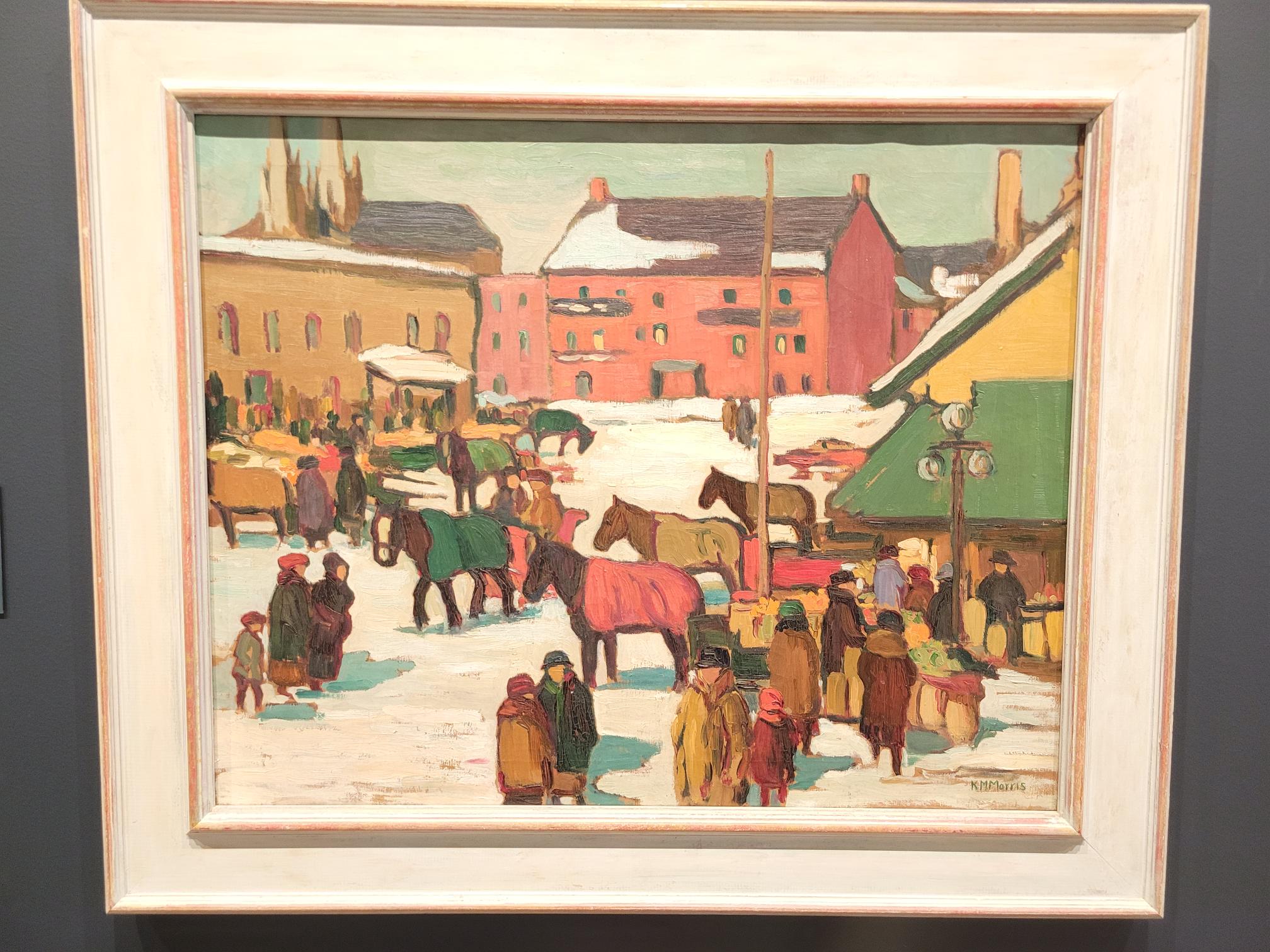

Two paintings are exhibited beside each other. This first one is Waiting, by Kathleen Moir Morris.


Its counterpart is A Laurentian Homestead, circa 1919, by Clarence Gagnon.


Mary Wrinch painted Snow Magic in 1918.


Here is another work by Kathleen Moir Morris. Byward Market, Ottawa was painted around 1927.


March Evening, Northland is a 1914 painting by J.E.H. Macdonald, yet another member of the Group of Seven.


The Group of Seven exhibited formally together from 1920-33. The membership changed through those years, but they started out as friends years beforehand. One member of that friendship died before they became a group, but is considered as one of them. Here we have two works. A.Y. Jackson painted Cacouna in 1921. Snow And Rocks, at bottom, is by Tom Thomson, a 1916 work. It was Thomson who died before the Group formalized itself, but who was a huge influence on the others in terms of the source of their inspiration- the Canadian outdoors.


Lawren Harris painted Winter Morning in 1914.


At top, we have In The Woods, an undated work by Thomson. Below it is Study For Sumacs, by Franklin Carmichael, yet another member of the Group of Seven.