My post last week about Oscar Peterson had me looking at the plaque behind the sculpture. It also made me think of the plaques for The Valiants, the series of statues I showed you not long ago. Click on it in the tags below if you haven't seen it. I photographed the plaques as a reference for myself at the time, leaving them in my folders.

Looking at these photos again, it got me thinking of just how many historical plaques and markers there might be out there. It must be countless. I remembered from childhood driving up to see my grandparents regularly with my mother, a trip of under an hour up to Guelph. There was a historical marker along the route we usually took, and I would ask that question from time to time- how many of those do you think are out there? A whole lot, no doubt, and if you tried to stop and see every single one of them, you'd never get where you were going. It's odd how a photograph can draw such memories back to the surface.
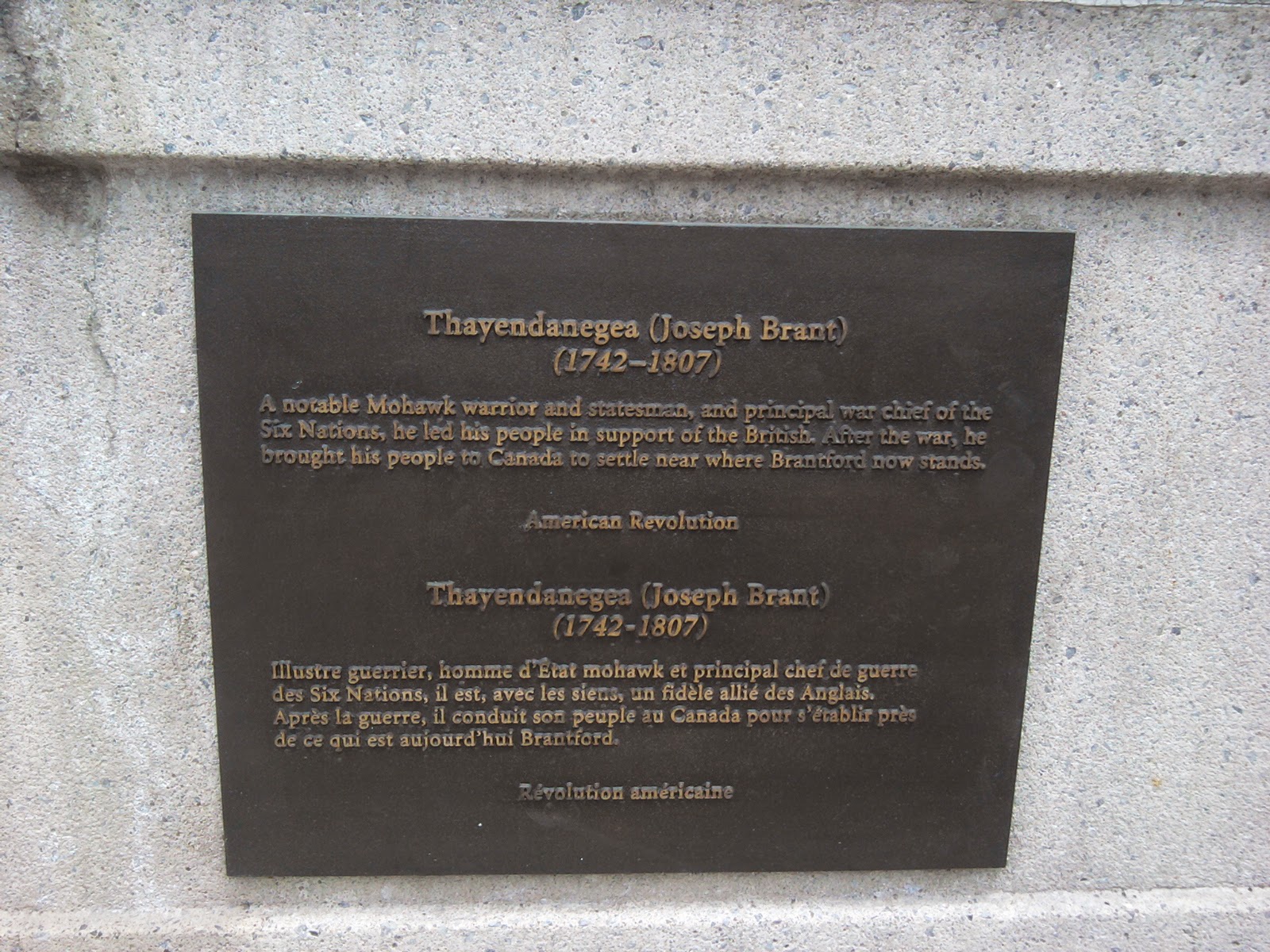
I like the plaques that are incorporated into these memorials. With the first, Frontenac's quote is one for the ages. Brant's Mohawk name spelled out is a good touch for the man who had quite a reputation among his people, not to mention among the British, the Canadian Loyalists, and the Americans. And Brock's plaque mentioning the capture of Detroit makes me wonder what the general would make of what has become of that city today.


