Friday, January 27, 2023

Making A Country

 The War of 1812 ended with different claims between British and Americans in North America, along with disputed territory. First Nations peoples who fought in it had their own goals.


Clothing of the era, from First Nations peoples.


Their warriors had fought in the Revolution, coming north as Loyalists. They fought again in the War of 1812, with some unintended consequences.


The French speaking peoples of the former New France sought accomodation.


Part of that came in the Acadian return, in the years following their initial expulsion at the time of the French and Indian War. They would return to their homelands in the Maritimes, building a distinct French speaking society of their own.


Loyalists and other English speakers also settled into Canada in the first half of the 19th century. At first, life would be hard, but they would end up succeeding and thriving.


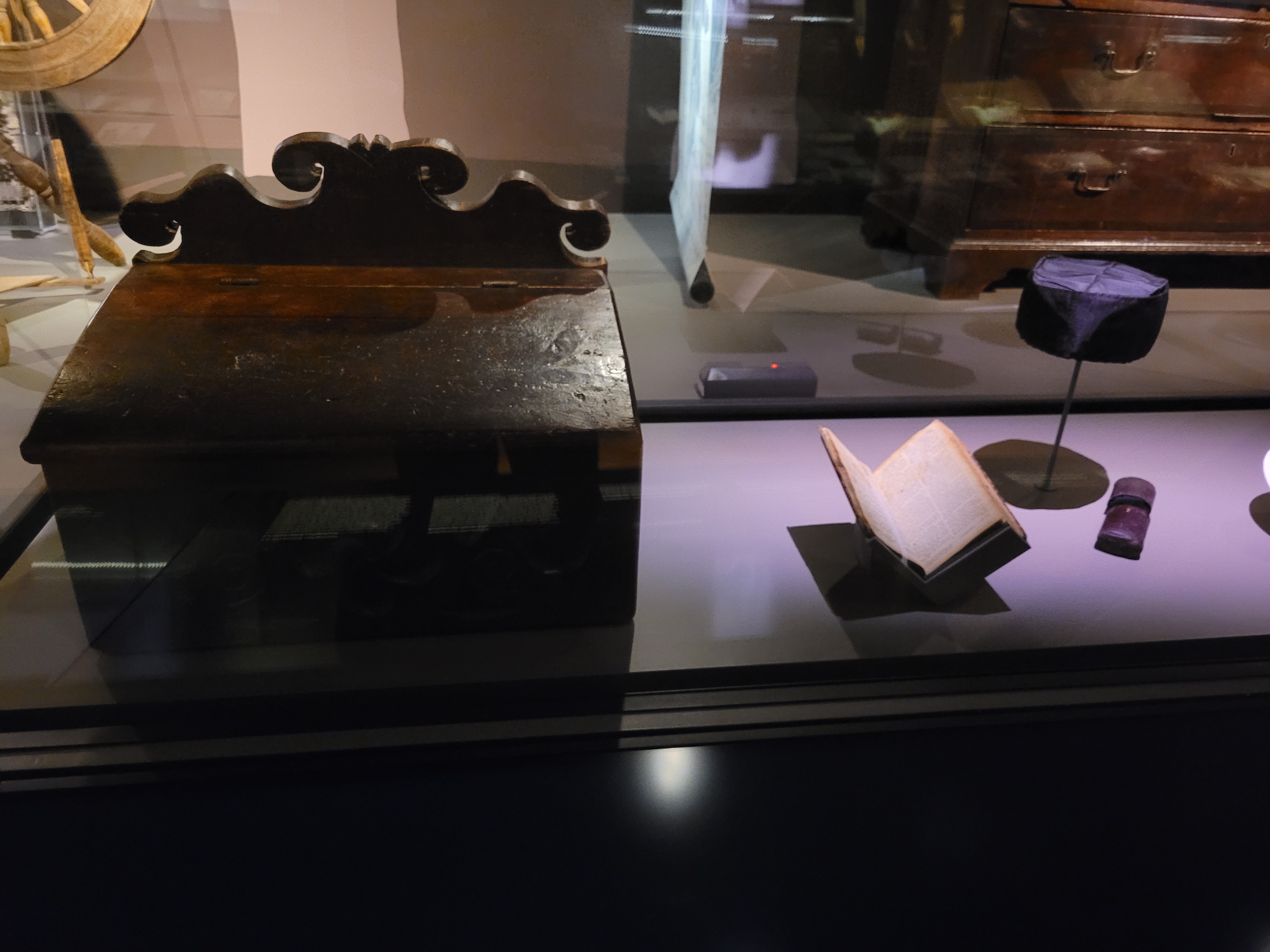
Some items of the period are displayed here.


In time, what would become Canada would rise politically out of a period of unrest and turbulence.

Thursday, January 26, 2023

New Conflicts

 A display case features items from the days of the height of the fur trade in North America.


Beside it are contemporary items. The Hudson's Bay Company was formed in 1670 and dominated much of the fur trade. Their distinctive coloured stripe motif is today seen in items still sold in their stores.


Annapolis Royal, Nova Scotia is the title of the painting seen here, dating around 1751 and from the circle of Samuel Scott. The British had established Nova Scotia as a colony.


Its governor from 1749-52, Edward Cornwallis, was ruthless and brutal towards the Mi'kmaq people living there.


The French and Indian War, otherwise known as the Seven Years War, would erupt in North America and around the world, pitting the English and French against each other. It would end in British victory, and end the era of New France for good. Four portraits of First Nations chiefs by John Vereist are here, dating to the period, collectively called the Four Kings Of Canada.


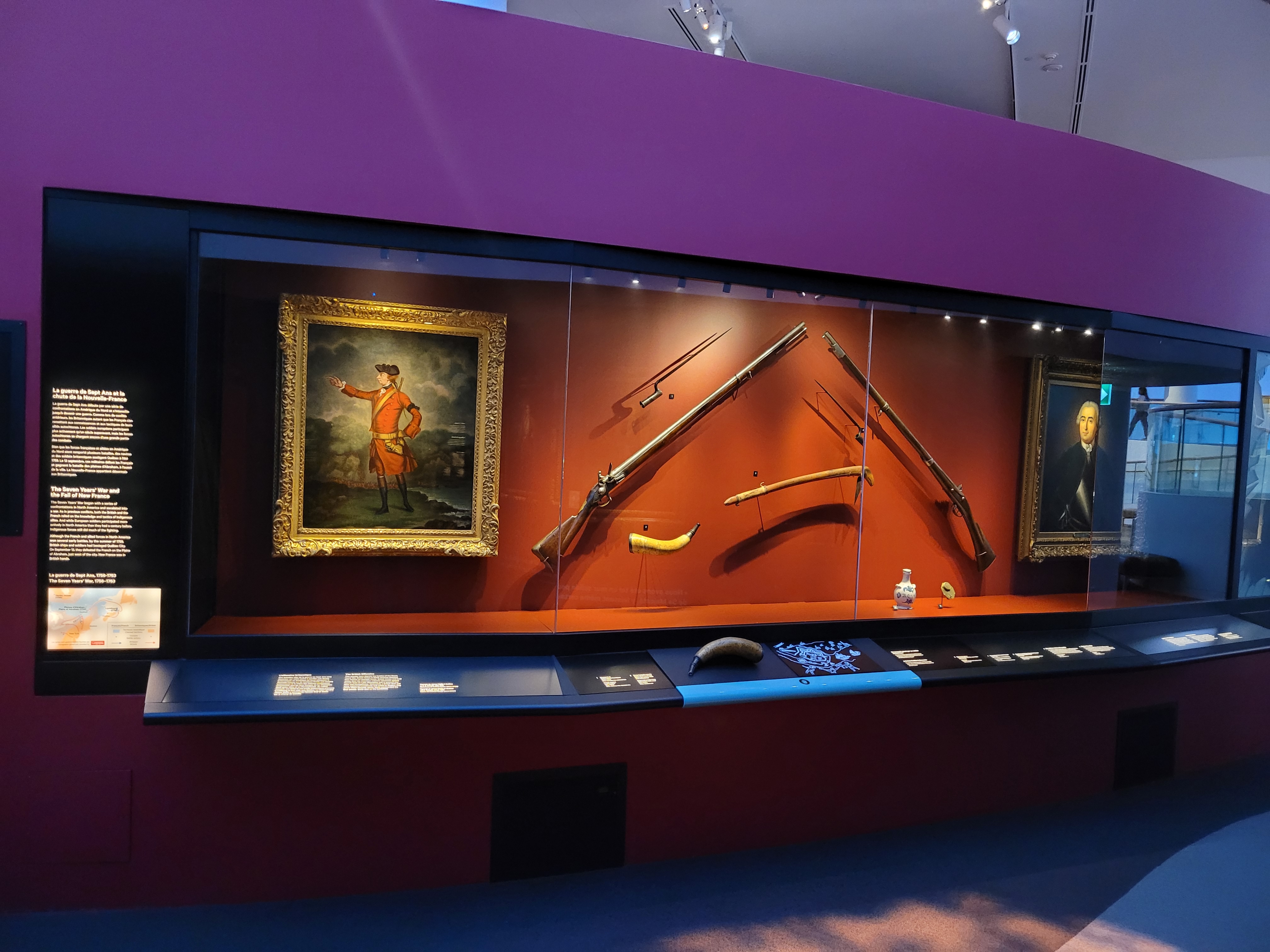
Weapons of the period are displayed between two portraits of opposing generals who met at the pivotal Battle of the Plains of Abraham at Quebec City. James Wolfe commanded British forces and fell in battle. Louis-Joseph de Montcalm died of his wounds there. The victory by the British was the climax of the war in North America.


Two more paintings of the period, both by Dominic Serres and both dating to 1760. A View Of The Treasury And Jesuit College, Quebec City and A View Of The Church Of Notre-Dame-de-la-Victoire, Quebec City are displayed together.


The British would have to accommodate the people they were now governing.


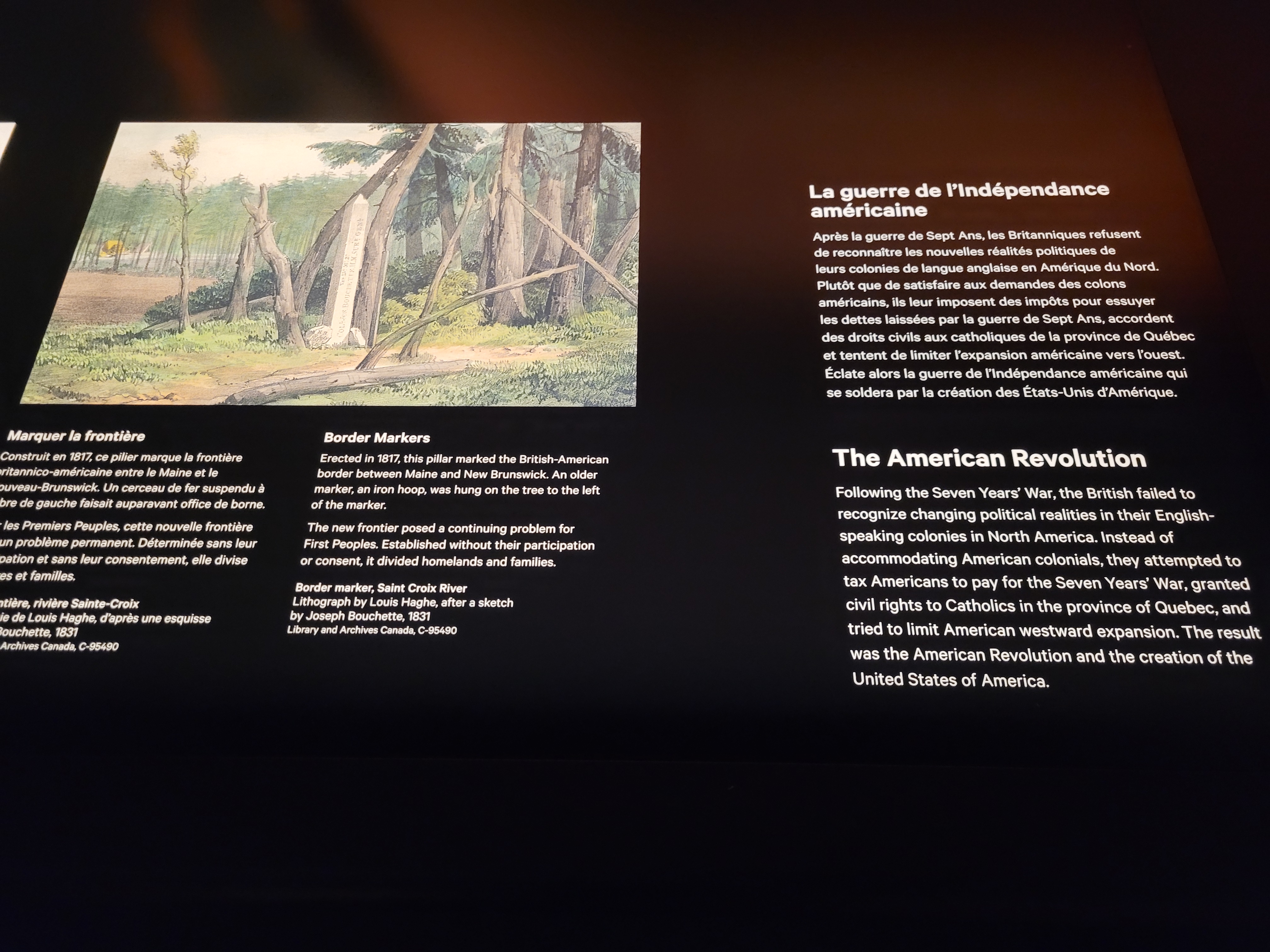
Some of their decisions of the time led to the American Revolution among the thirteen colonies of the Atlantic seaboard.


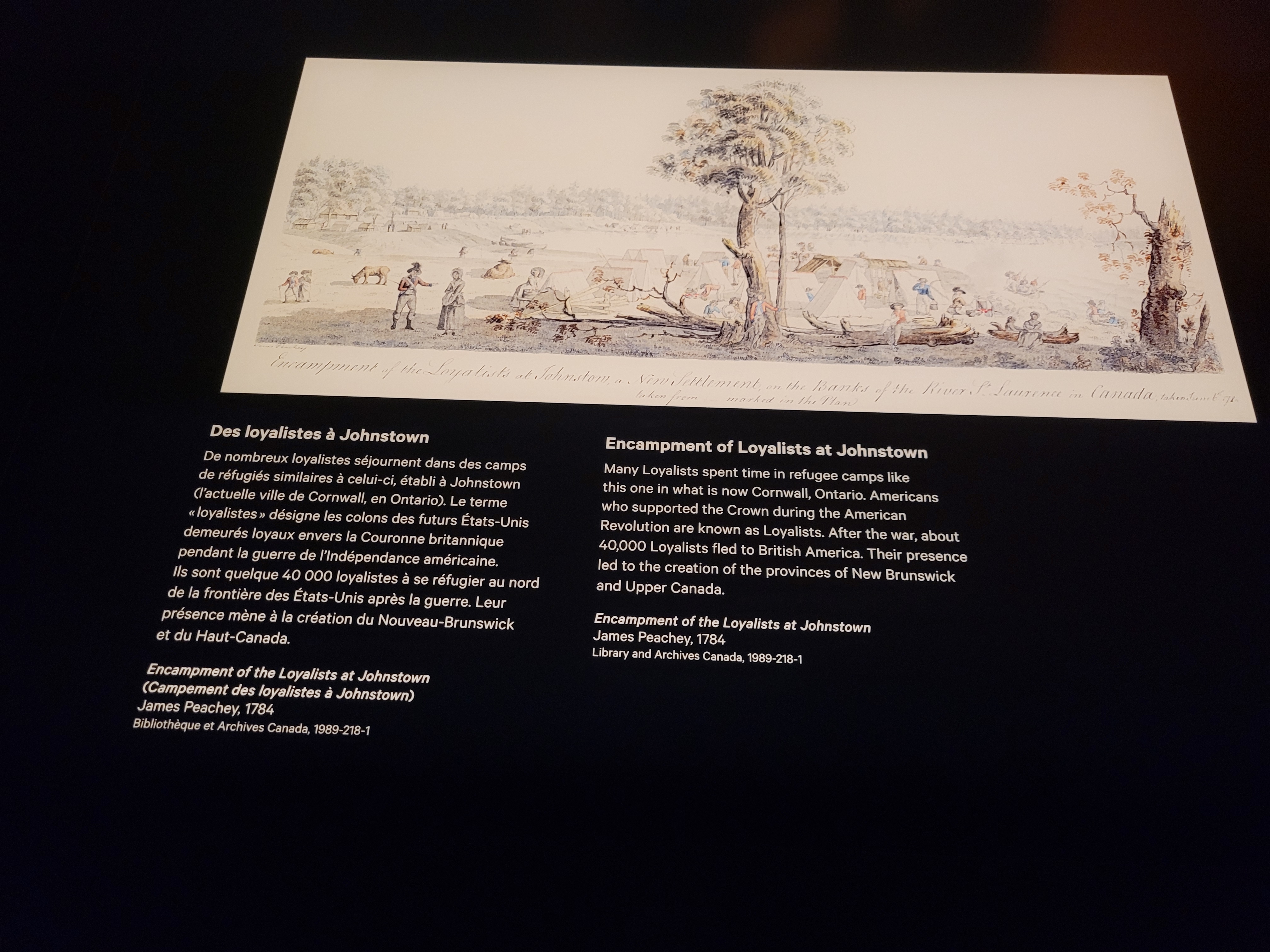
A complicated war, because not everyone in what's now the United States agreed with going to war against the Crown. Loyalists fought against the Continental army, and came north to make a new life following the war.


And a few years beyond that, the Americans started another war with the British, this time to drive them out of North America entirely. The War of 1812 was fought by British regulars, Canadian militia, and First Nations warriors to prevent that from happening.

The Americans didn't achieve their goal. 

Wednesday, January 25, 2023

New Society

 New France as a society began to develop in different ways from the mother country.


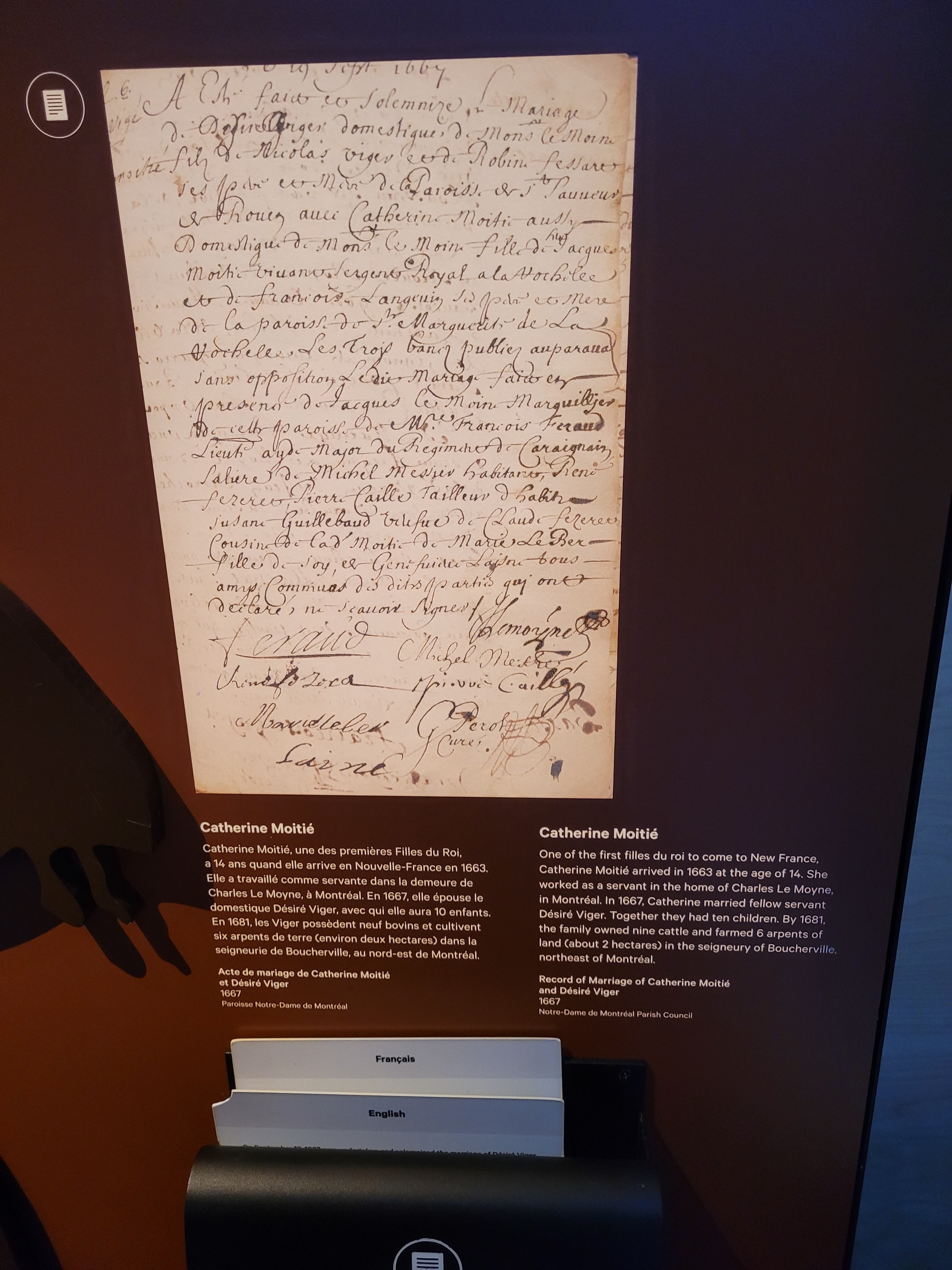
This is the marriage certificate of Catherine Moitie, one of the Filles du Roi, and her husband, Henry Le Moyne. They would have ten children.


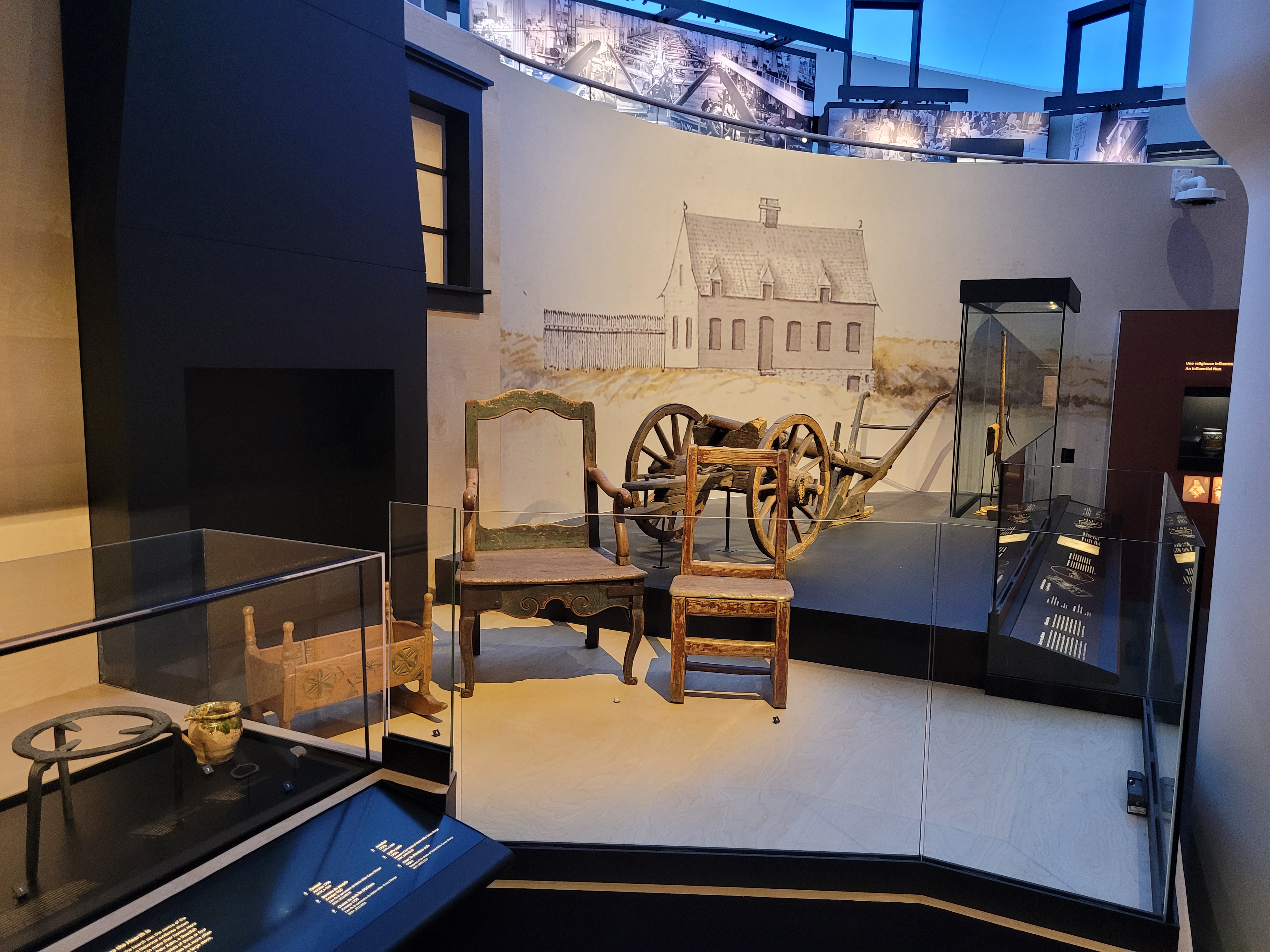
More artifacts of the period are seen here.


The sculpture I showed you yesterday is here again. Catherine Moitie is listed at its base. Each line represents each of her children, and their children. Within five generations she had 600 descendants.


Far from France, people built their own lives. This included items for their own homes. This cabinet is a well preserved example.


Increasingly the settlers began to be known as Canadiens.


While New France was busily being established, the old rival of the French was busy too. England had established colonies in what is today the Atlantic provinces, and further south along the Atlantic seaboard in what is today the United States (ungrateful colonials....). They were also busy on the fur trade deep in the interior of the continent.


This map of trading routes also shows a whole lot of territory that both the English and the French thought belonged to them. It was just a matter of time before their old rivalry would erupt in the New World.

Tuesday, January 24, 2023

New France

Samuel de Champlain left quite a legacy behind, with his name in multiple places through the country and south of the border.


This early period led to what became the Post-Contact Wars, with the French alongside their Indigenous allies against the traditional enemies of those allies.


Weapons of the time, both European and First Nations, are represented here. The indigenous clubs would be a particularly formidable weapon.


With the easing of those wars came the establishment of New France, a permanent colony often overlooked by Paris.


Settling the colony would require people to go there. The Daughters of the King was such a concept, encouraging women to go and make families in the New World. Many descendants of the Filles du Roi are around today.


This sculpture in the distance we'll look at tomorrow. Each line represents a generational descendant of one Fille du Roi in particular.


Organizing New France was done in the seigneurial system: dividing up land primarily for agricultural uses, each managed by a person of some importance, to whom fees would be paid yearly by the settlers. Its influence is still felt today in some aspects of the Canadian legal system, as well as seen in person if you're looking at parts of Quebec from the air.


I close out today with these two items. The Croix de Saint-Louis at lower left was a military decoration. The clock dates from the New France era.