Wednesday, February 9, 2022

The Last Shots Fired

Today I bring this extended visit to the Canadian War Museum to a conclusion.

 Canadians Arriving On The Rhine is a painting by Inglis Sheldon-Willams.


Another work by Sheldon-Williams: The Return To Mons.


As noted above, Canadians liberated Mons, Belgium, at the end of the First World War. Two field guns, said to be the last guns to have fired on the enemy before the armistice, were presented by the soldiers to the town. With the centennial of the armistice, Mons returned this one to Canada, and it now has its home here in the entrance hall for the museum galleries.


Memorial Hall was open for the first time since Covid started. This space has one artifact: the original gravestone of the soldier who now rests in the Tomb of the Unknown Soldier at the National War Memorial. This soldier fell at Vimy Ridge in 1917 and now rests in the most hallowed ground of the country. His stone hangs in this quiet room of reflection. The museum's architecture is aligned in such a way that on November 11th, at 11 in the morning (providing it's a sunny day), sunshine will come through an overhead window and shine on the gravestone. 

Inscribed on it: A Soldier of the Great War, A Canadian Regiment.

Tuesday, February 8, 2022

Canvases For War Art

From where I left off yesterday, another look into Lebreton Gallery. The painting I finished with yesterday is at upper left. 


No. 3 Canadian Stationary Hospital At Douliens is by Gerald Moira. The painting hangs high overhead.


This view looks up the ramp. Note the angled walls, a deliberate part of the architecture.


Canadian Headquarters Staff was painted by Harold Nicholson in 1918.


Canada's Grand Armada 1914 was painted by Frederick Challener in 1919.


The Second World War saw the rise of plane nosecone art, painted by crews onto fighters and bombers. Some were of women, some were of home, some humorous, and some defiant. A number of them are here.

Monday, February 7, 2022

Views Around The Gallery

Have a look over at my writer's blog today for a rant that's overdue concerning the events of recent days in my city.

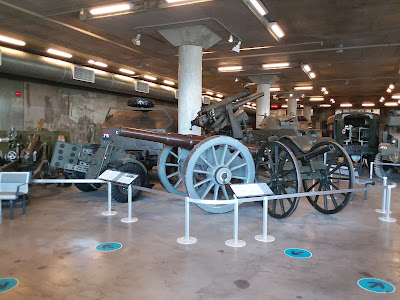
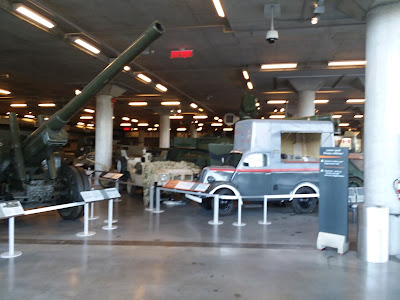
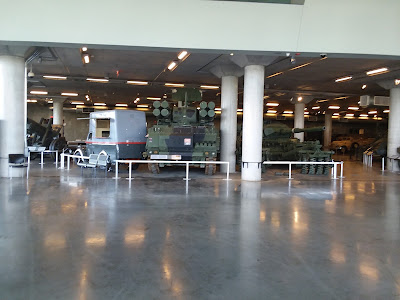
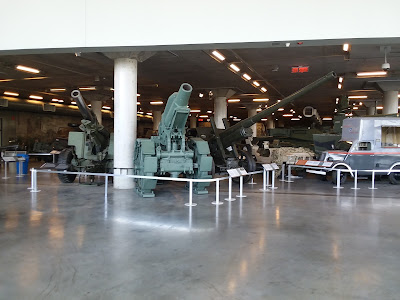
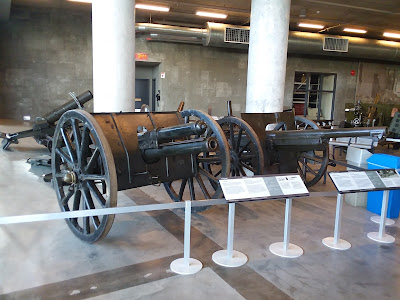
I start today with a look at artillery of different eras. 


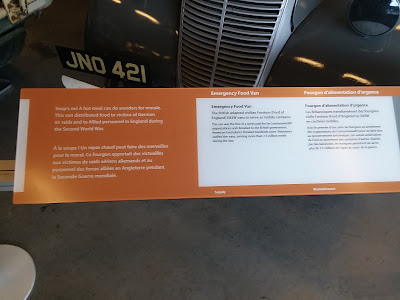
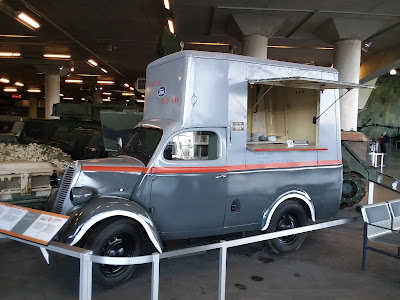
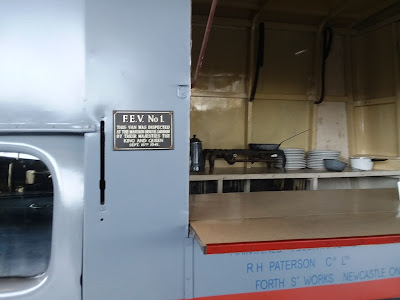
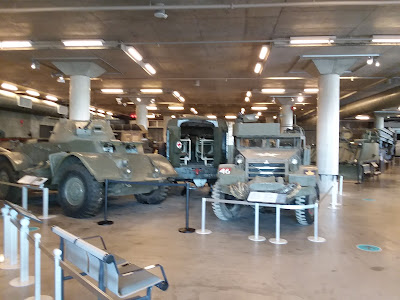
Close by is a truck I showed in yesterday's post. A British made Fordson mobile canteen was vital for the army, keeping the troops fed during the Second World War, but also providing food for those victims of the German air raids. It's open, so you can see the interior space and the equipment inside.


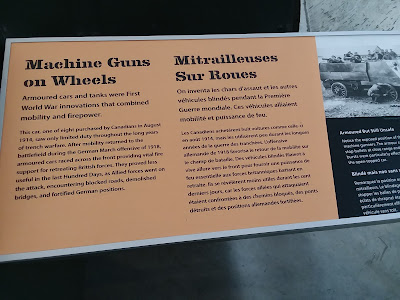
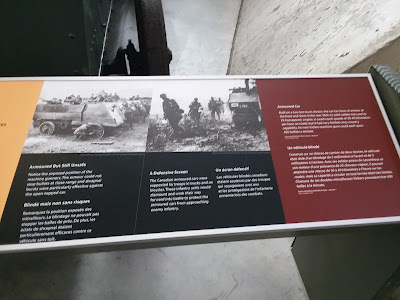
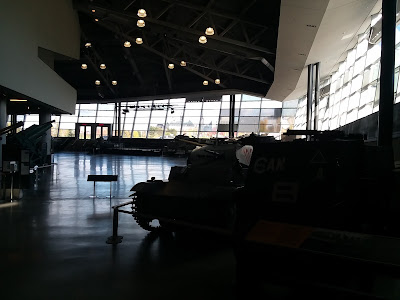
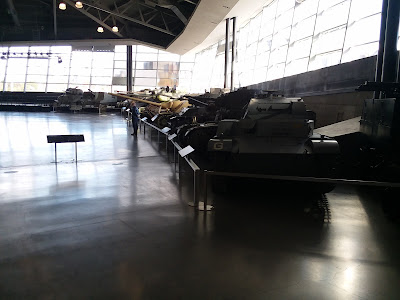
Armoured cars and tanks came out of the First World War. One of them is included as the last item I'm focusing on in the Gallery. These provided mounted support for infantry. 


It's here at right largely in silhouette. 


One last look into the Gallery for today.


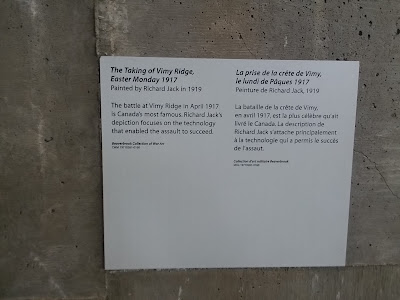
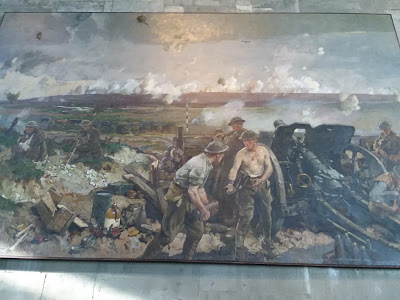
The ramp leading up out of the Gallery and towards the main entrance is lined with war art, most of them being large canvases. The first of them is the dramatic painting The Taking Of Vimy Ridge, Easter Monday 1917 by Richard Jack, done in 1919.

Sunday, February 6, 2022

Firepower Of Different Eras

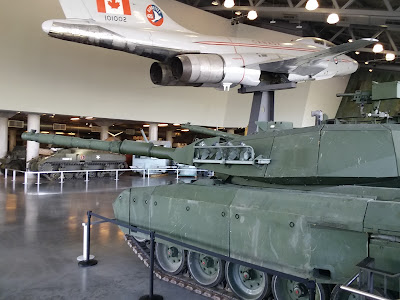
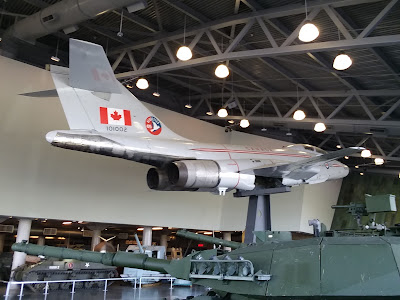
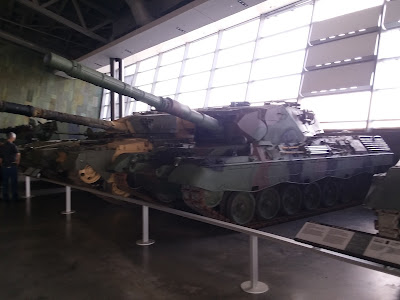
 Starting where I left off yesterday, here's a couple of looks over the shoulder of a Leopard tank, and views of the Voodoo jet.


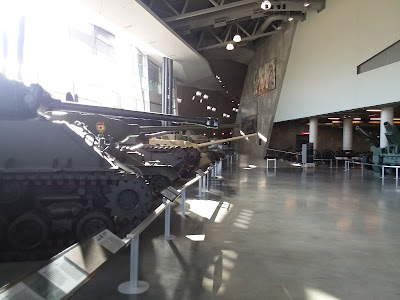
The mix of vehicles and equipment here always appeals to me. The vehicle seen at left here we'll get a closer look at tomorrow.


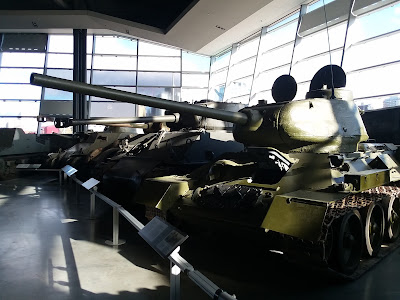
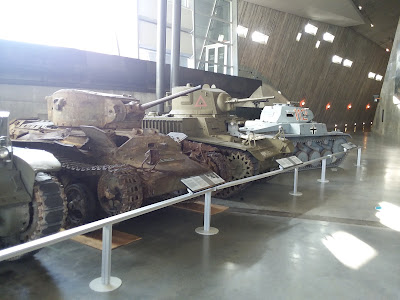
Tanks from multiple countries are lined up together.


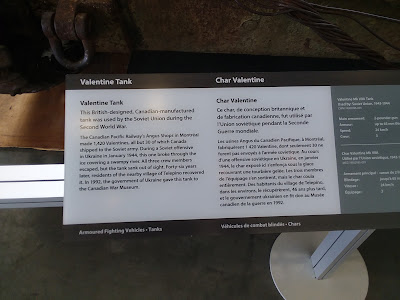
The beaten up tank here at left has a story. Valentine tanks were designed by the British, built by Canadians, and mostly provided to the Soviets during World War Two. This one fell through ice during an offensive in Ukraine in 1944 and spent decades in the water. In 1992 the government of Ukraine gave the tank to the War Museum.


Two more shots for today.

Saturday, February 5, 2022

Fuselage Art, Kurt, And Leopard

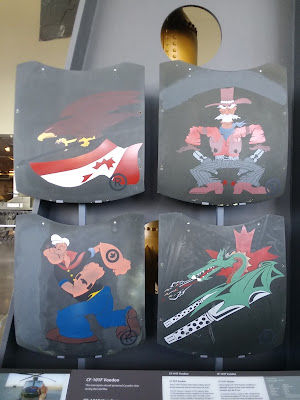
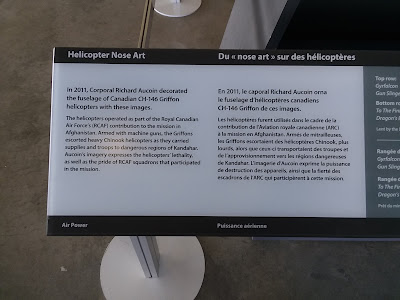
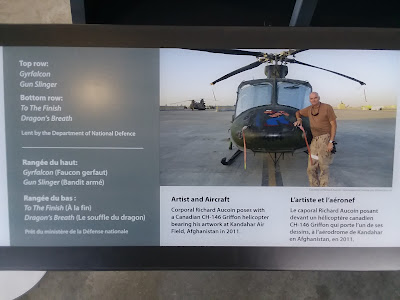
Pilots in the World Wars started decorating their planes with so called nose cone art. That's since also happened to the helicopter. Four such examples here are displayed together. Corporal Richard Aucoin painted these onto Canadian Griffon helicopters during the Afghan War.


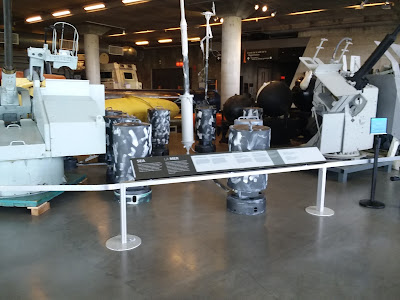
A mix of equipment: mechanized transport and navy guns.


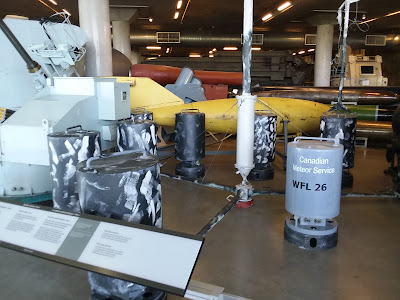
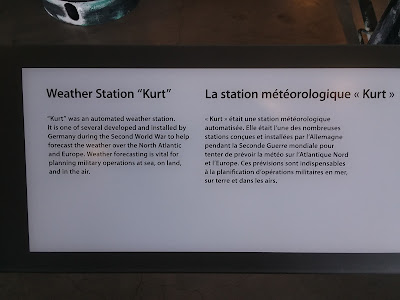
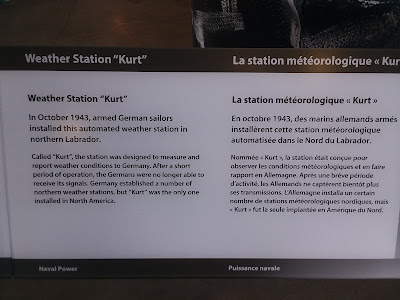
These barrels and other items at center here constitute one of my favourite artifacts in the Museum. This is Kurt, a weather station from the Second World War. A German U-Boat planted this station at the far northern reaches of Labrador in 1943. It operated for a short time before going offline and was forgotten. Decades later a German scholar going through war records found out about its existence, and the Canadian government was notified. Looking at the components of Kurt, it would look to any passerby like something placed by the government. And that part of Canada is very isolated and sparsely populated, so it's little wonder that it was unnoticed. Now it has its home here.
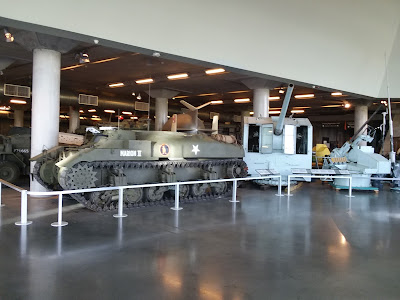

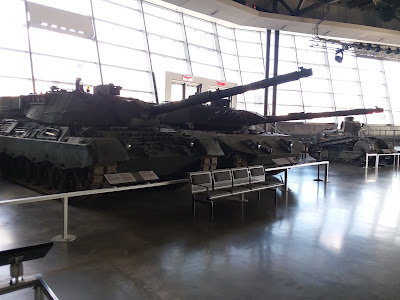
Two views of Leopard tanks, the contemporary tank used by the Canadian army. I've been in one once.