Showing posts with label Robert Borden. Show all posts

Tuesday, February 3, 2026

A Dark Period Of Global Upheaval

Some recruitment posters from World War One, in both official languages, are seen here.


It was a war that had come at great cost. The country would never be the same.


This portrait by William Orpen is of Robert Borden, the Prime Minister of the country through the First World War.


With the amount of things Canadians had done during the Great War, Borden pushed for them to have a place in the peace negotiations, as well as a greater say for their place in the world. This was still a period in which the British decided foreign policy for their dominions, after all.


The Great Depression was a calamity in and of itself, with the collapse of the economy worldwide plunging the world into the darkness. Canada was hit by it as much as any other country. Here, this includes a quilt made by a church congregation women's organization.


The CBC (Radio-Canada in French) is a legacy of this period, founded as a public broadcaster.


World War Two would drive the world into more upheaval, but also bring us out of the malaise of the Depression. Canada joined Britain from the beginning of the war, and again, the country's military would distinguish itself throughout.


Two photographs taken during the war. Prime Minister William Lyon Mackenzie King hosted two conferences at Quebec City for the western allies, with Winston Church and Franklin Roosevelt, and the Earl of Athlone, who was the governor-general at the time. At bottom, a photograph of King taken during his radio broadcast on VE Day.


Canadian industrial output for the war was total. The country was dedicated to winning the war.


And when it all came to an end, both in Europe and in Asia, the country would celebrate, welcome their sons, husbands, fathers, and brothers home, and grieve for those who never made it back.

Thursday, November 27, 2025

Hell Unleashed On Earth

 A collage of newspaper headlines here speak to how much the country was focused on the war.


It was a tense time at home, with debates about conscription.


An election was held during the war, with Prime Minister Robert Borden facing a former prime minister, Wilfrid Laurier, who by that time was in the twilight of his life.


The painting above is Convoy In Bedford Basin,by Arthur Lismer, a commissioned war artist, depicting the harbour at Halifax. After the war, Lismer and several of his friends founded the Group of Seven, which changed Canadian art forever.


Halifax saw an explosion in its harbour on the 6th of December, 1917. A collision between two ships, one of which was carrying explosives, set off one of the largest non-nuclear and artificial explosions in history, killing almost two thousand people and wounding nine thousand more.


A piece of one of the ships is displayed here, along with medals related to the response.


That fall in France, Canadians were called upon to do what British and French forces had been unable to do- to take the ridge at the village of Passchendaele. Once again, they did what couldn't be done, achieving victory in a brutal battle that comes as close to hell on earth as anything in the history of warfare.


This is particularly vivid- a recreation of the shattered landscape you can walk through, with equipment, weapons, and even a body pounded into the mud. The Western Front still surrenders bodies back to the surface to this day.

Sunday, June 1, 2025

City Daily Photo Theme Day: Shadows

The first day of each month is a theme day for members of City Daily Photo. For June, that theme is Shadows. Take a look at how others are interpreting the theme right here

I begin today with some shots from my current series on the Tulip Festival, here in Ottawa. I took this shot of a bed at Dow's Lake; shadow was cast over much of the bed.


A short walk beyond, in a bed not so densely planted, the shadows of the tree above provided shade to this set of tulips.


I had another version of this some days ago. The Man With Two Hats is a statue by Dutch artist Henk Veert. Here we have the cyclist walking into the shadow of the statue.


When I went over to the Gatineau side of the Ottawa River on a trip to take in the tulips, I noted the soft shadow of the wall and the trees on the sidewalk.

I took another shot of the shadow of a street light on the road.


Stopping in at the Canadian Museum of History, I took advantage of the architecture and the shadows cast by the curatorial wing.


On another day, I took this shot close to home. Motorbikes and their shadows outside a government complex.


Out in Nepean, I decided to take this shot of the shadow of a tree on the roadway.


On Parliament Hill late one afternoon a few days ago, I came for more shadows. I was standing in the shadows of the east side of West Block for this one.


I looked at Centre Block, and noticed a shadow from part of the building cast onto the Peace Tower.


Coming around the north side of West Block, I took this shot of a doorway now in shadow.


And on the west side, a statue of Prime Minister Robert Borden cast its own shadow in the late sunlight.


And now for something completely different, as the Pythons would say. I finish with something from home- the score album for the 90s film The Shadow, by Jerry Goldsmith.

Wednesday, October 9, 2024

Close To My Heart

 Displayed here is a letter from Philippe Lariviere, a Canadian soldier, to his sweetheart. He would never see her again, dying in the First World War.


This Memorial Cross was given to his loved ones.


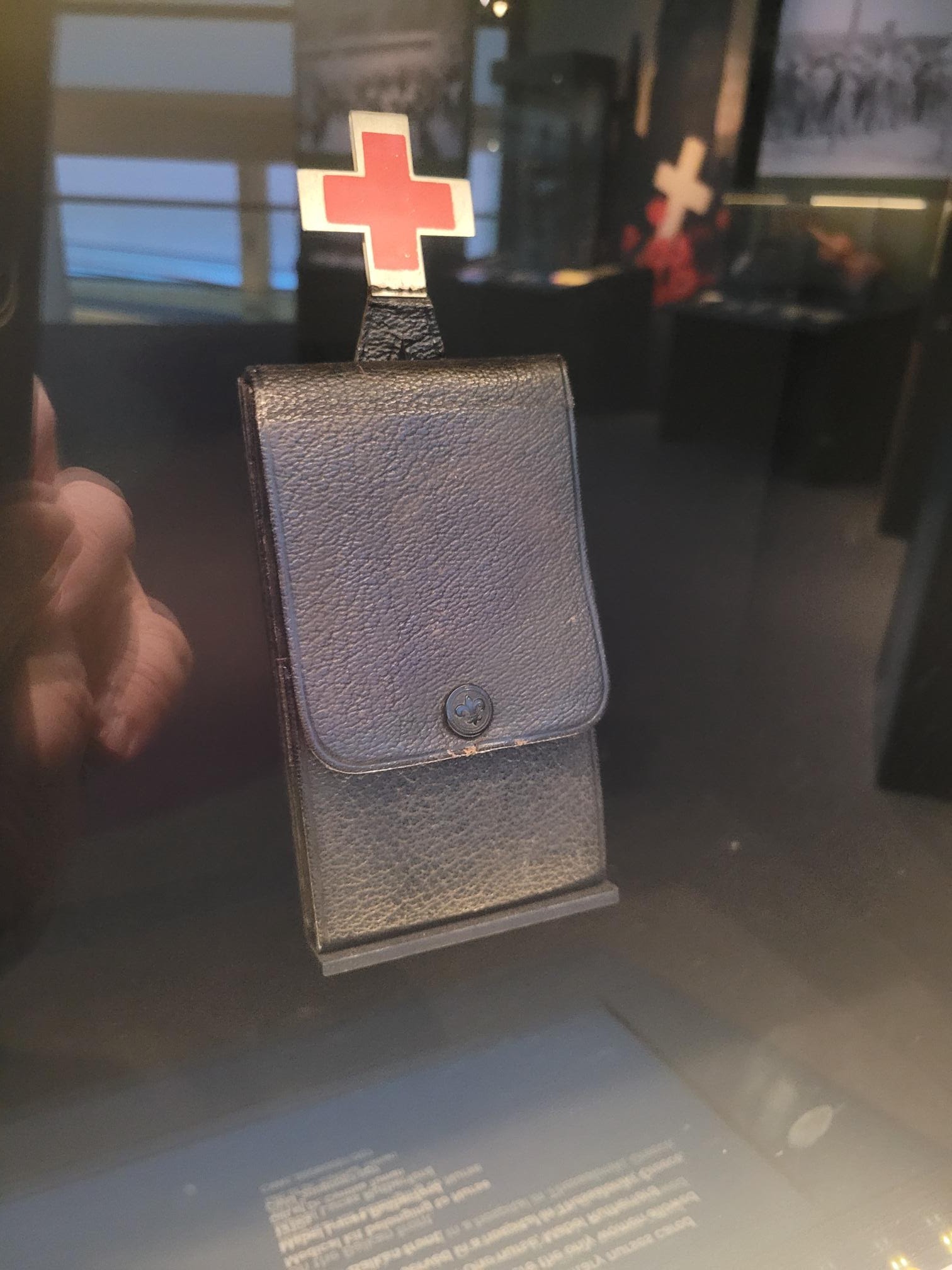
Canadian women served as nurses, and saw many horrors.


This dramatic painting is Gas Attack, Flanders, a 1915 work by Alfred Bastien.


This photograph depicts Canadian soldiers, jubilant in the wake of a hard fought victory. Over the course of the war, Canadians developed a reputation as shock troopers, doing things that simply couldn't be done- but they did them anyway.


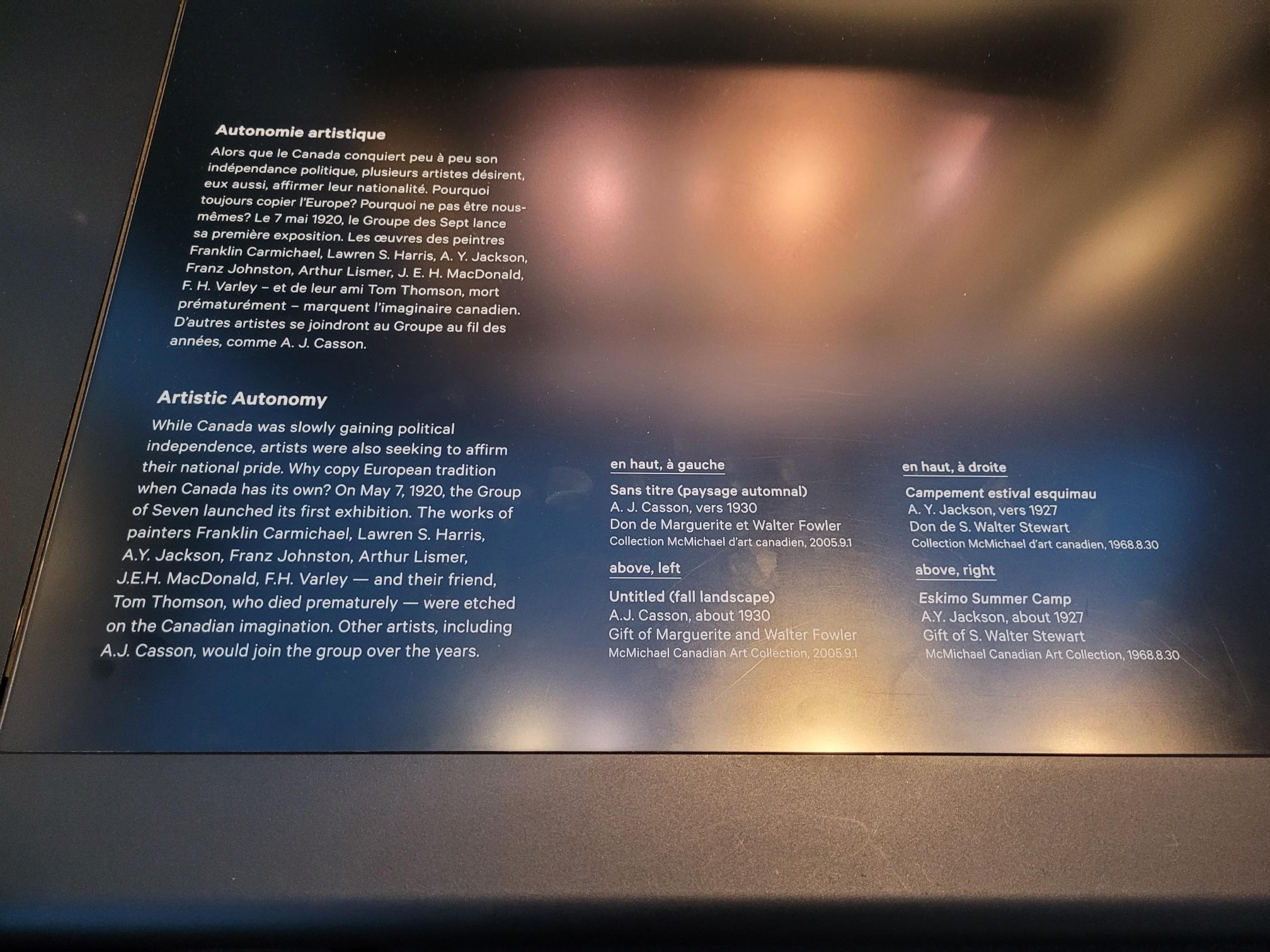
A group of artists had been friends going back before the war, but in 1920 began to formally exhibit their work together. They were called the Group of Seven, and their art would prove to be hugely influential ever after in Canada. Two works by members are here.


This painting is of Robert Borden, the Prime Minister who saw the country through the war and pushed for a place in the peace talks at Versailles.


The Depression hit Canada as hard as it did elsewhere.


This quilt is the work of a number of women in an Anglican church of the west, made for a fundraiser to alleviate suffering of the time.