Saturday, February 4, 2023

Forces Of Change For Canada

The Second World War was as momentous a time for Canada as the First World War had been. The country was involved from the start until the end.


Photographs of the time: at the First Quebec Conference, Prime Ministers William Lyon Mackenzie King and Winston Churchill stand behind President Franklin Roosevelt and the Earl of Athlone, the governor-general at the time. Below is a photograph of King on V-E Day.


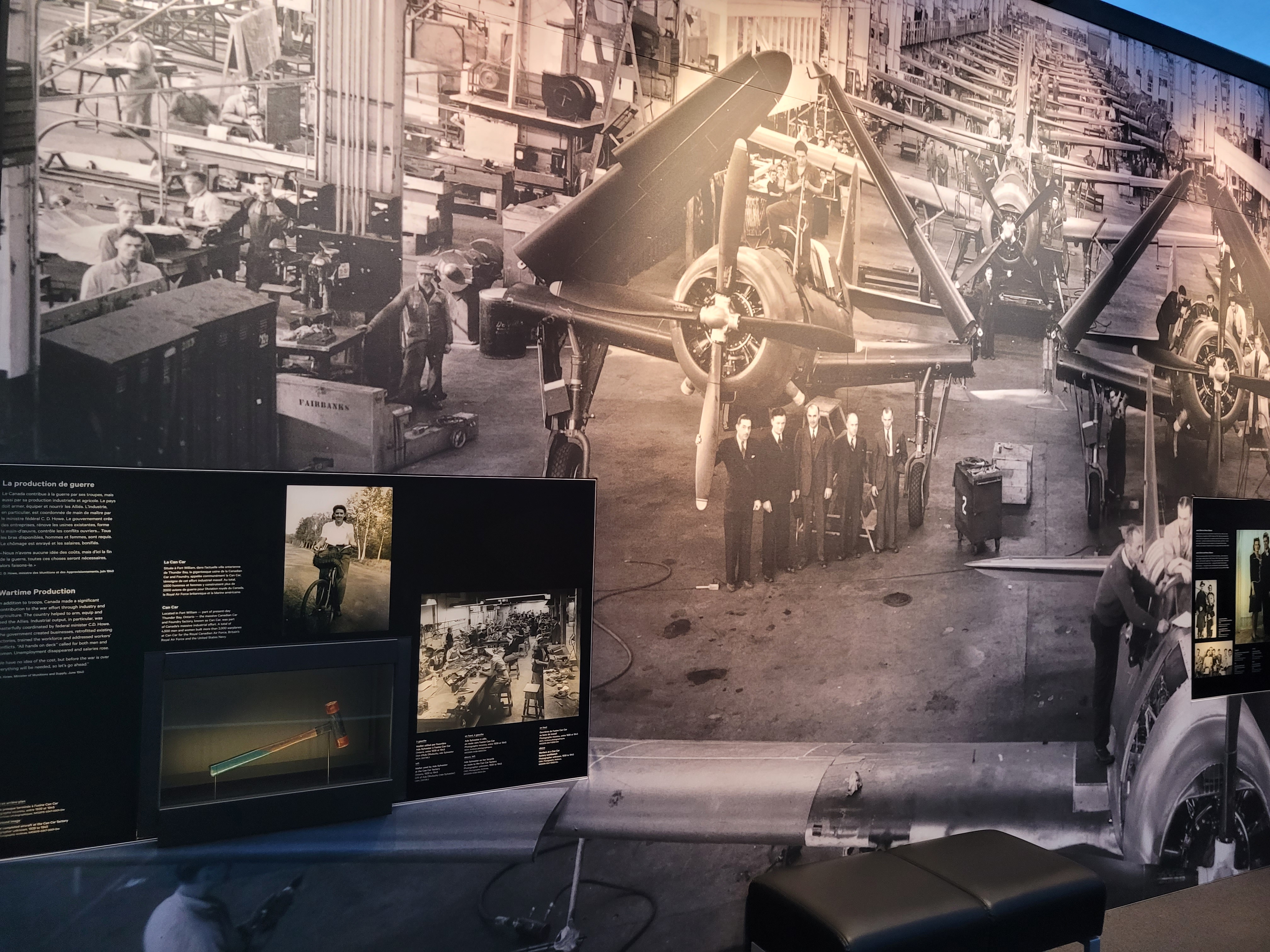
This photograph of a man and woman, both in the service, on V-E Day, always catches my eye.


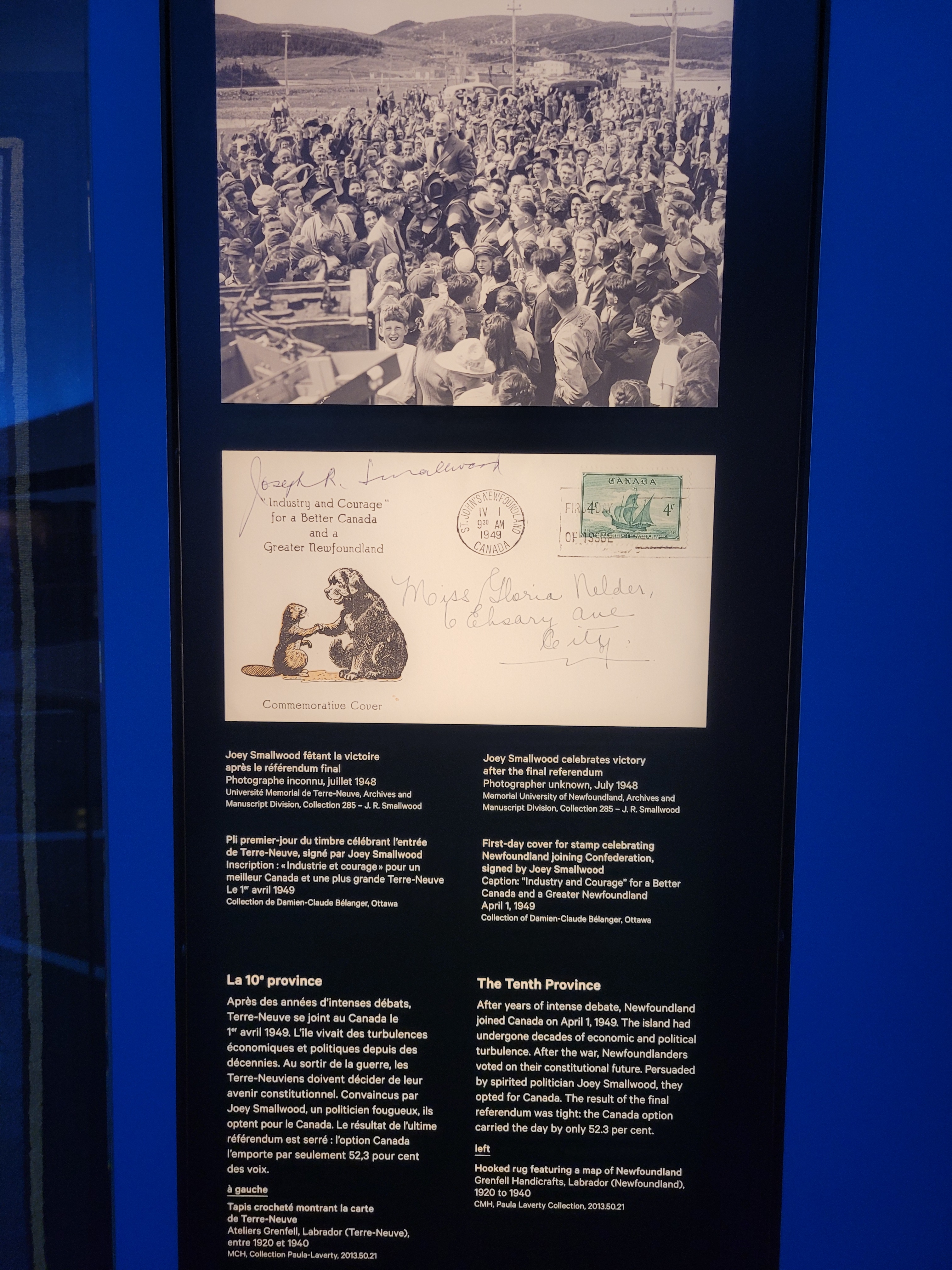
After the war, Newfoundland, which had been a separate dominion under the British empire, voted to join Canadian Confederation.


Its premier, Joey Smallwood, was the driving force for that. As such, he is considered the last Father of Confederation.

Another political force in the country was the politician Tommy Douglas, whose policies from the left wing had a strong influence, both in his province and at the national level. Universal health care is his legacy, and today he is one of the most admired leaders in the history of the country.


The decades following the war saw a great deal of change. Women's role in society, the growing influence of the youth making up the baby boom, economic booms, all of it had an effect on the country. Some fashions of the time are here. 


A display screen features a wealth of Canadian musicians of the time. Clicking on any albums displayed allows the visitor to bring up a specific song. In this case, The Weight, a classic from The Band.


I close off for today with this.

Friday, February 3, 2023

A Land Finding Its Own Identity

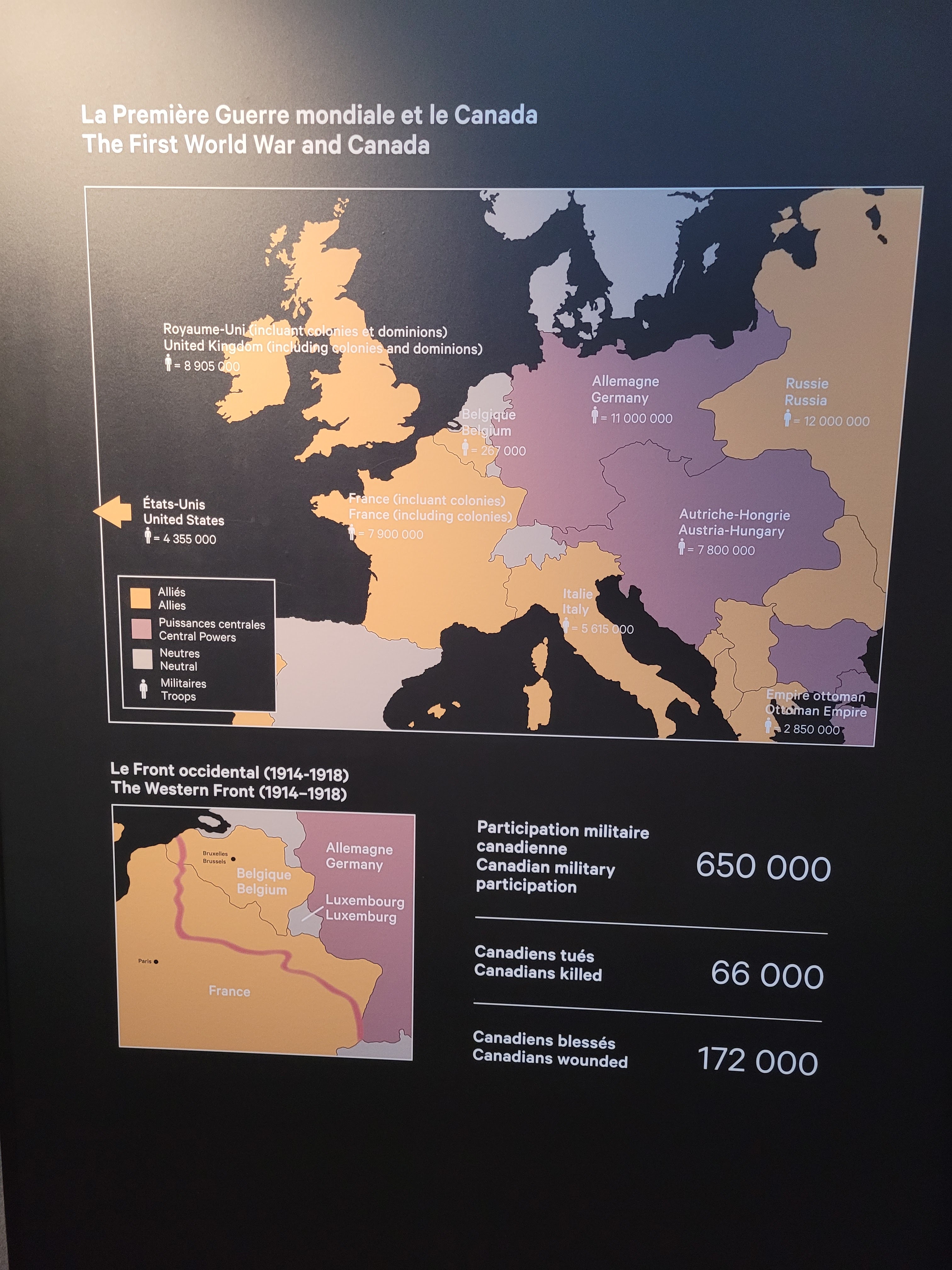
The First World War was transformative for Canada. The country was automatically part of it from the beginning to the end, with a large part of the population involved. Servicemen went to the battlefields of Europe, bled and died, and repeatedly did things that couldn't be done. And the country's sense of itself- as a distinct country as opposed to being just one other part of the British empire- began to grow out of it.


This powerful painting is Gas Attack, Flanders, a 1915 painting by Alfred Bastien.


A photograph of Canadian soldiers en route, celebrating their victory at Vimy Ridge. What other Allied forces had tried and failed to do, they did it. The battle is one of the pivotal moments in Canadian history.


In the wake of the war, as in so many other cases, there was much to mourn.


Robert Borden had been the prime minister who led the country through that war. This 1919 portrait is by William Orpen.


Borden pressed for a place for Canada at the post-war conferences, given the amount of work Canadians had done for the war effort. 


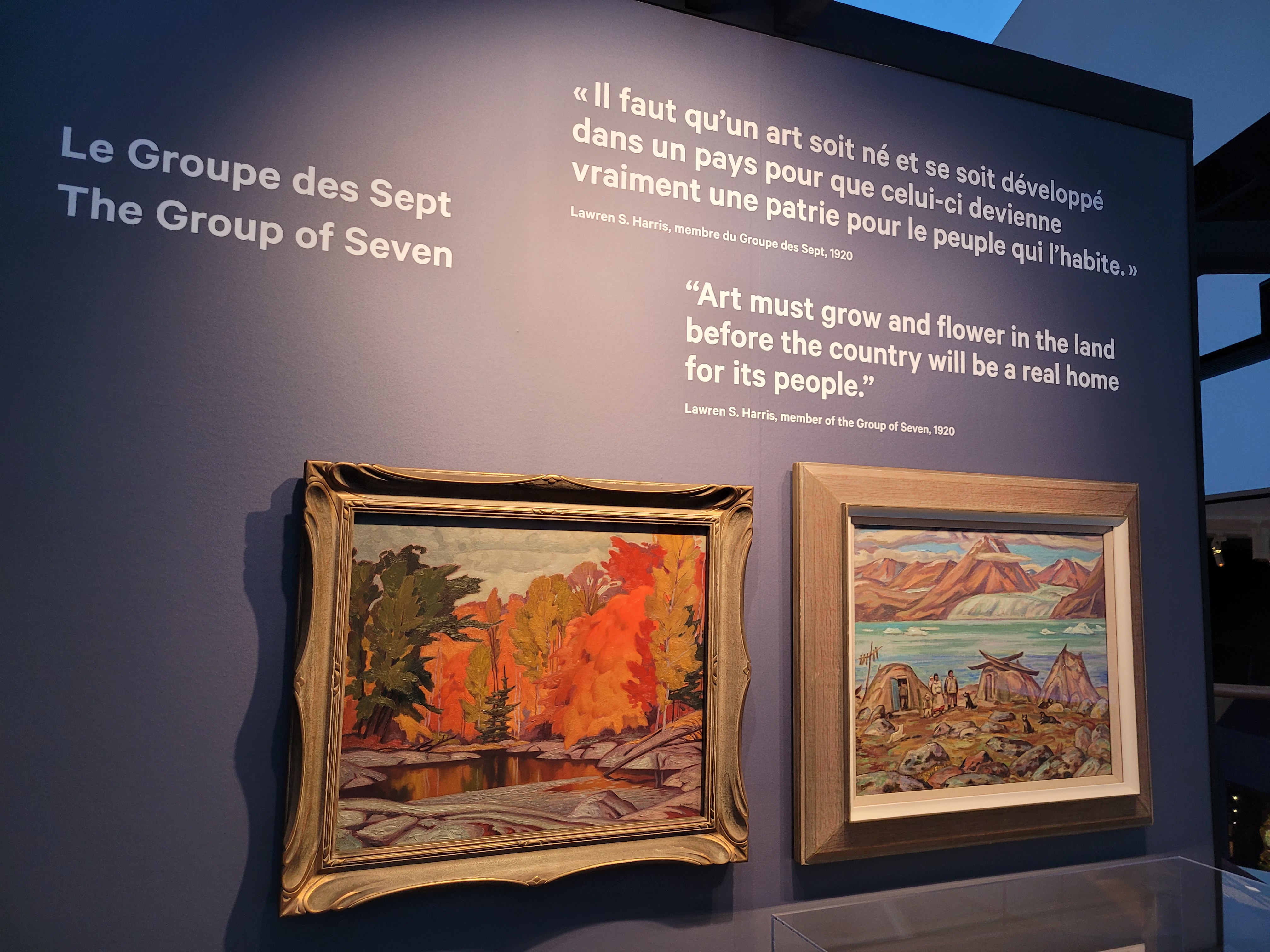
Another push forward in Canadian identity was by a group of artists who felt the Canadian character should be expressed in art. They became hugely influential to the country and are known as the Group of Seven. Two paintings by members are here: an untitled fall landscape by A.J. Casson and Eskimo Summer Camp by A.Y. Jackson. 


The Great Depression would have a huge impact on the country. A turbulent time of high unemployment, social unrest, and despair, it proved to be a challenge for leaders to cope with, as well as the country as a whole.


From this period sprung the Canadian Broadcasting Corporation (CBC) or Radio-Canada, offering radio broadcasts across the country in English and French. It's still in operation today as a government broadcasting company.

Thursday, February 2, 2023

Informed And Shaped By Nature

A note to readers in the area: Winterlude is back in full force starting tomorrow and running through until the 20th. I will be taking pictures, of course, so expect a lot of that down the line.

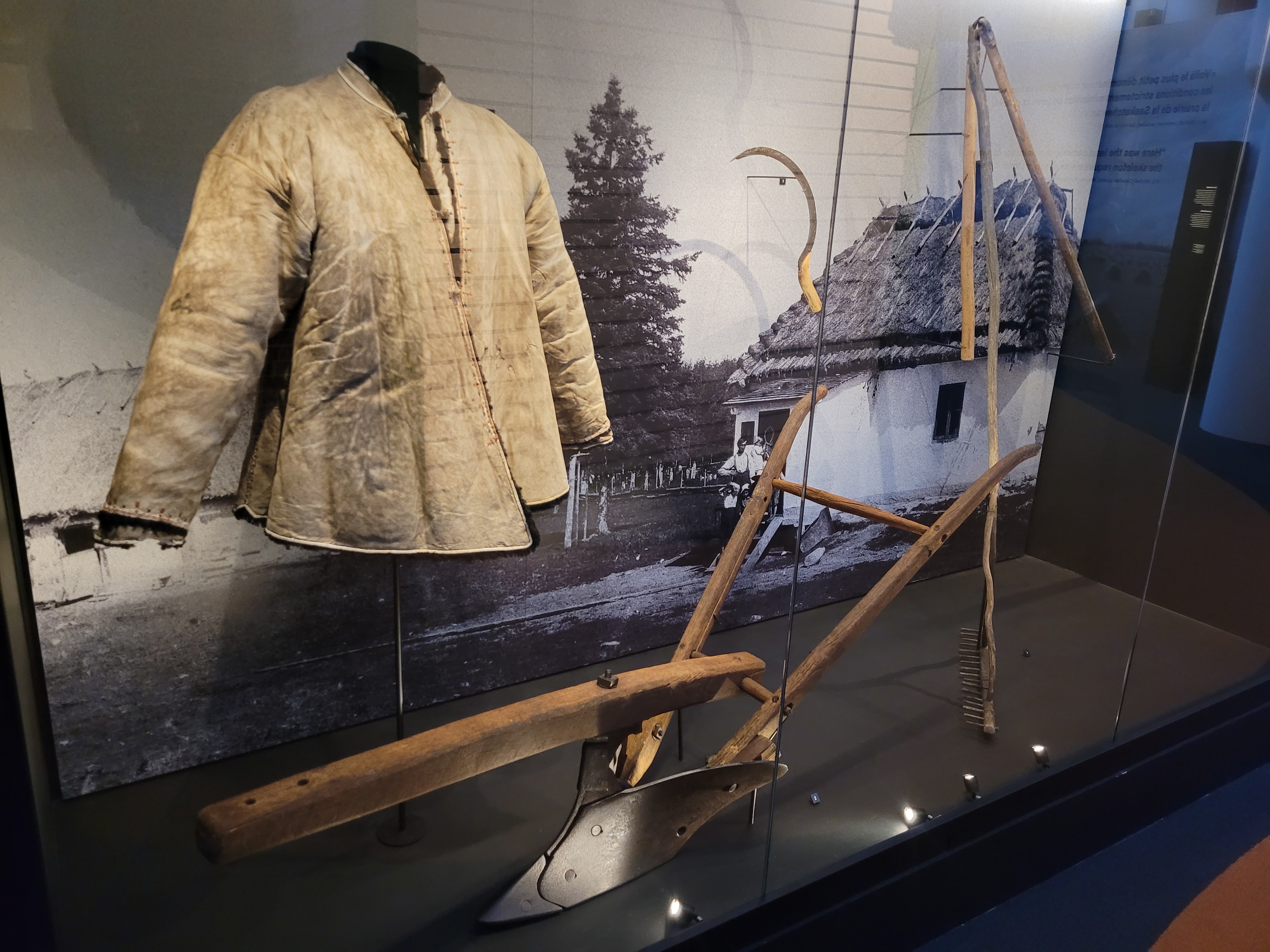
Continuing on where I left off. Settlement of the Canadian West was a concern for the federal government in the last third of the 19th century. Many went into what could be a challenging land. 


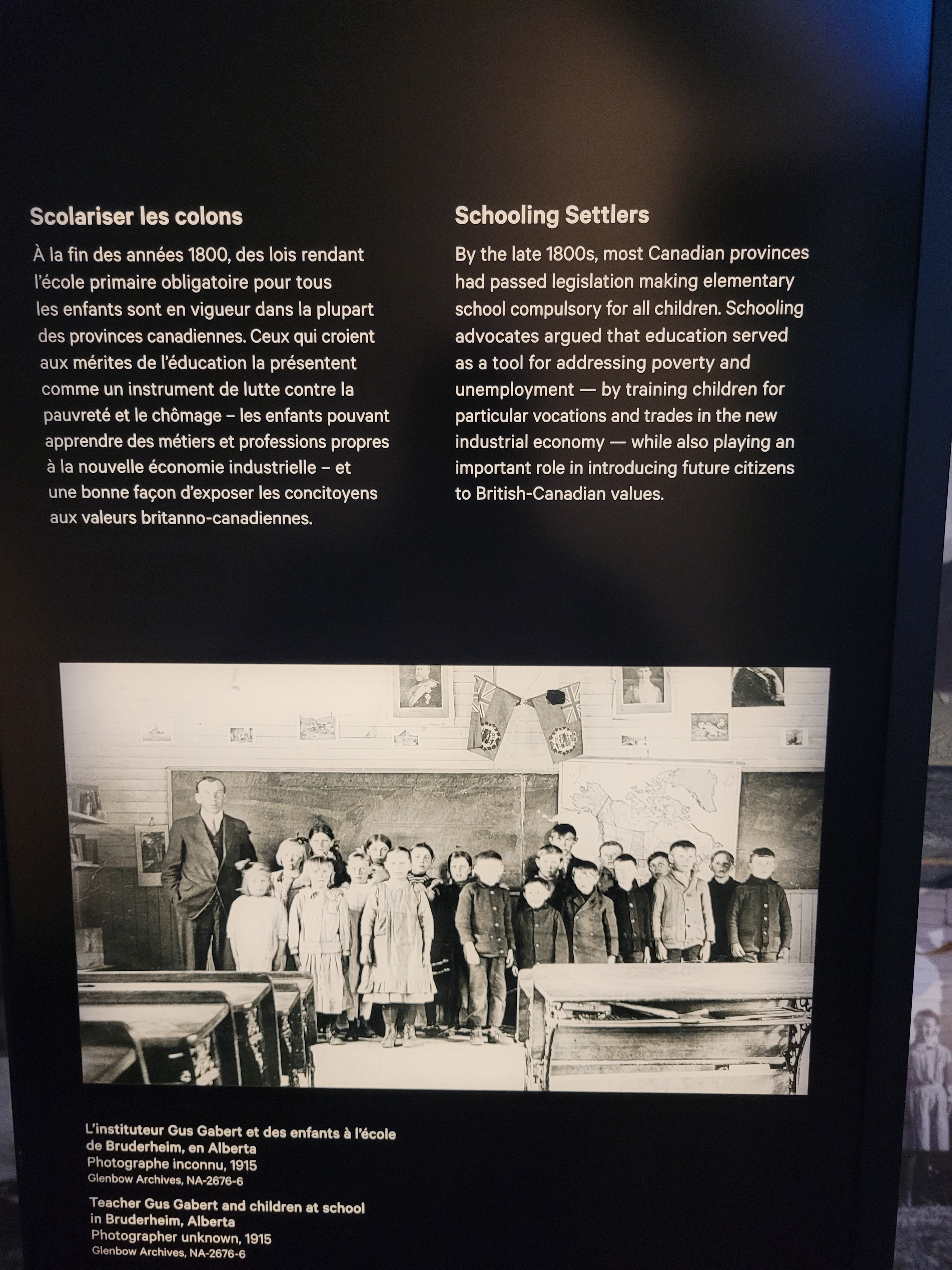
Education was important for the settlers to see to it for their children. Many one-room schoolhouses would be established.


Quotes from Canadian writers speak to life in the West- and indeed into one of the fundamentals in what defines Canada and Canadians: the vastness of the land.


Towns and cities in the West developed as the 19th century slipped into the 20th century. This domestic uniform dates to the time.


The Eaton's company made it possible for retail goods to be shipped out into remote areas by catalogue sales. Some of the items of the period are here.


The last of the three galleries in the Canadian History Hall is on the upper level. It is accessed either by elevator or by a long winding ramp around the central hub. A physical map of the country is laid out on the floor. Three staff members are seen talking right at the northern islands of the Canadian Arctic.


I leave off with this display case, featuring items late in the reign of Queen Victoria, who can be seen in two stages of life on the flag in the background. The bust is of Sir Wilfred Laurier, prime minister at the time of her diamond jubilee.

Wednesday, February 1, 2023

City Daily Photo Theme Day: Virtue

 The first day of each month is a theme day for City Daily Photo, and for February, that theme is Virtue. Check to see how others are interpreting the theme right here

Among the definitions of virtue is "a beneficial quality or power of a thing". To me, a museum fits that bill entirely. I am in the midst of a tour of the Canadian Museum of History at the moment. One of the treasures of the Museum is this church, St. Onuphrius Ukrainian Catholic Church. It is part of the legacy of the settling of the Canadian West, having had been built at Smoky Lake, Alberta. Donated by the congregation to the Museum in 1996, it remains a consecrated church, still occasionally used for services. It is located inside the Canadian History Hall, which tells the story of Canada's history from time immemorial to the present day.


It is especially a wonder inside.


A video display screen allows the visitor to look at details about the church, including its interior and its religious services and meaning to the community.


The path around the building is wide, allowing the visitor to look into the windows at the back of the building while also looking at artifacts on the other side of the path. This is the sacristy.


And at the back of the church, these allow for looks into the area behind the altar.