Showing posts with label Wilfred Laurier. Show all posts

Friday, August 4, 2023

The Proverbial Call Of The Wild

Starting where I left off yesterday in the Queen's Lantern, here's a look up. 


The Victoria Memorial Museum Building, as it is still formally called, has a long and storied history, having had housed more than one subject in its walls. 


In 1916, when Centre Block on Parliament Hill burned, the House of Commons and Senate met inside for several years until Centre Block could be rebuilt.


Wilfred Laurier, seventh prime minister of the country, and whose tenure saw the creation of the museum, died in 1919, and laid in state here.


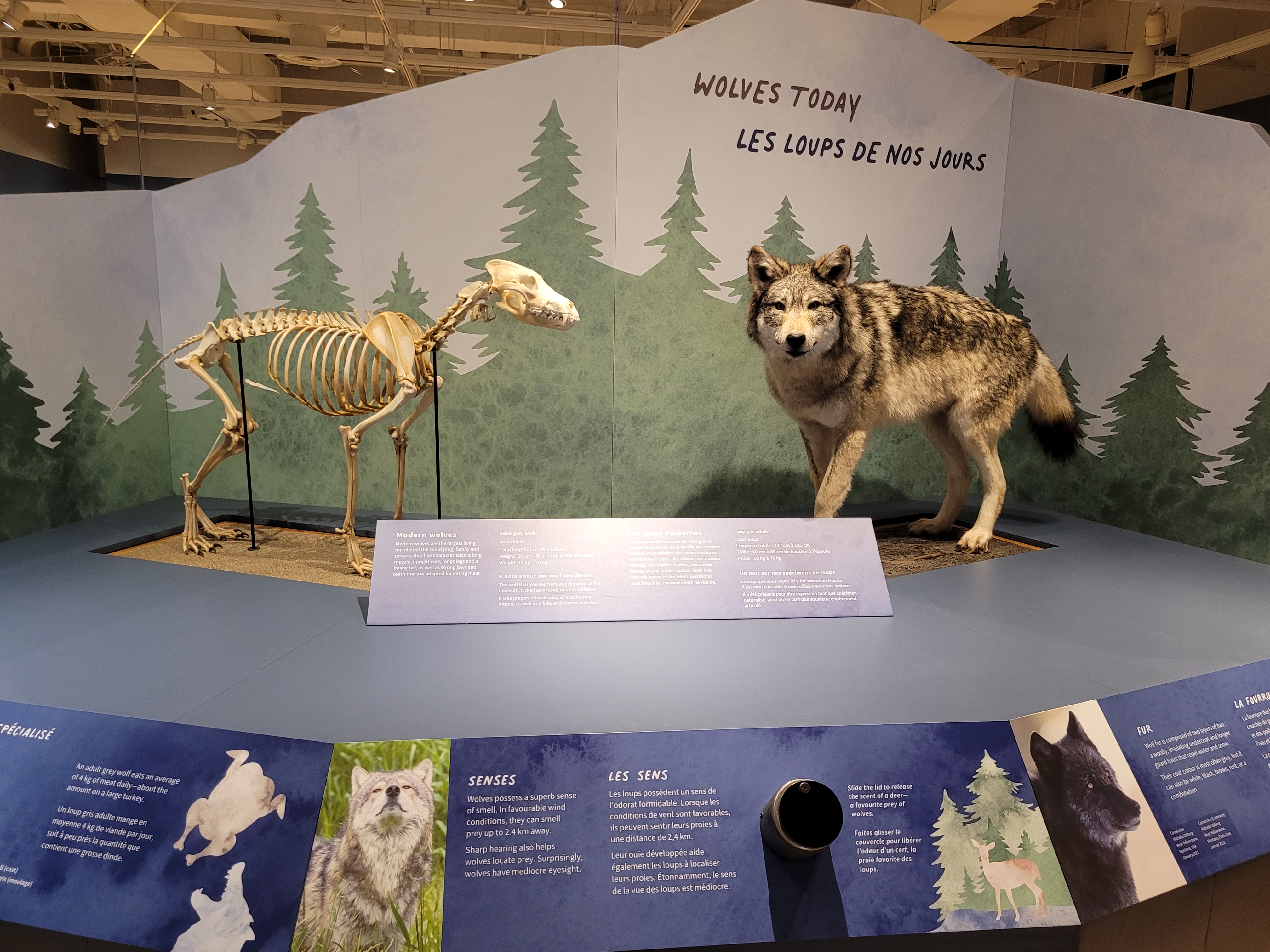
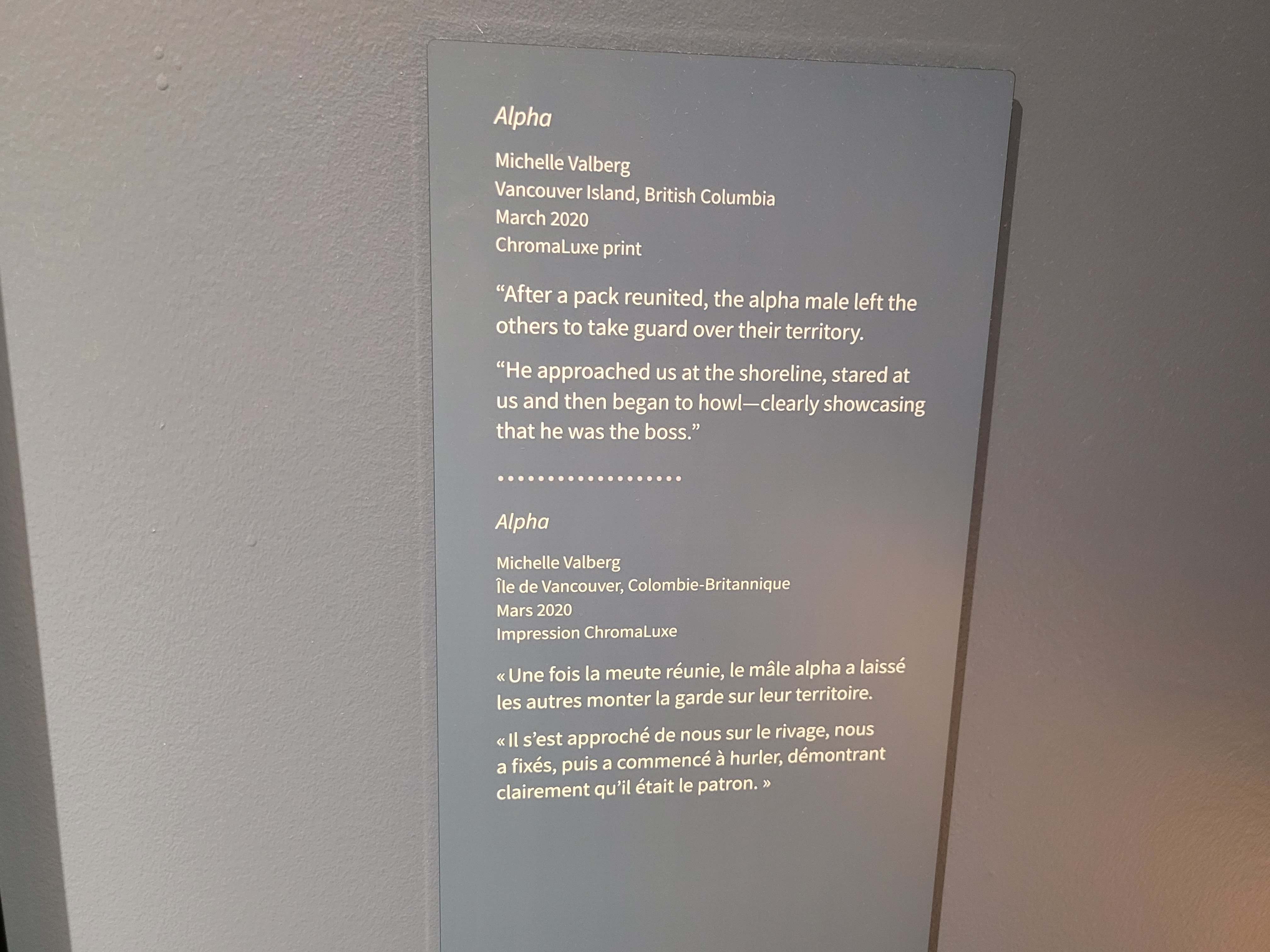
The next gallery led me on. The first area has had something of a changeover since I was last here, and focuses on wolves. This includes dramatic and beautiful photographs by the Canadian nature photographer Michelle Valberg, who photographed wolves on Vancouver Island and in Yellowstone for this series. We start with On The Prowl.


Howling Blues is this one.


A central display gives facts about the animal, while speakers play recordings of wolf howls. An animal that has been misunderstood for centuries, and which we're only starting to now appreciate for its role in nature. For me, the sound of wolves howling is achingly beautiful.

Alpha is the title of this photograph.

Thursday, February 2, 2023

Informed And Shaped By Nature

A note to readers in the area: Winterlude is back in full force starting tomorrow and running through until the 20th. I will be taking pictures, of course, so expect a lot of that down the line.

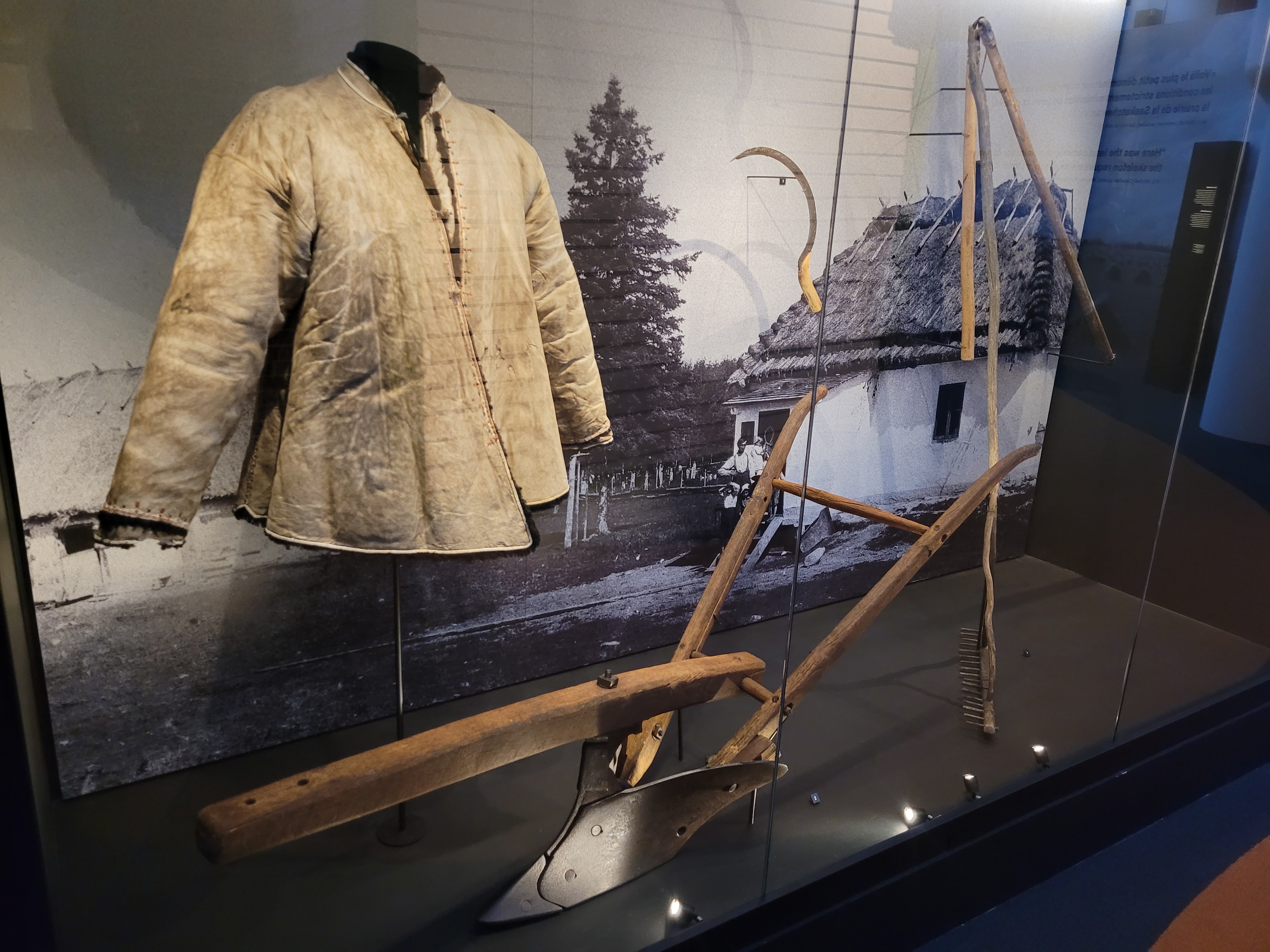
Continuing on where I left off. Settlement of the Canadian West was a concern for the federal government in the last third of the 19th century. Many went into what could be a challenging land. 


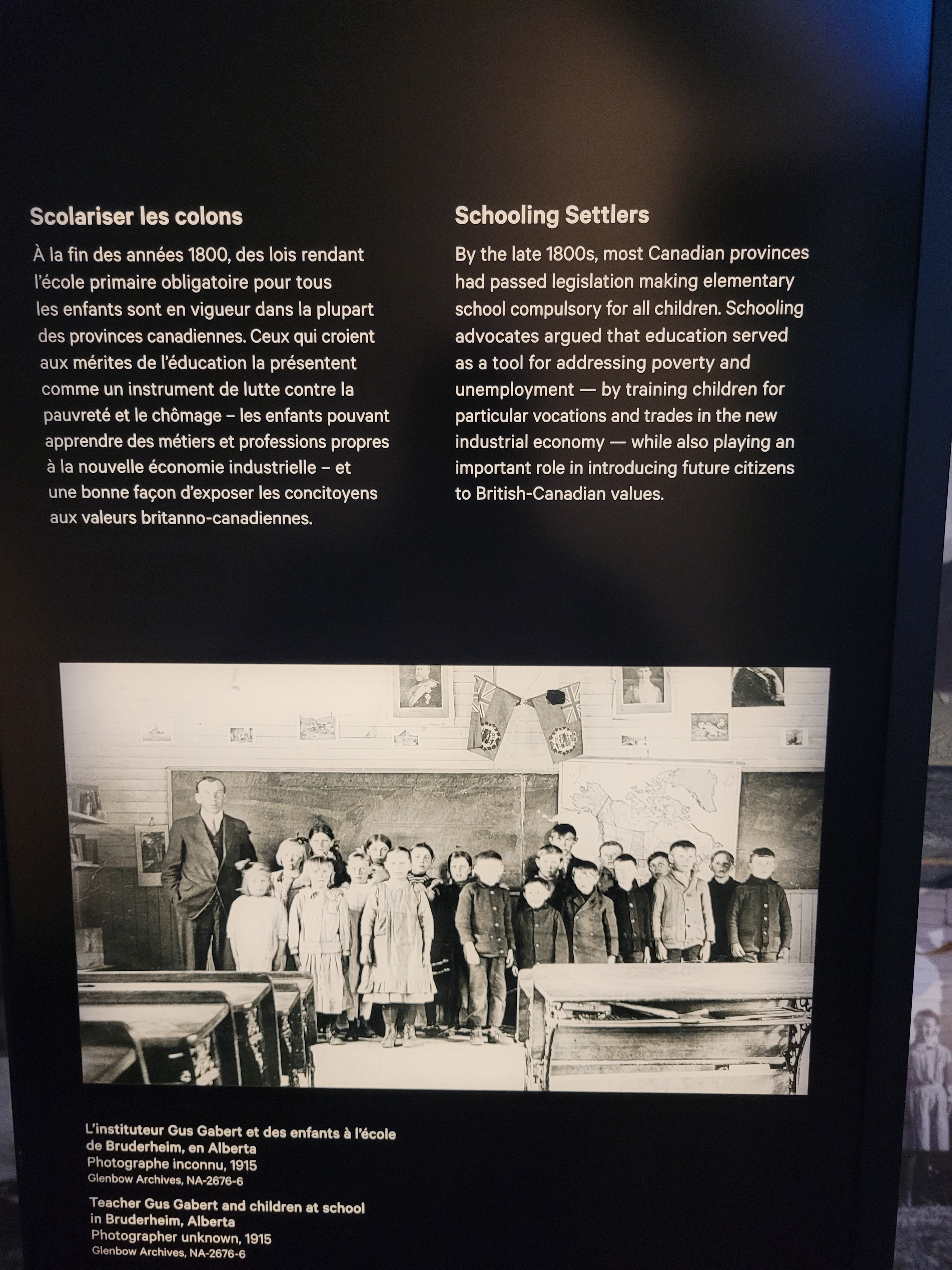
Education was important for the settlers to see to it for their children. Many one-room schoolhouses would be established.


Quotes from Canadian writers speak to life in the West- and indeed into one of the fundamentals in what defines Canada and Canadians: the vastness of the land.


Towns and cities in the West developed as the 19th century slipped into the 20th century. This domestic uniform dates to the time.


The Eaton's company made it possible for retail goods to be shipped out into remote areas by catalogue sales. Some of the items of the period are here.


The last of the three galleries in the Canadian History Hall is on the upper level. It is accessed either by elevator or by a long winding ramp around the central hub. A physical map of the country is laid out on the floor. Three staff members are seen talking right at the northern islands of the Canadian Arctic.


I leave off with this display case, featuring items late in the reign of Queen Victoria, who can be seen in two stages of life on the flag in the background. The bust is of Sir Wilfred Laurier, prime minister at the time of her diamond jubilee.

Saturday, December 3, 2022

War At Home, Hell Upon The Front

Family portraits from the time of the First World War are gathered together, adding to the poignant tone of this part of the Museum.


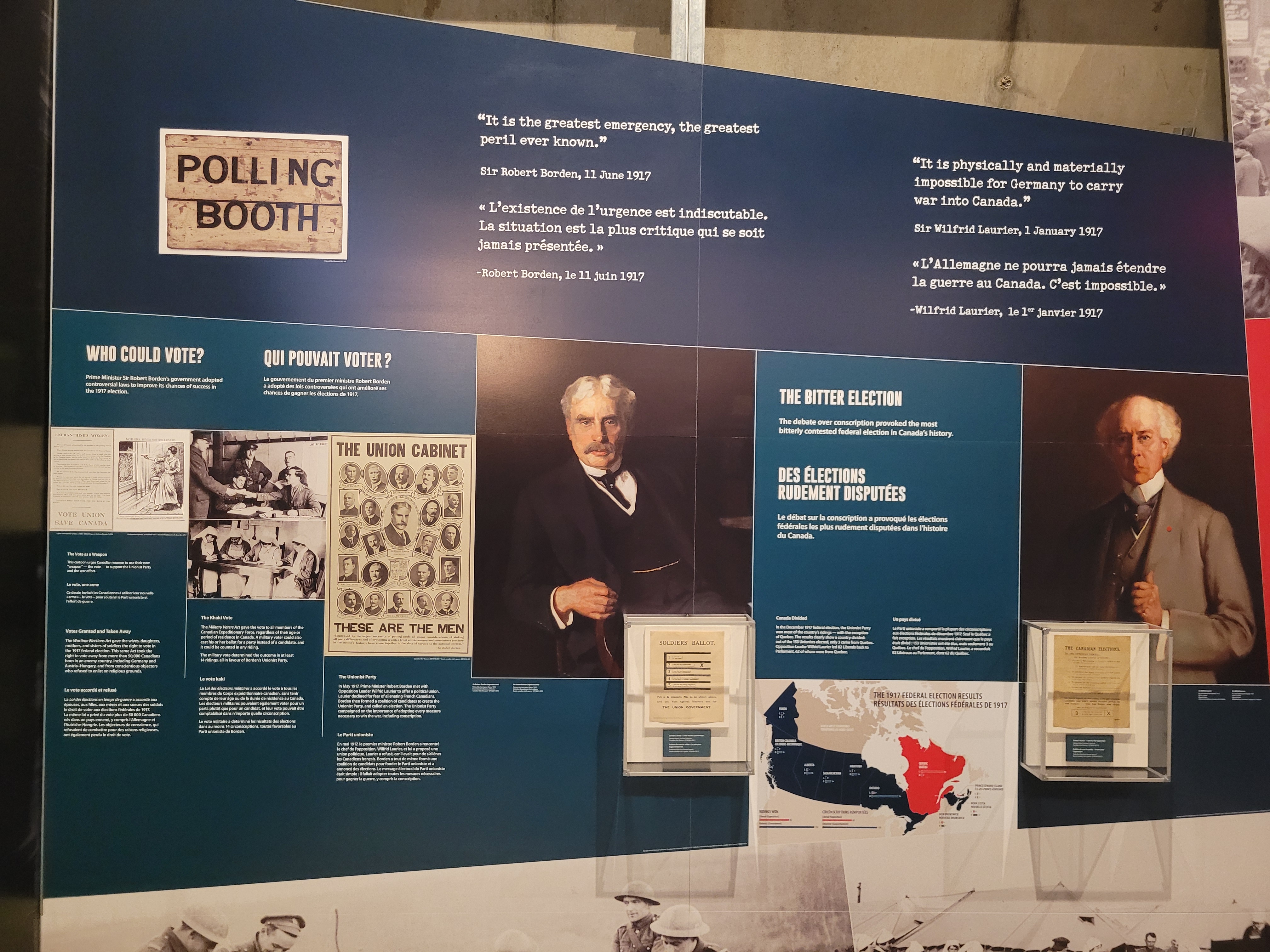
The 1917 federal election was the most bitterly fought election in the country's history, with the question of conscription at its heart. Prime Minister Robert Borden and Liberal leader Wilfred Laurier, a former PM in the twilight of his life, represented different world views on the matter.


This collage of newspaper pages of the time does catch the eye.


There is war art here as well, such as Land Girls Hoeing, by Manly Macdonald.


A large painting nearby is by one of Canada's greatest artists. Arthur Lismer of the Group of Seven was a commissioned war artist at the time, and the painting is Convoy In Bedford Basin. This is the setting of the Halifax Explosion in late 1917, with the collision of two ships in the harbour, one carrying explosives. This resulted in the worst non-nuclear explosion in history.


Medals related to the explosion are at right. A fragment of one of the ships, blown several kilometres inland, testifies to the violence of the explosion.


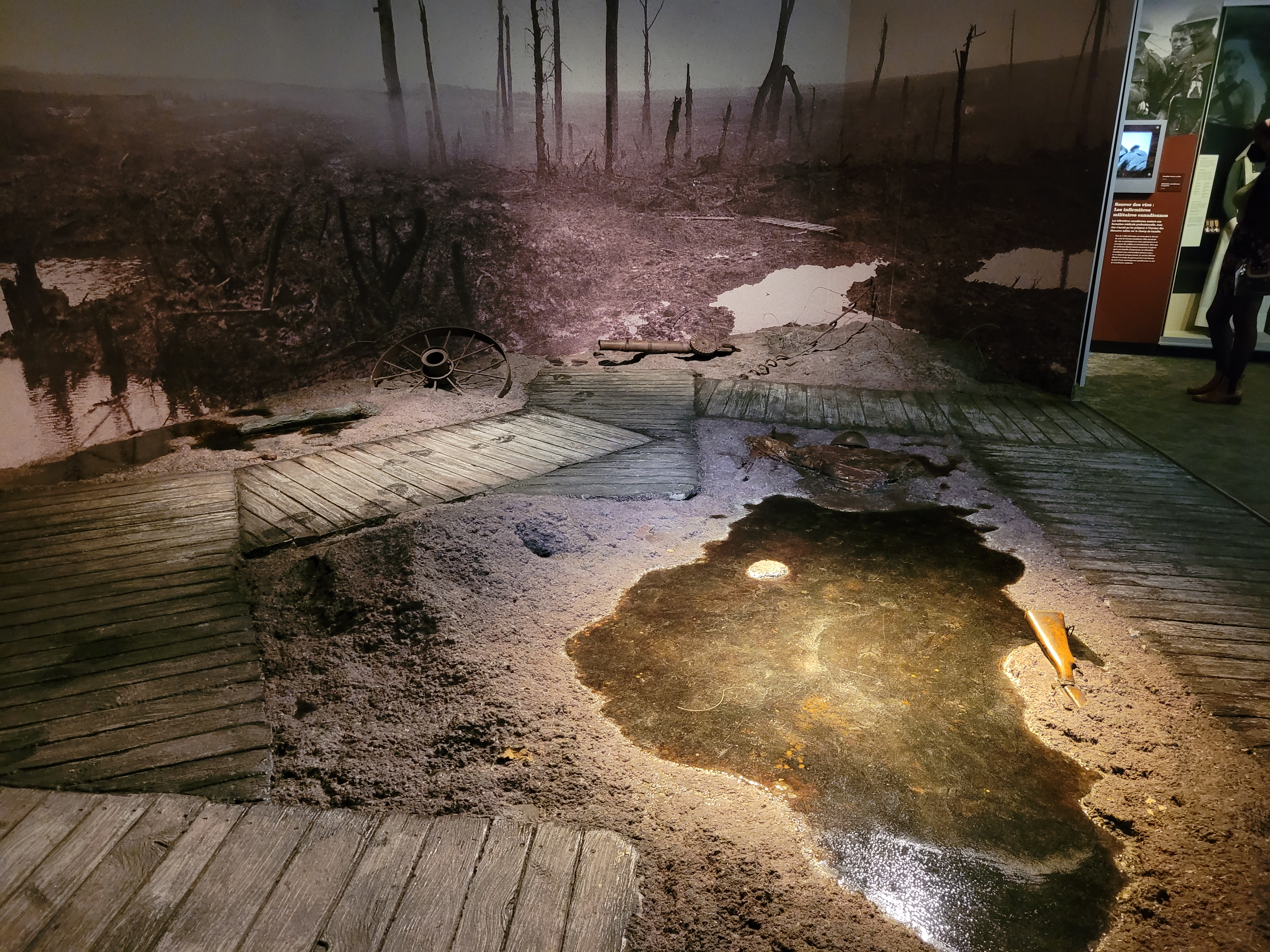
On the front, there is no more fitting example of hell on earth during that war than the Battle of Passchendaele, a bloody victory by Canadian soldiers in 1917.


A recreation you can walk among is here, with large photography on the wall, and equipment and even a body reproduced in the mud and water.


Two Canadians of the same rank fought with valour at Passchendaele, and their story is detailed here, with only one of them surviving.

Sunday, November 27, 2022

For Queen And Country

 The concluding years of the 19th century was a heady time for the British empire, with Queen Victoria marking her 60th anniversary as Queen not just of Britain, but all of the empire, including Canada.


In the mix of this came the South African War, a conflict between Afrikaaner farmers and the British. Canadians would be drawn into it.


Prime Minister Wilfred Laurier had to figure out how to deal with more than one side to the issue.


Canadian troops would be sent halfway across the world and take part in a war that, perhaps because of its proximity in time to a greater cataclysm in the First World War, is often overlooked.


I leave off today with weapons of the time.