Friday, May 5, 2023

From One Style Into Another

 Venus Plucking The Wings Of Cupid is a bronze sculpture by Massimiliano Soldani, dating to 1715-20, depicting the story of mythology, with the goddess uncharacteristically angry.


One last look at this wide space.


Going back and finding a side corridor, I made my way to the other end of the closed off space. Here we find works by Gustav Klimt. Two of them are on extended loan to the Gallery (no pictures allowed, more's the pity). This one is from the permanent collection. Hope I is from 1903, made all the more poignant when you know the artist's infant son had died the year before.


Van Gogh painted Vase With Zinnias And Geraniums in 1886.


Vilhelm Hammershoi was a Danish Impressionist, and this painting is a recent acquisition. Sunshine In The Drawing Room dates to 1910.


And today I finish off with a work by the greatest of the Impressionists. Monet painted Rough Sea in 1881.

Thursday, May 4, 2023

Masterpieces Of A Bygone Period

 Elisabeth Louise Vigee  Le Brun was a prolific artist from France who spent time in exile during the French Revolution. Here we have Countess Anna Ivanova Tolstoya, a 1796 work by her.


Anne-Louis Girodet de Roucy-Trioson painted this portrait with a showstopper of a name- Erneste Bioche de Misery in 1807.


A wider view.


Wisdom Defending Youth From The Arrows Of Love is a large 1810 canvas by Charles Meynier.


Love Seduces Innocence, Pleasure Entraps, And Remorse Follows is by Pierre-Paul Prud-hon, dating to 1809.


The next couple of gallery spaces were actually closed off for reorganization or a new paint job to the walls, so I had to backtrack a bit to link up to further world art. For today, I finish with views of Dancer and this large space.

Wednesday, May 3, 2023

Landscapes, Sculptures, And Myth

 Here we have a view from above of the water fountain courtyard in the National Gallery.


The Salutation Of Beatrice is by Dante Gabriel Rossetti, dating to 1859-63.


This painting has something of a ghostly feeling to it. Man On A Rope is by Honore Daumier, dating around 1858-60.


These two small canvases are Landscape With Gnarled Tree Trunk and Landscape With Woman In Peasant Costume, both dating to the 1850s by Frederick Sandys.


A look back at where I had come from- two people were having a look at Dancer.


I returned, stepping into the room adjoining the larger space, where several works of art are gathered. Bacchus and Ariadne is an 1821 painting by Antoine-Jean Gros, depicting the story from mythology.


Empress Josephine is the title of this bust by Joseph Chinard, dating to 1805-08.

Tuesday, May 2, 2023

The Lady In Marble Feels Quite Alive

Dancer is a marble sculpture by Antonio Canova, done between 1818-22, roughly life sized and mounted on a podium. It's such an expressive, even playful sculpture that it feels alive, and ready to move at any moment. This has long been my favourite sculpture in the Gallery.


I slipped into a side hall. This work by an unknown British artist is View On The River Wye, circa 1830.


Windsor Castle From The Great Park is the title of this 1846 canvas by David Cox the elder.

Monday, May 1, 2023

City Daily Photo Theme Day: Museum

 The first day of each month is a theme day for members of City Daily Photo, and that theme this month is Museum. Check out how others are handling the theme right here.

I am in the midst of a series on the National Gallery of Canada, one of several national museums in the national capital area. This first view today looks into a long gallery space, with my favourite statue in the building at the far end.


Here we have an experiment in art gone wrong. Charles Churchill is a 1755 portrait by Joshua Reynolds. The artist experimented with pigments that have since vanished, resulting in the ghostly pallor of the subject. 


River Landscape With Cattle Watering And Ferry Boat is by Thomas Gainsborough, dating to 1754-56


This marble bust, done in the Roman clothing style, is of one of the great heroes of British- and Canadian- history. Joseph Wilton carved General James Wolfe around 1760.


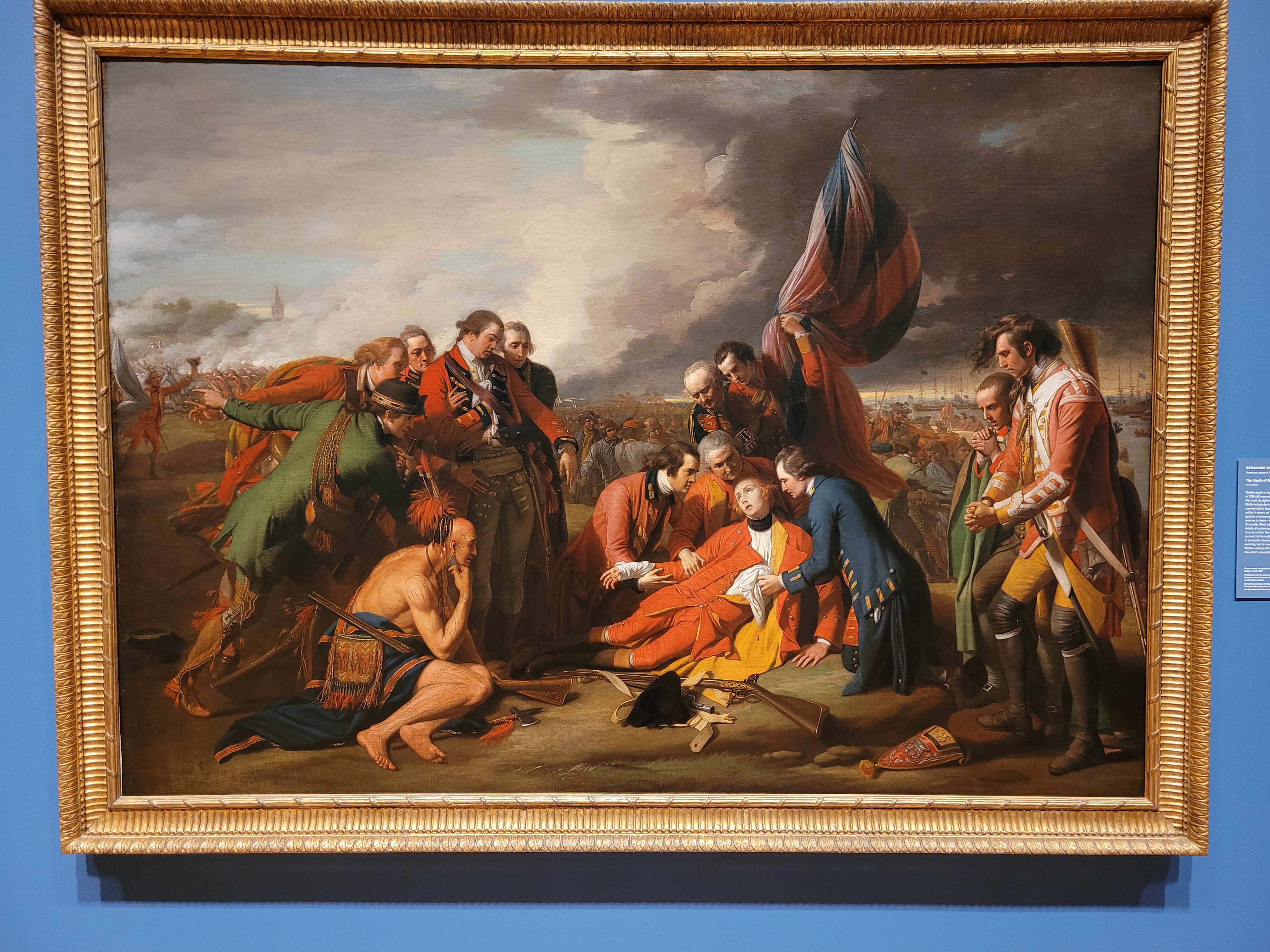
It was Wolfe who led British, Canadian, and First Nations forces at the decisive Battle of the Plains of Abraham at Quebec City during the French and Indian War, a victory that cost him his life. This large, dramatic painting is The Death Of General Wolfe, by Benjamin West, done in 1770. There are other versions by West out there, but this is considered to be the primary version, and this is the canvas that made his reputation.


Here we have Still Life With Peaches And Grapes, done in the 1770s by Anne Vallayer-Coster.


And for today we'll leave off with this one. View Of Lake Nemi is a 1748 painting by Claude-Joseph Vernet.