Showing posts with label J. R. Booth. Show all posts

Friday, December 1, 2023

City Daily Photo Theme Day: Local History

The first day of each month is a theme day for members of City Daily Photo. This month that theme is Local History. Check what other members are featuring for today right here.

Lebreton Flats is an area lying just west of the downtown core, a place with a lot of history. Here, to the south of the Canadian War Museum, is a landscaped parkland which looks at that history. Its central aspect is a memorial fountain to a woman who once lived here, Lilias Fleck, erected by her family. It was rediscovered in 2013 by workers doing soil clean up and restored. It was lost in the Great Fire of 1900, and found in an area a distance from where it had stood. How that happened remains a mystery. 


Lebreton Flats was largely a working place neighbourhood, with its workers tied to the lumber mills that were around here. Panels tell the story of the place.


The Great Fire would ravage much of this area, being brought to a halt here as well. But the area would never be the same, and by the 1950s, the area was being referred to as a slum. The federal government ended up expropriating the entire area and razing it. One can still, with a careful eye, see the hint of foundations of homes here and there.


Mrs. Fleck's son in law, Thomas Ahern, would have a big effect on the city, building a company with his business partner W. Y. Soper that brought electricity through the city and other improvements.


One last look. The War Museum is over at left, while at centre, across the intersection, is the National Holocaust Monument.

Friday, October 14, 2022

A Rough Lumber Town

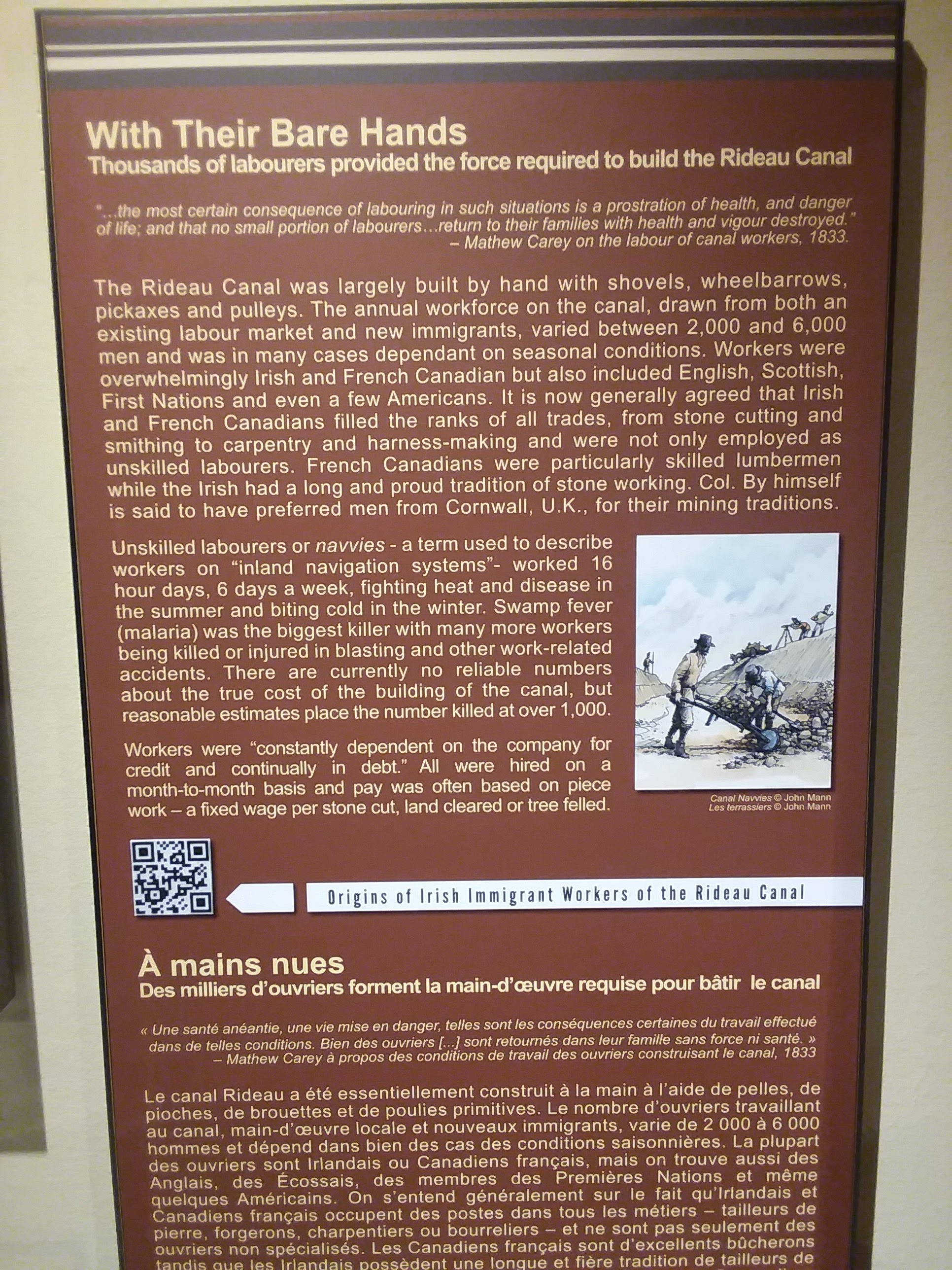
 John By being a military officer, it made sense for him to have enlisted military men, most of them of one trade or another, to be part of the Rideau Canal project, working alongside and leading the civilian men also working on it.


It was a project of thousands, and many of them died in accidents or of illness. This also applied to their families.


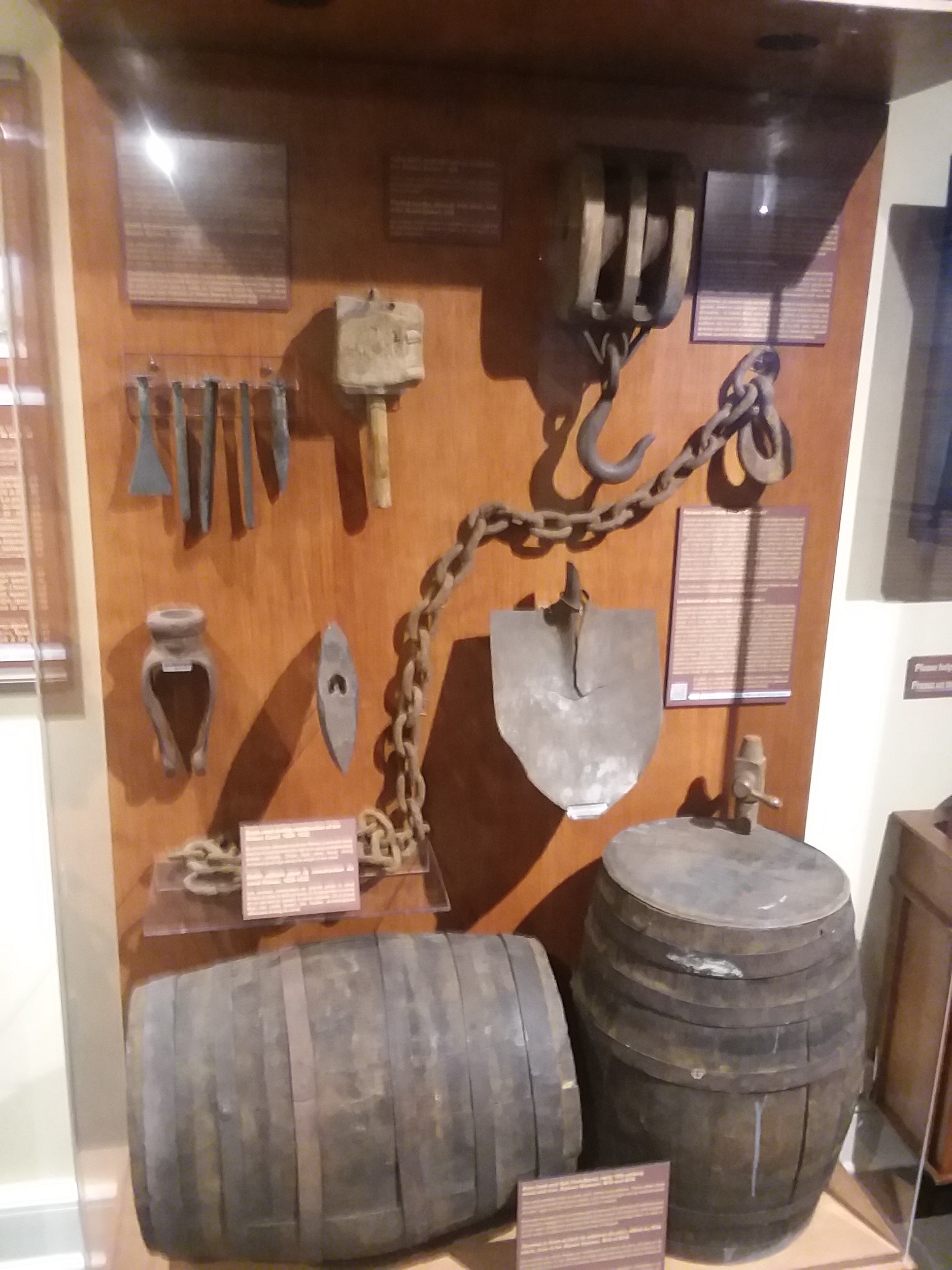
Some of the tools and equipment of that time are in this display case.


Bytown would become a focal point of the timber industry in North America at this time.


This table, featuring thousands of pieces of inlaid wood, was created by a manager at the E.B. Eddy company and displayed at the Philadelphia World's Fair in 1876.


The painting here is of J.R. Booth- the pre-eminent timber baron of the age in Canada. Artifacts of his life are below.


Throughout the Ottawa Valley and beyond in the 19th century and into the early 20th, the lumber industry went on- heedless of consequences, with no thought of sustainable logging- with many men taking part in it.


A display case here includes some typical lumberman's items. Note the studded boots- absolutely essential for maneuvering on a collection of logs in the water.


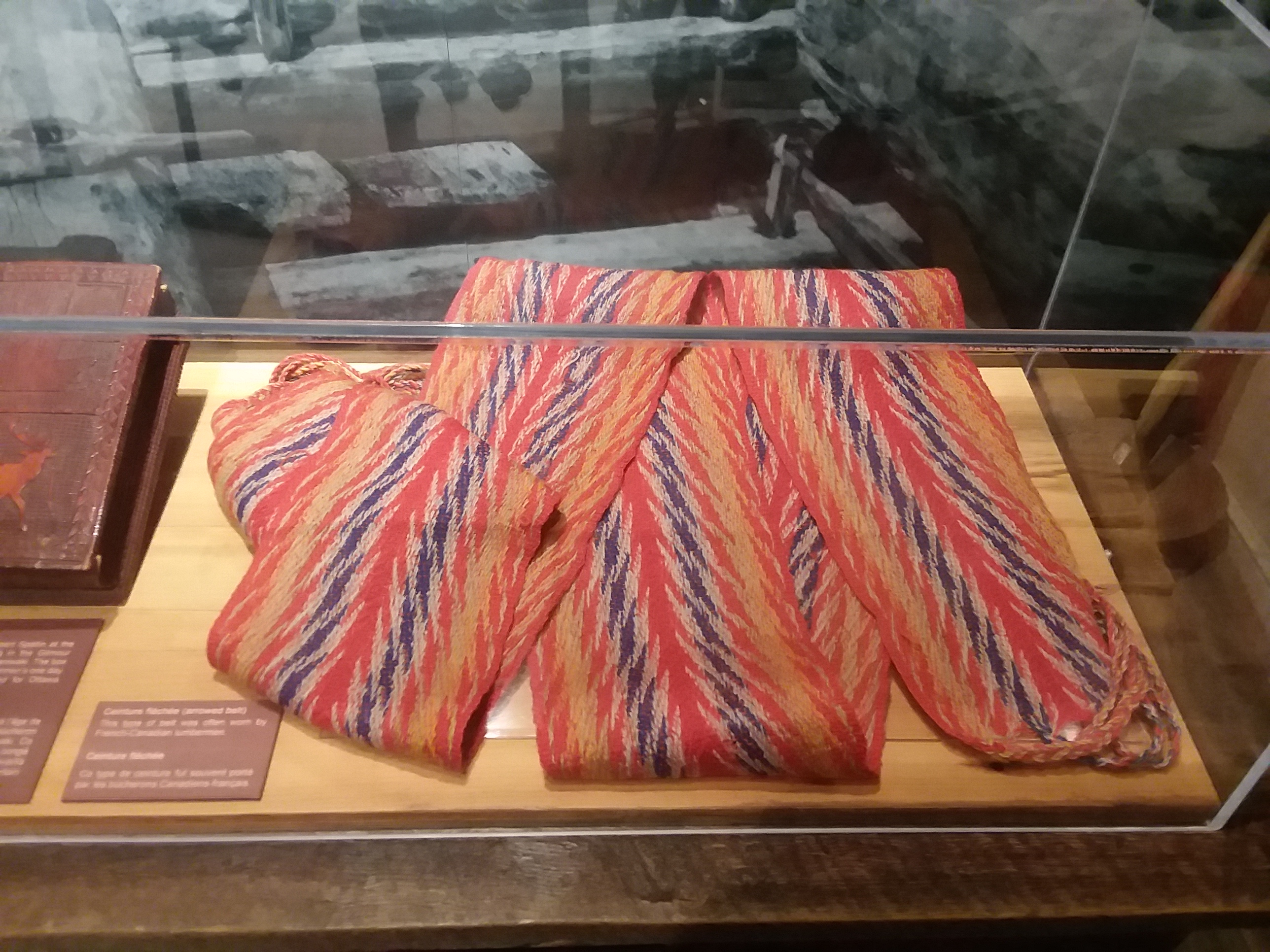
One of them led a life that became a legend. Joseph Montferrand ranged across the Ottawa Valley, and stories were told about him down through time that made him larger than life. Stories are still being told about him.


I close today with a close up of that sash.

Saturday, August 12, 2017

Historical Artifacts

This bust of Colonel John By occupies a prime spot within the Bytown Museum.


Close by is the Drummond Cup. One of four silver cups commissioned by the colonel, it was an acknowledgment of satisfaction from By to the construction crew chiefs, in this case, Robert Drummond, after the Rideau Canal was completed. Drummond's work crews were concentrated in the Kingston section of the waterway.


Here are more tools that would have been in use at the time of the building of the Canal.


This display is about Sister Elizabeth Bruyere and the Sisters of Charity mission, who came up from Montreal in the mid-19th century and established local institutions, such as the hospital that still bears Sister Elizabeth's name.


This formal portrait, an oil painting by an unidentified artist, shows the timber baron J.R. Booth, who was hugely influential in the latter 19th century and early 20th century in the city and beyond.


Some of you might remember this from a previous visit. The Hannum Table was crafted by James Hannum, a manager at the E.B. Eddy lumber property, in 1874. This table offers a bird's eye view of the complex, and incorporates over 10 000 pieces of wood, with 19 different kinds of wood used to construct it. This table was exhibited at the 1876 World Fair in Philadelphia. Today the Museum calls it home.


This view looks out one of the windows to the far side of the Canal, a different perspective than I gave you in yesterday's post. The Colonel's statue can just be seen to the left of the center pane frame.


Artifacts and a display panel factor into a section that deals with the Great Fire of 1900, which devastated both Ottawa and the Quebec side of the Ottawa River- what is today called Gatineau was then called Hull. 


Some of the Museum's artifacts have been shifted into a temporary exhibition, such as these two items. The arm chair dates to 1820, and belonged to Colonel By. The chest at its side is a carpenter's chest, one owned by Joseph Summers, a carpenter and foreman who spent fifty years working on Canal maintenance. His family donated the chest to the Museum's collection after his death- and before the Museum actually took possession of this building.


I finish for today with something else that caught my eye. This daguerrotype camera dates to around 1854, built of wood, brass, and glass. It was furnished by a New York company, Palmer & Longking. The fascination with the new technology quickly found its way to Bytown, as it was still being called, and numerous photographers were setting up shop in the city by mid-century.

Tuesday, June 20, 2017

Embassy Row

This is a regular stop for Doors Open weekend, and like the primary subject of yesterday's post, it too is an embassy. The Fleck-Paterson House was built in 1901 by timber baron J.R. Booth as a gift to his daughter and her new husband, and was later the residence of Senator Norman Paterson. These days it serves as the Embassy of Algeria, and its location in Sandy Hill is ideal.


Outside in the back yard, the visitor can walk to the overlook that gives a view of the Rideau River below, and the Vanier Quarter on the opposite shore.


This building also on the property was a coach house and garage back in the day. The building behind it that you can see is the Russian embassy I showed you yesterday, quite a contrast between a beautiful structure and something that's harsh and unforgiving.


I was surprised to come across tulips in the garden as I headed that way. Usually by early June, the tulips are done, but these were still looking good.


The coach house featured several tables laid out with Algerian items and crafts, as well as coffee table books, and members of the staff chatting with people. The wooden box particularly caught my eye, and on my way out, I stopped for a cup of particularly tasty mint tea that was offered.