Sunday, December 4, 2022

Victory In The Last Hundred Days

 This is the uniform of a so called Bluebird, nurse Alma Finnie, who served during the war in France. The dedication of nurses in the cruelest of conditions cannot be understated.


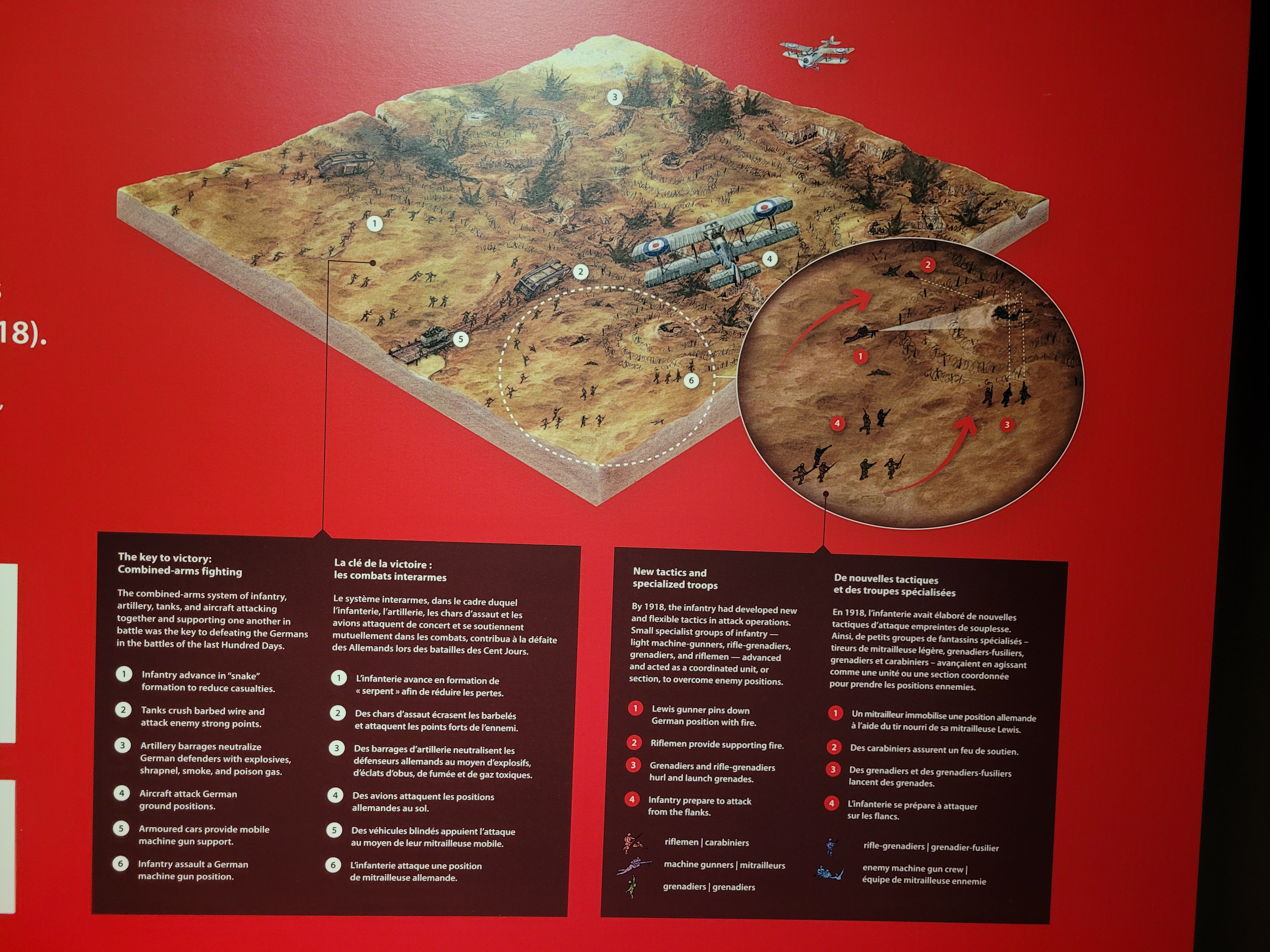
The First World War would end in what's been called The Hundred Days: the push by Allied forces that won the war. What won it? A formula called combined-arms fighting, or the coordination of infantry, artillery, tanks, and air working together in tandem. Four years and millions of lives down the drain. If only they'd figured this out so much sooner.

Some of the weapons of the time.


While many Canadians fighting in the War were white, not all of them were.


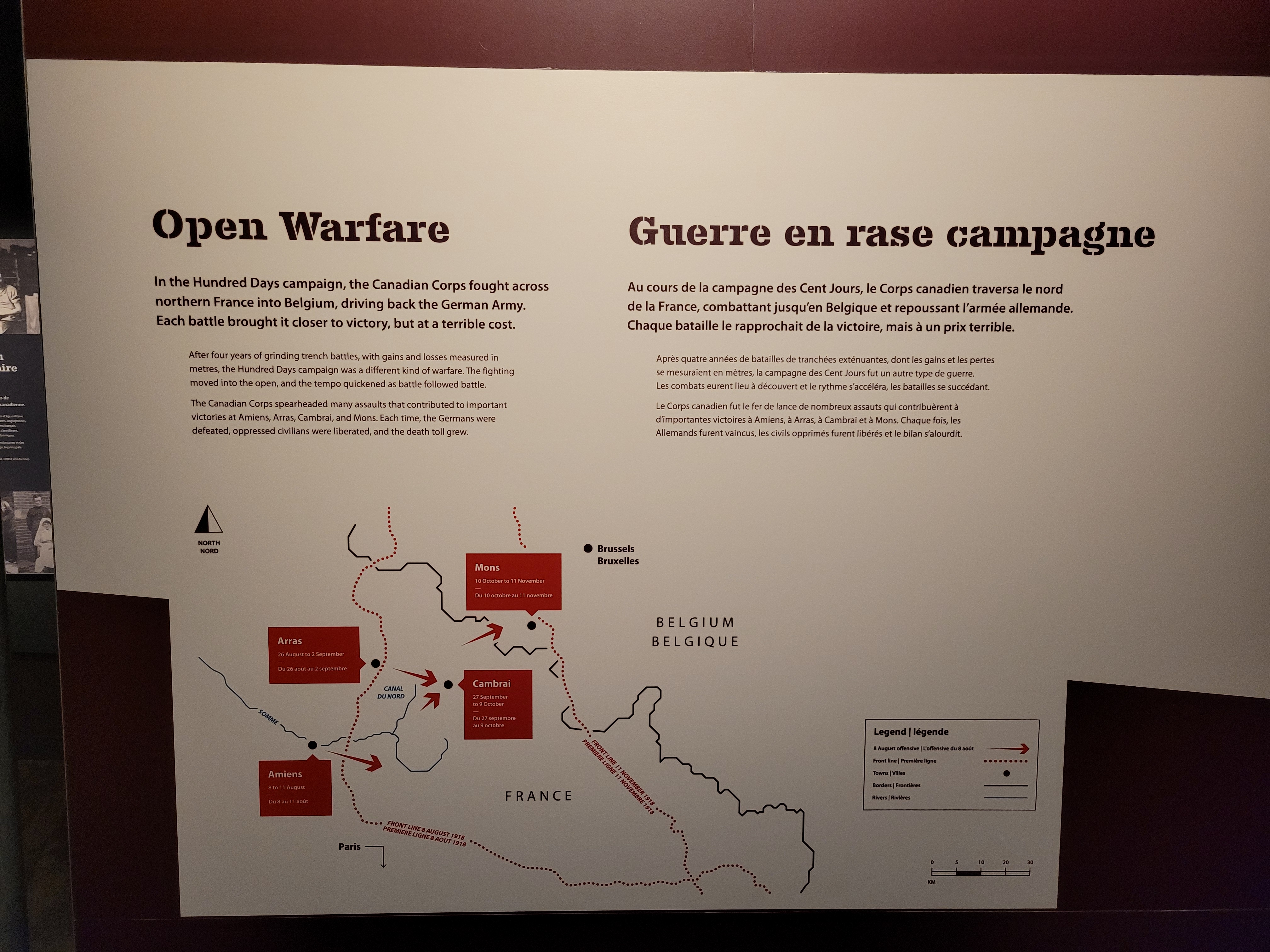
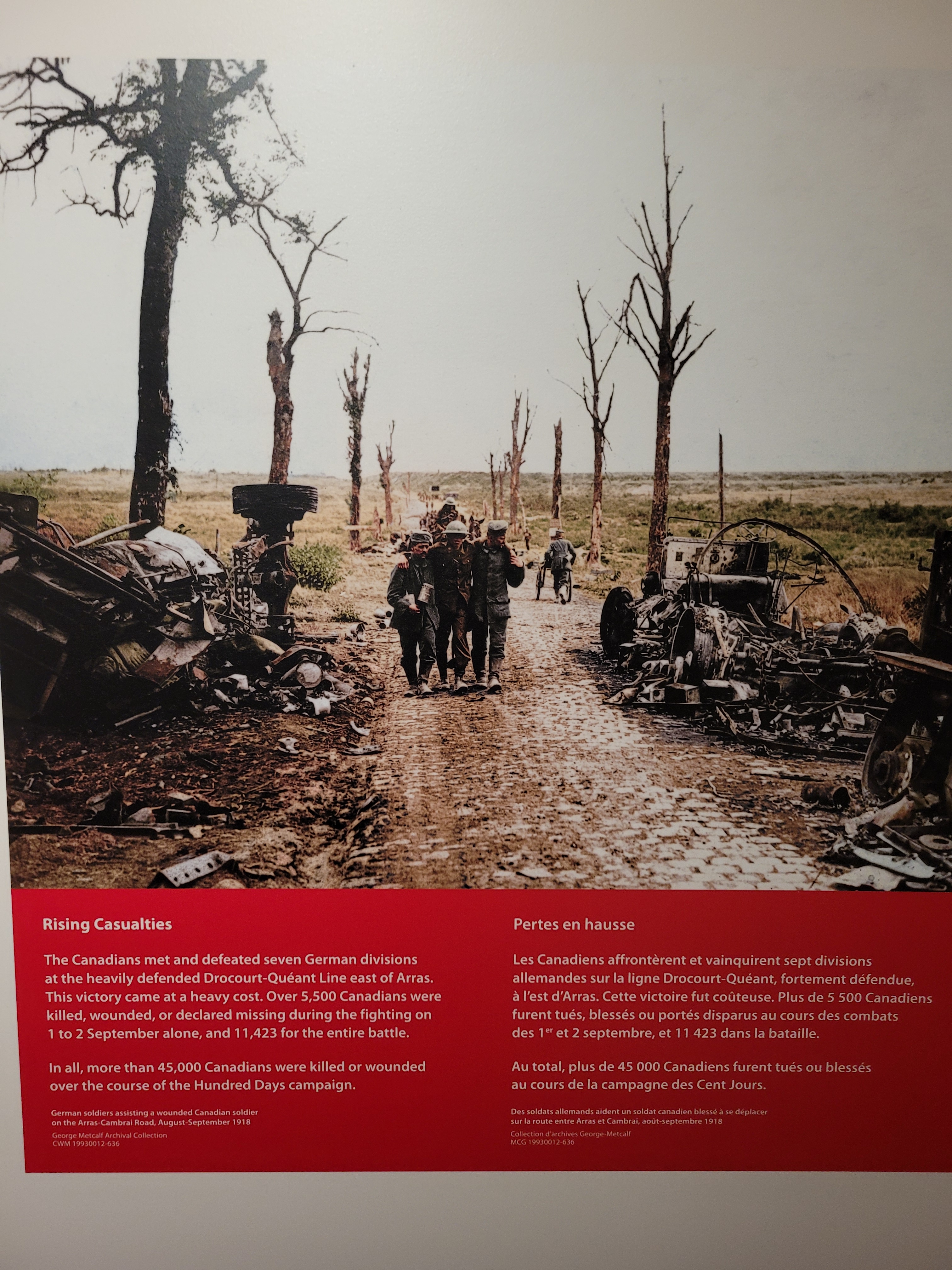
Once the Allies had actually figured out the value of combined-arms fighting, the stalemate was broken, and the great push all along the line was unleashed. During The Hundred Days, Canadian soldiers fought battles against the Germans time and time again, pushing towards victory.
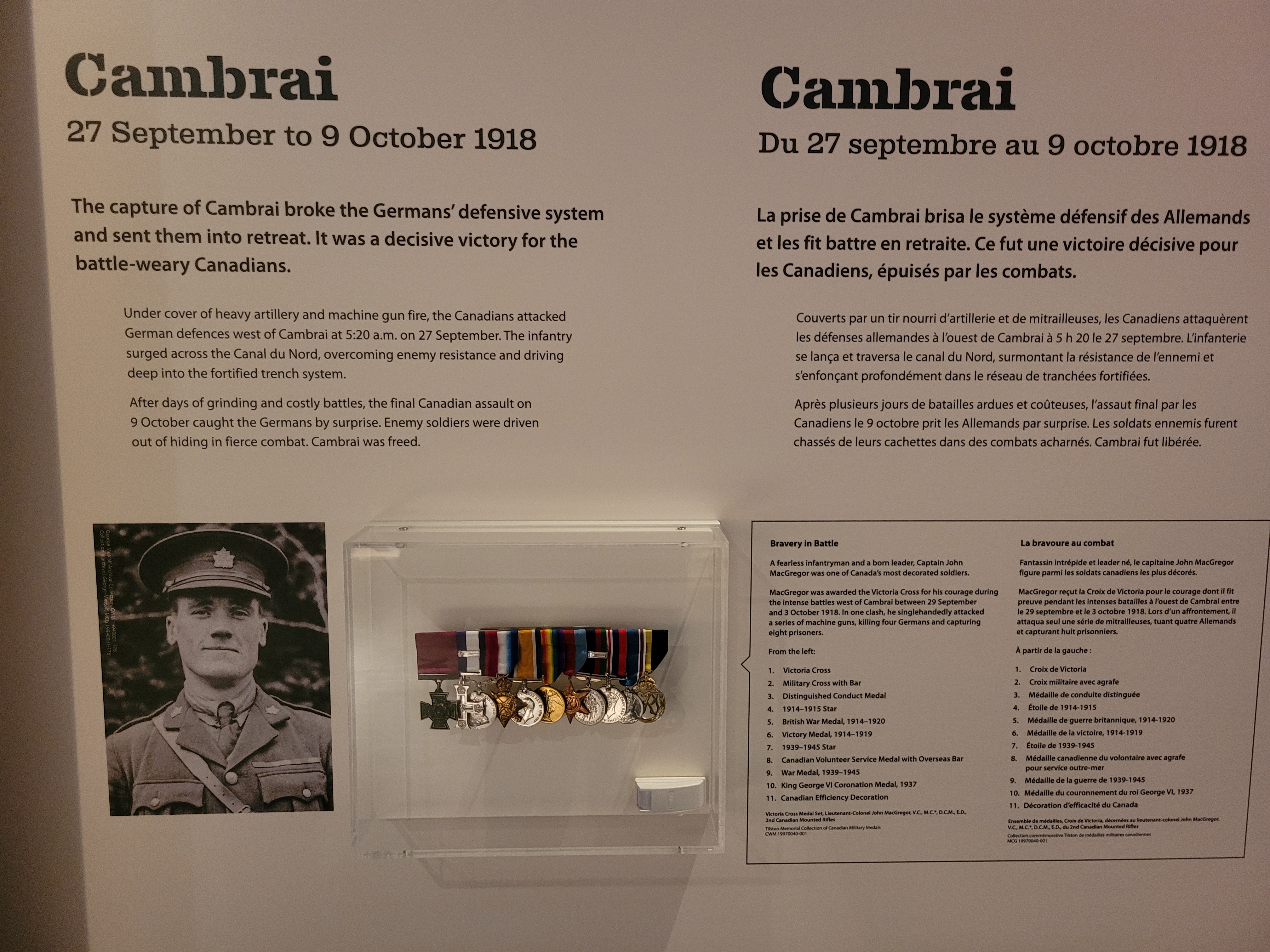
Their stories include men like Captain John MacGregor, whose bravery and leadership during this time won him distinction.

Sergeant Hugh Cairns showed that same level of bravery, but would not survive the war.


While the war would not lead to the kind of peace that could prevent another, at least for these people the Allied victory meant something: people who had been under occupation from the start, and which had been liberated by Canadians. The joy on their faces speaks volumes.


A handmade Red Ensign- the Canadian flag of that time- is seen here, a gift from the liberated.

Saturday, December 3, 2022

War At Home, Hell Upon The Front

Family portraits from the time of the First World War are gathered together, adding to the poignant tone of this part of the Museum.


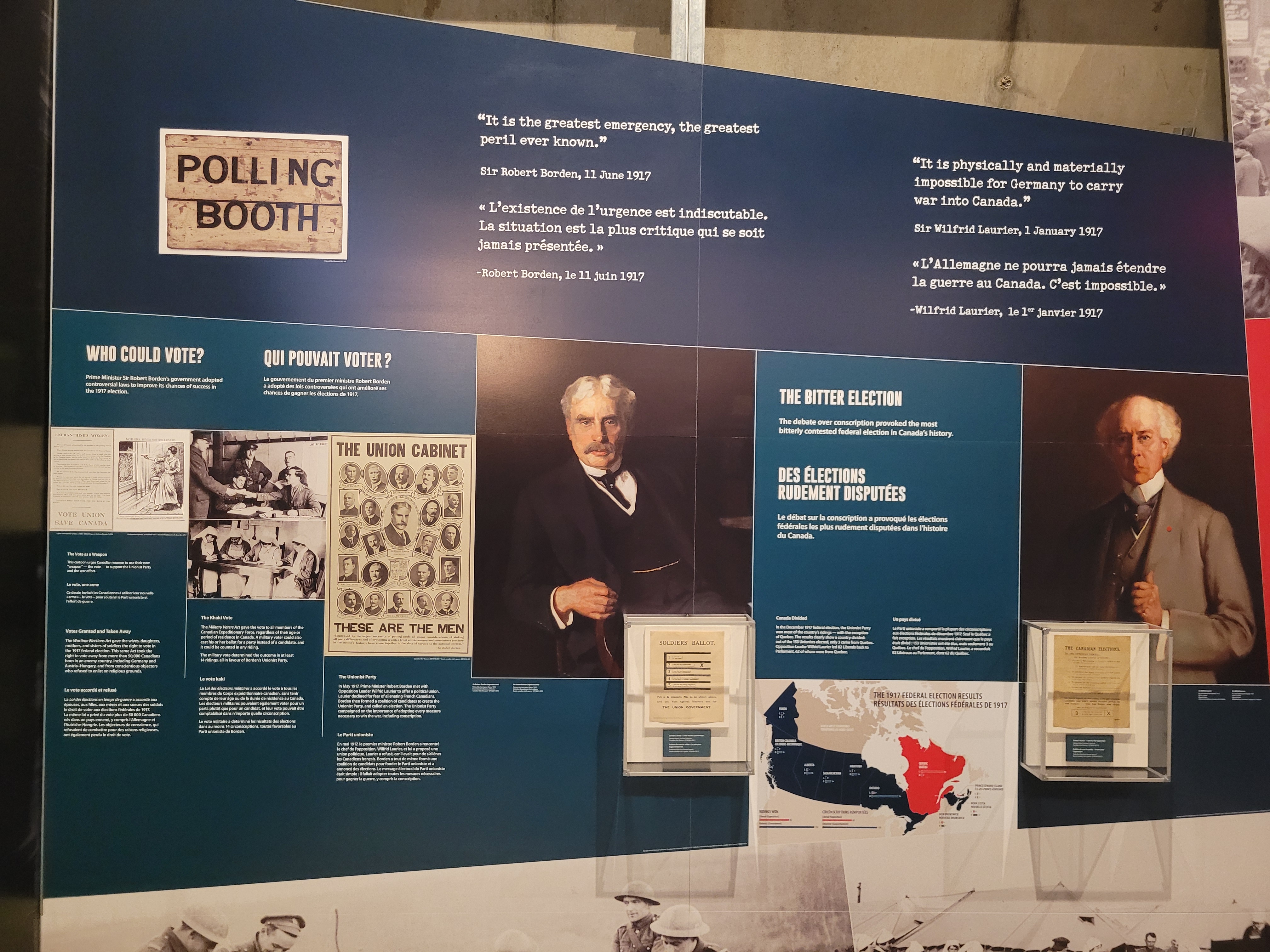
The 1917 federal election was the most bitterly fought election in the country's history, with the question of conscription at its heart. Prime Minister Robert Borden and Liberal leader Wilfred Laurier, a former PM in the twilight of his life, represented different world views on the matter.


This collage of newspaper pages of the time does catch the eye.


There is war art here as well, such as Land Girls Hoeing, by Manly Macdonald.


A large painting nearby is by one of Canada's greatest artists. Arthur Lismer of the Group of Seven was a commissioned war artist at the time, and the painting is Convoy In Bedford Basin. This is the setting of the Halifax Explosion in late 1917, with the collision of two ships in the harbour, one carrying explosives. This resulted in the worst non-nuclear explosion in history.


Medals related to the explosion are at right. A fragment of one of the ships, blown several kilometres inland, testifies to the violence of the explosion.


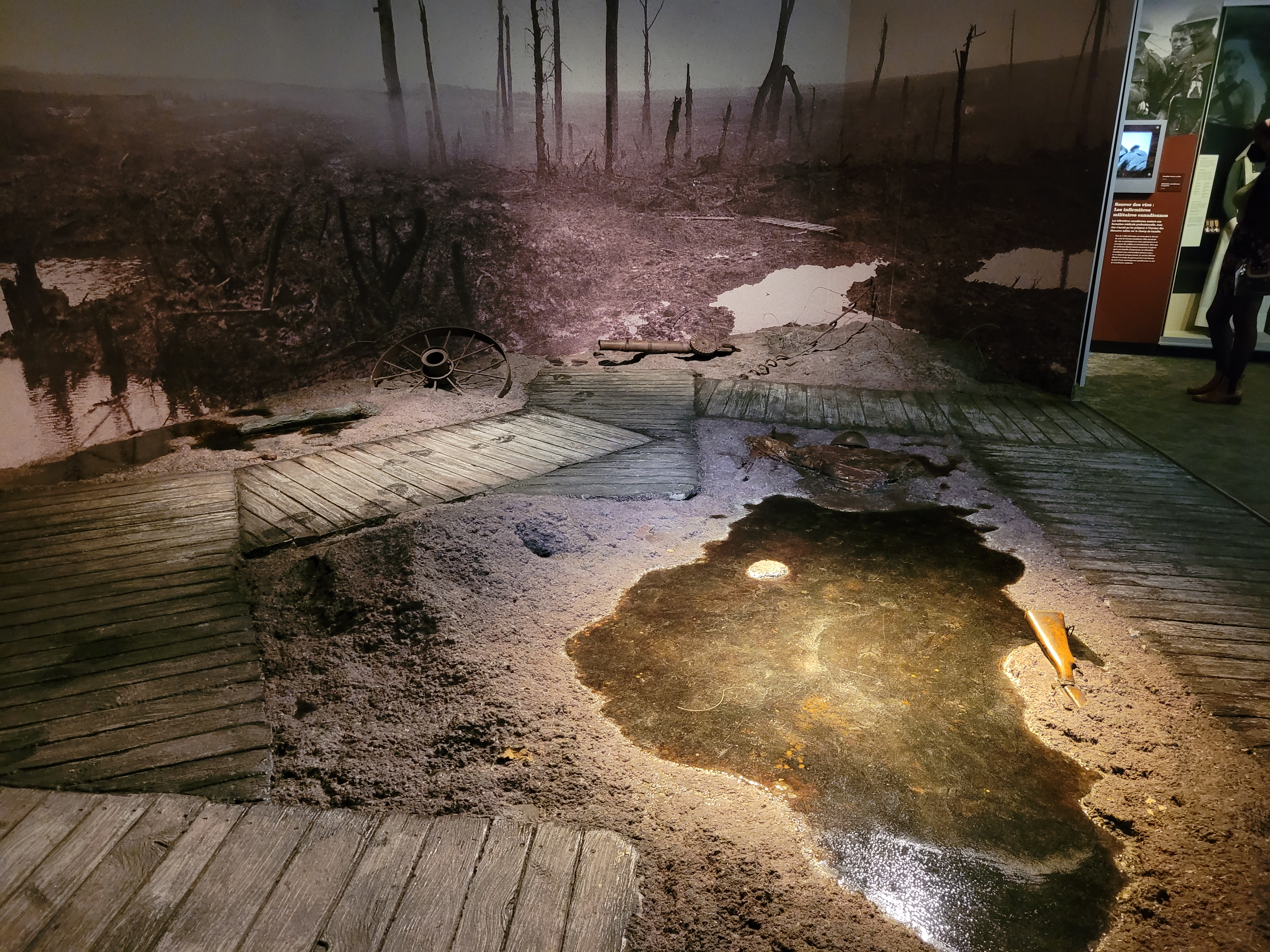
On the front, there is no more fitting example of hell on earth during that war than the Battle of Passchendaele, a bloody victory by Canadian soldiers in 1917.


A recreation you can walk among is here, with large photography on the wall, and equipment and even a body reproduced in the mud and water.


Two Canadians of the same rank fought with valour at Passchendaele, and their story is detailed here, with only one of them surviving.

Friday, December 2, 2022

The Supreme Sacrifice In Wartime

 This large field gun is a perfect example of what this part of the Museum's collection now focuses on: the killing power of the artillery in World War One.


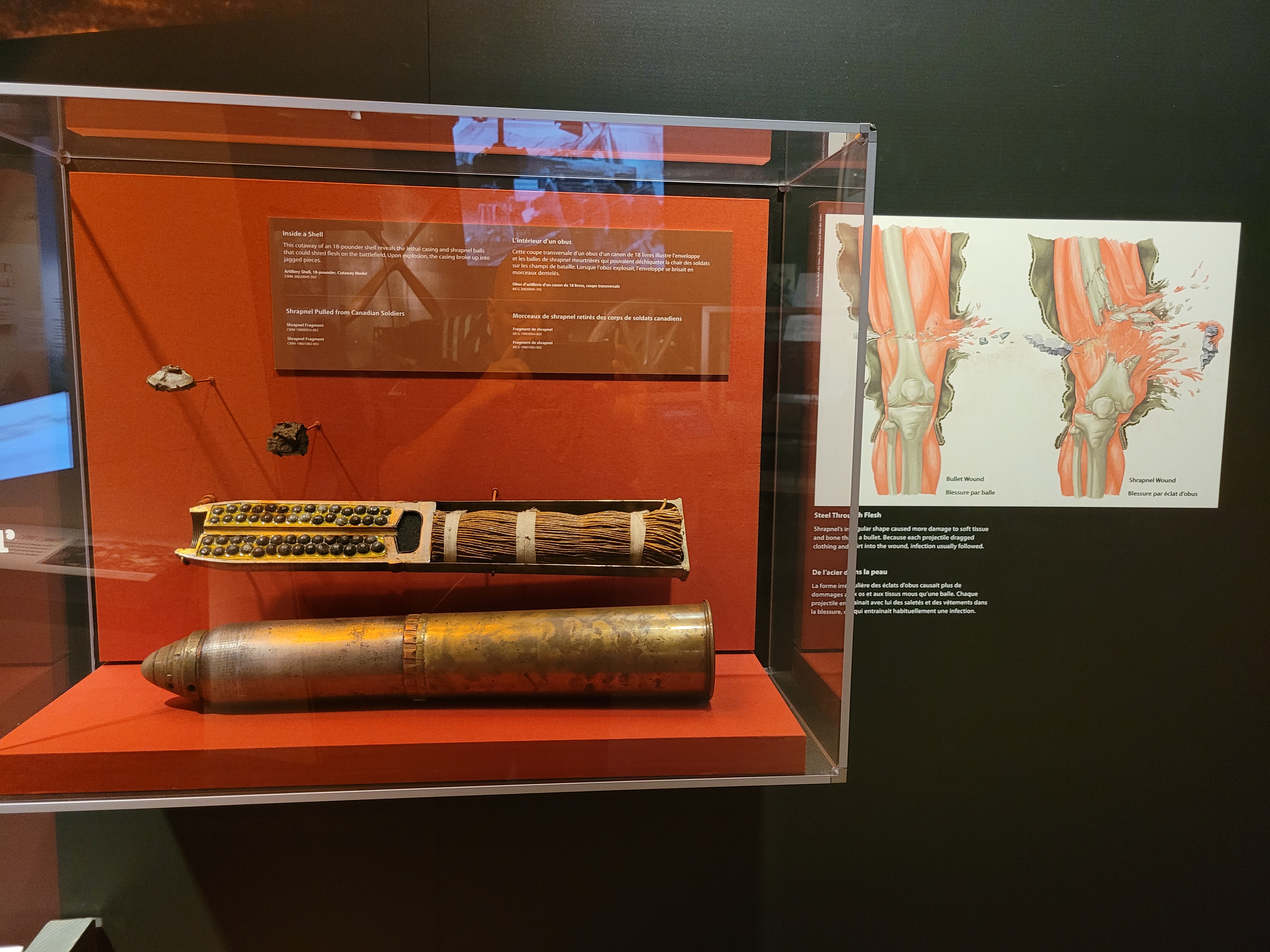
Shrapnel and balls from shells are displayed here.


This display case features a cutaway of a shell, along with shrapnel pieces. The illustration at right is chilling but accurate, demonstrating the sheer amount of damage a piece of shrapnel could do to the body. A bullet wound you'd probably survive. Shrapnel would leave you forever wounded, but probably dead.


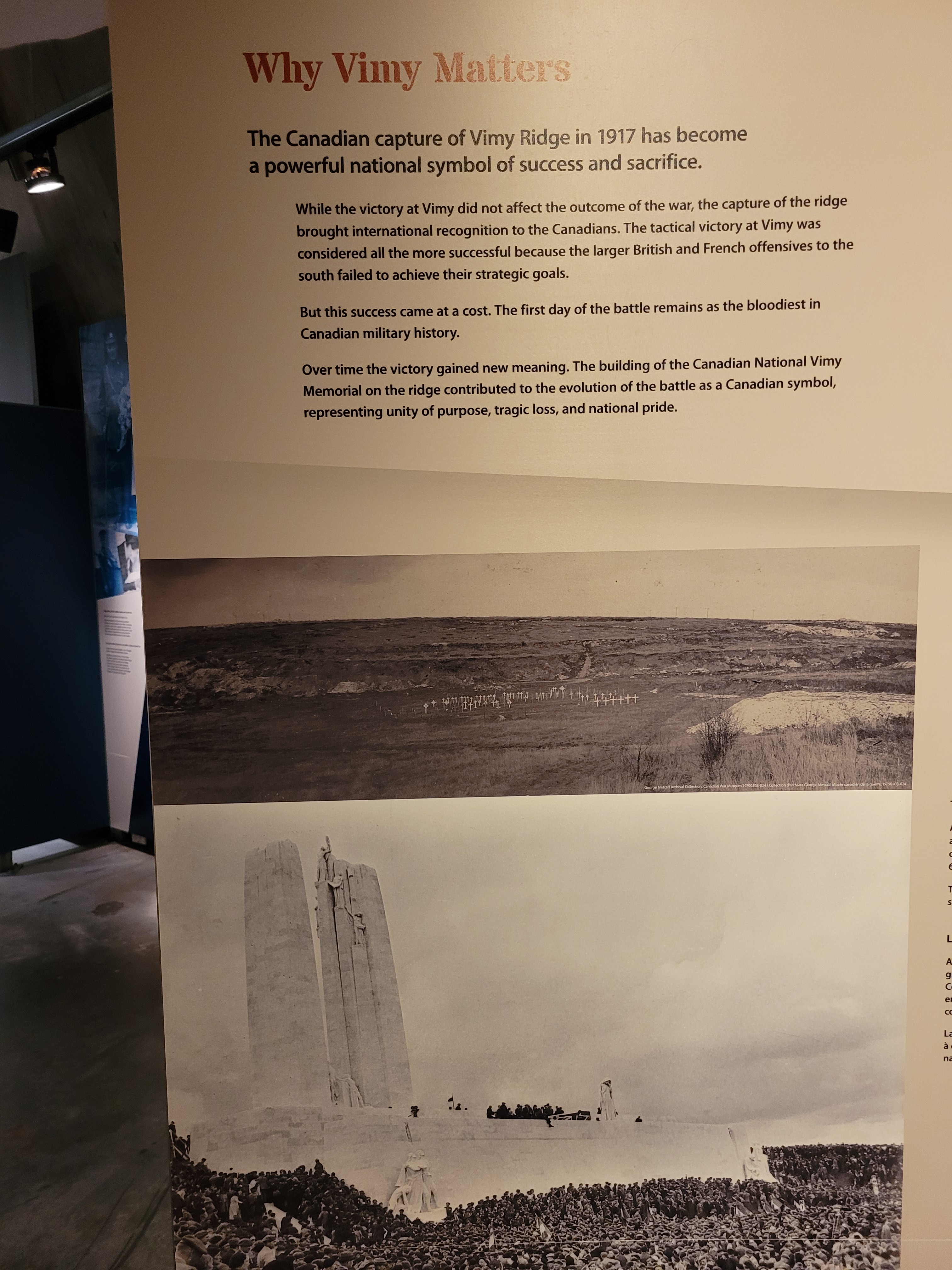
Stepping out of this area, panels look at the meaning of Vimy Ridge in the context of Canadian history. A massive memorial would be erected at Vimy, with the land given to Canada by France.


This photograph always intrigues me: Canadian soldiers after the battle. The faces of men who know they've done something that couldn't be done- but they did it anyway.


The next portion of the gallery looks at the war at home, and is particularly poignant.


This service flag belonged to a family who sent four sons to war. One came back.


A child's toy and books are displayed beneath a clock. The clock itself was made by a company in what is today Kitchener, Ontario. During the war the town changed from its original name of Berlin.


This small bear and letter are among the Museum's most touching artifacts. The bear was carried by a father, and the letter is from his son. They are among several artifacts belonging to the family. Lawrence Rogers would not live to see the end of the war.

Thursday, December 1, 2022

City Daily Photo Theme Day: Luxury

 The first day of each month is a theme day for members of City Daily Photo. For December, that theme is Luxury. Check out how other members of the group are taking on the theme right here.

Two hotels came to mind for me for this theme, and we start with one. The Chateau Laurier is the grandest of hotels in Ottawa, opened in 1912 and built in a French Gothic Revival Chateauesque style as a compliment to the Parliament Buildings, which lie to the west. To the east, as seen from here in Major's HIll Park where we are seeing the Chateau in the distance, is the Connaught Building, a government building and castle of sorts. I took these shots a few days ago.


For the second half of his career, the pre-eminent portrait photographer of the world, Yousuf Karsh, had his studios in the Chateau. A few years ago this bust was erected in his honour outside.


Inside, the hotel is inviting, with its walls adorned with art and photographs dating back through the Chateau's history.


A look from out front and across the road. The statues and busts seen to the left are part of the collective group called The Valiants- figures of Canadian military history.


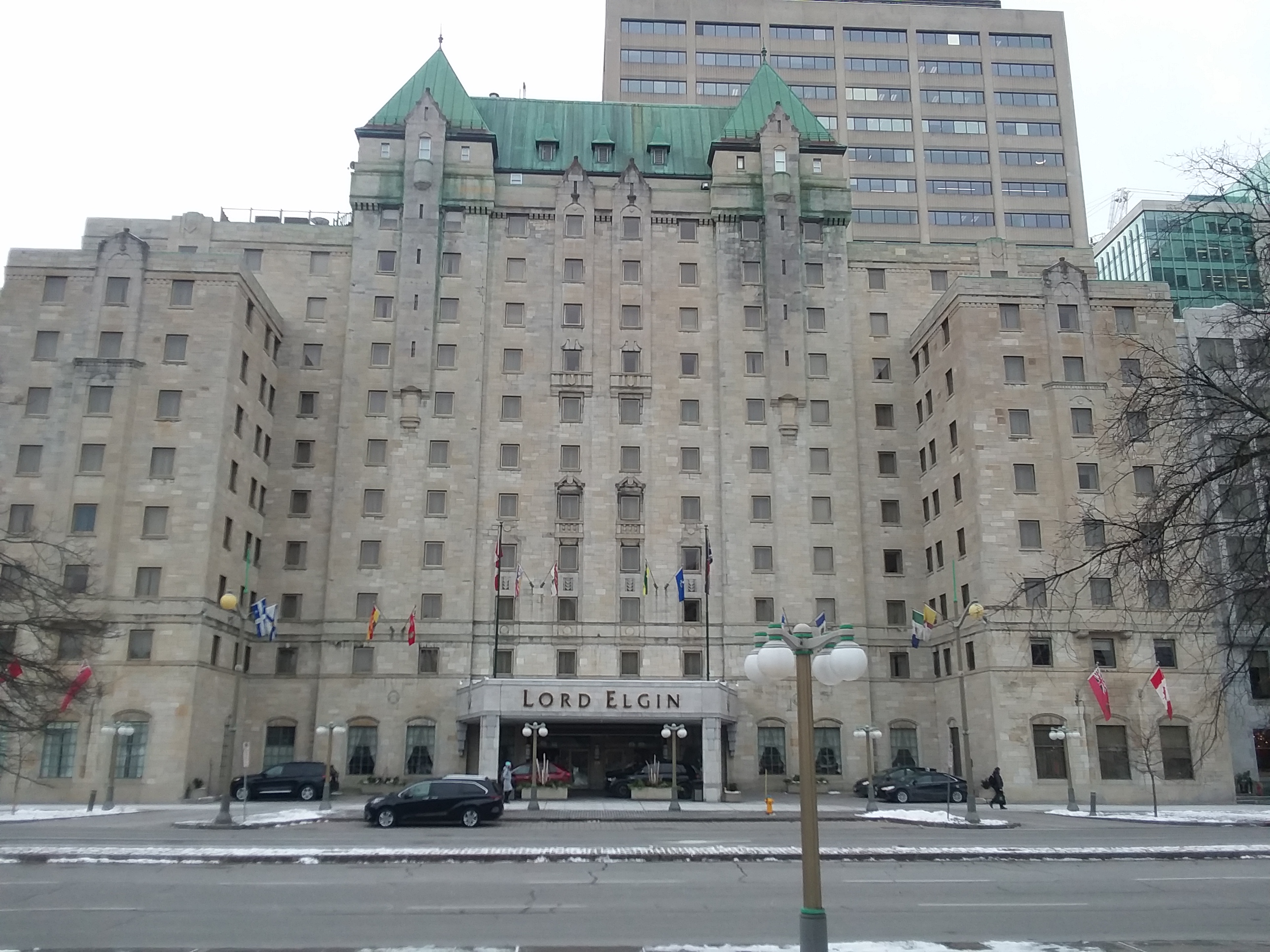
Down the road from there is another luxury hotel- the Lord Elgin Hotel. Named for a governor-general of the 19th century and dating back to 1941, it looks out over Confederation Park.


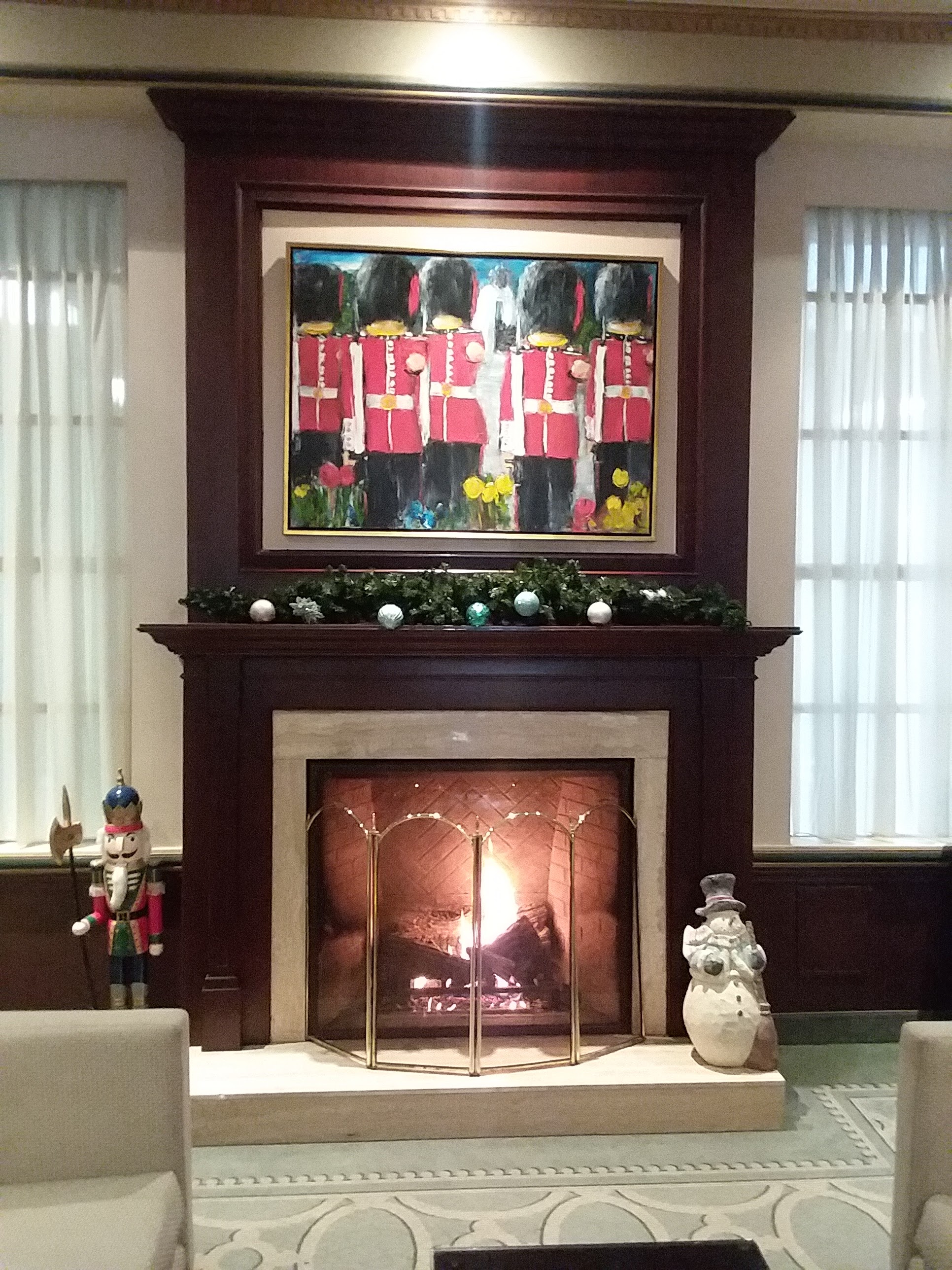
Inside, this fireplace drew my attention. This being that time of the year, Christmas decorations have already started to make their presence known in both hotels.


Two marble busts are present, flanking the main entrance. This is Maria, Lady Elgin.


And this is James Bruce, Lord Elgin.