Saturday, January 8, 2022

The Aerodrome Of Democracy

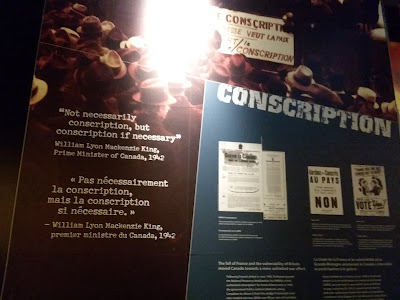
 The question of volunteers versus conscription was one that lingered throughout the war years in Canada.

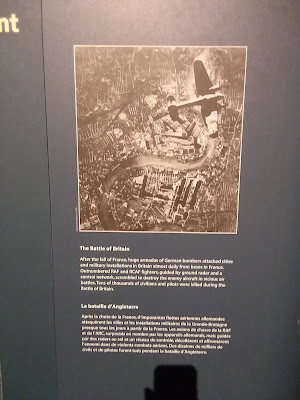
Canadians served in the air alongside British and other allies during the pivotal Battle of Britain.

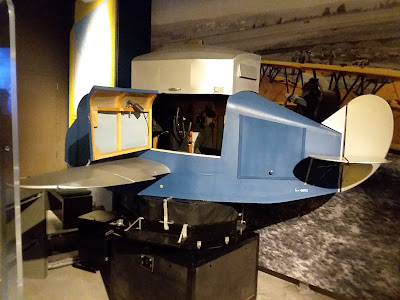
The Link Trainer is a predecessor to flight simulators. It was one way to get novice pilots to learn before putting them up in the air.
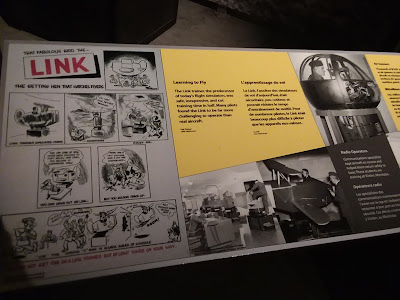

This is one of them.

Canada, Britain, Australia, and New Zealand formed the British Commonwealth Air Training Plan in 1939. BCATP bases were established across the country, giving pilots a safe ground for learning how to fly for real. President Roosevelt, sympathetic to the Allied cause but contending with an isolationist sentiment at home prior to Pearl Harbor, called Canada the aerodrome of democracy.
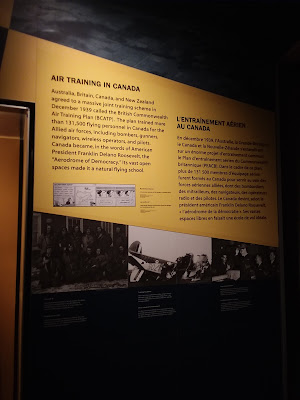

With so many men joining the war effort directly, women went to work, including in the BCATP.
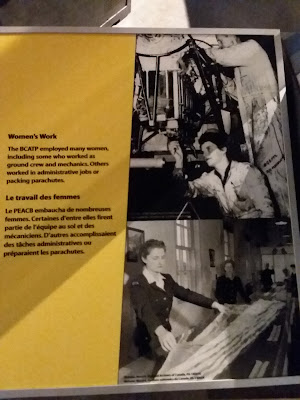

Actor James Cagney made a film, Captains Of The Clouds, about the organization. Canadian ace Billy Bishop, who had flown to glory during the First World War, was a consultant for the film.
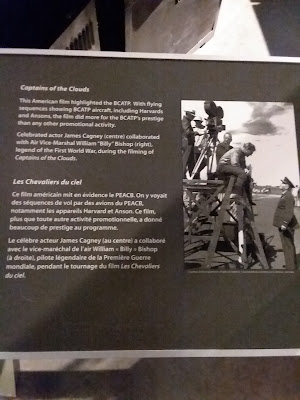

There were a lot of bases across the country for this work.


Merchant mariners were part of the war effort, though not recognized as veterans until decades later. The effort to bring supplies to Europe started from the first day and lasted until the end of the war, and it was hazardous. The Battle of the Atlantic was the longest campaign of the war.

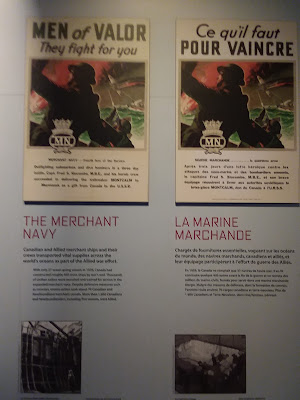
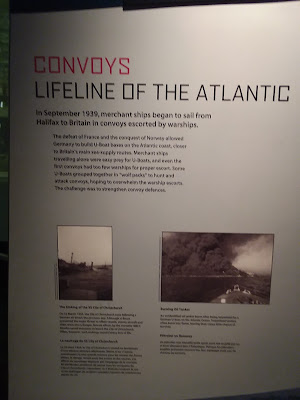
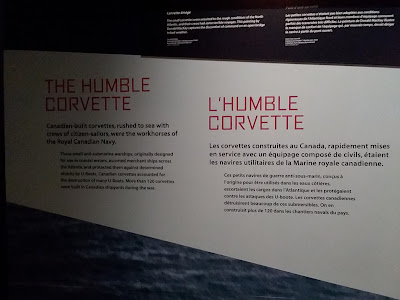
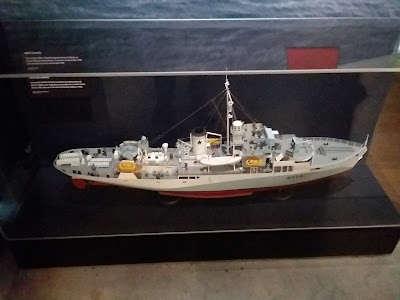
The corvette was a class of escort ships used by the Canadian navy during the war. They saw a lot of use throughout.

This is a model of one of those corvettes, the H.M.C.S. Chamblay, which was in war service from 1940 through 1945.
Friday, January 7, 2022

From One Cataclysm To The Next

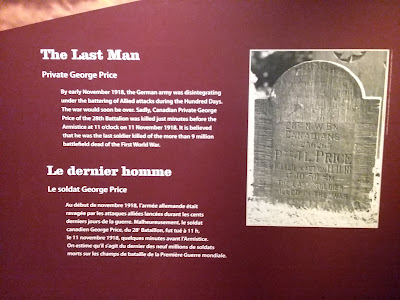
 It is thought that Canadian Private George Price was the last soldier to die in the First World War, certainly the last Commonwealth soldier. He was shot dead two minutes before the armistice came into effect on November 11th, 1918, at Mons, Belgium- the end of the line for Canadian forces in the war.

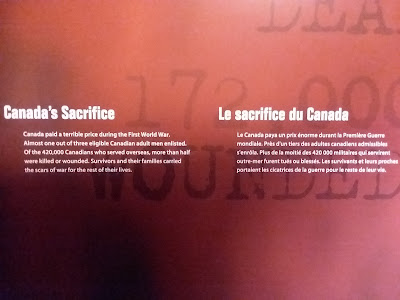
The cost for the country was a high one. An entire generation of men: killed, wounded, traumatized, or otherwise marked by the memories of war. Families whose lives would be forever changed by it. This was typical, of all sides.


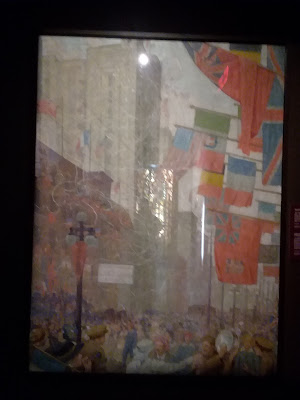
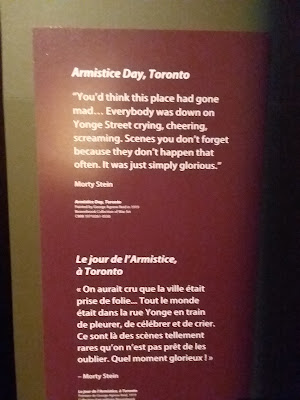
George Agnew Reid painted Armistice Day, Toronto, after the war. 


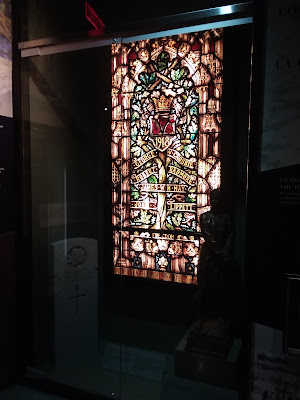
In the wake of the war, people tried to make sense of what was left. Cenotaphs and memorial windows went up in town squares and churches. Temporary grave stones were replaced by the familiar site of the Commonwealth War Graves Commission- an organization created during the war- and one of which is displayed at bottom left here.


The aftermath of World War One merely set the stage for the Second World War. Instead of seeking to ensure that another war would not happen, the victors sought harsh payback. This created the conditions for the later rise of the Nazis in a Germany that resented that harshness. Hindsight is 20/20, as they say.

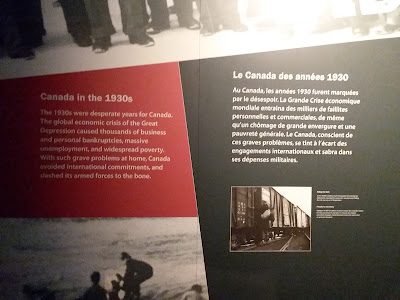
The next section is about the Second World War. Canada in the 1930s was as affected by the Depression as much of the rest of the world.


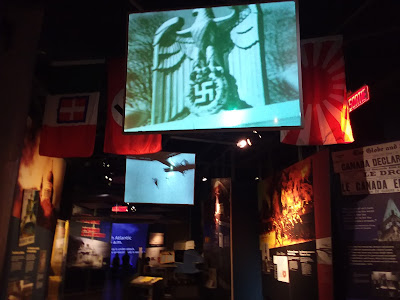
The rise of the powers later called the Axis is examined in this first portion of the gallery. Videos and flags of those powers are seen here.


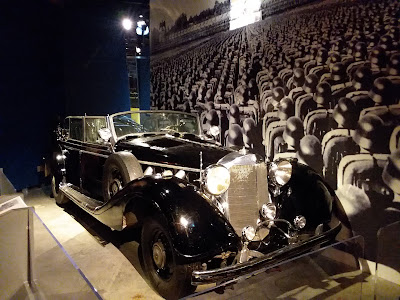
This is one of those trophies of war: one of Hitler's cars. It's the first thing the visitor sees entering this gallery.


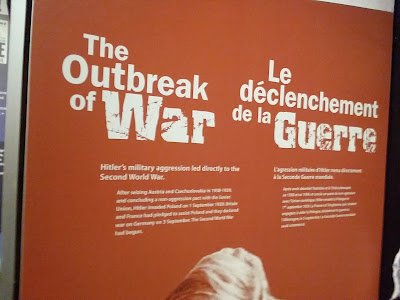
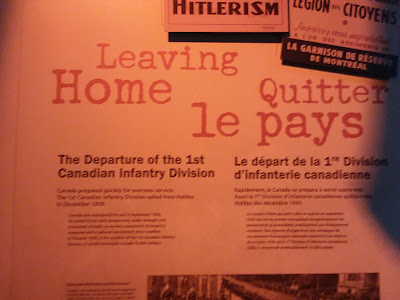
Canada declared war after Nazi Germany invaded Poland. Troops were signed up for the journey to Europe.


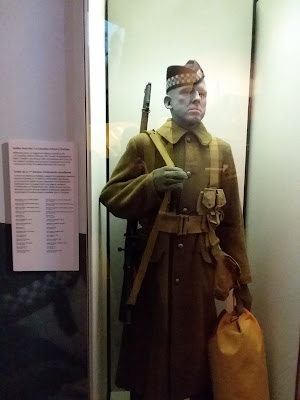
A mannequin sports the typical uniform of a soldier.


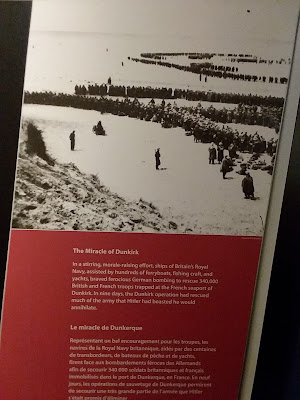
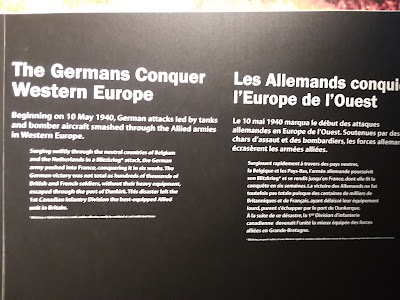
Early on in the war, the Miracle of Dunkirk: the salvation of an army of men from France as the Germans overwhelmed Allied forces in their blitzkrieg through France. The salvation of that army would one day come back to haunt the Nazis.

Thursday, January 6, 2022

The Hundred Days: A Path To Victory

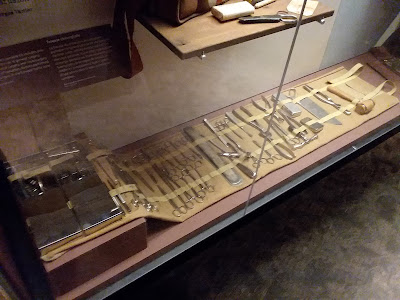
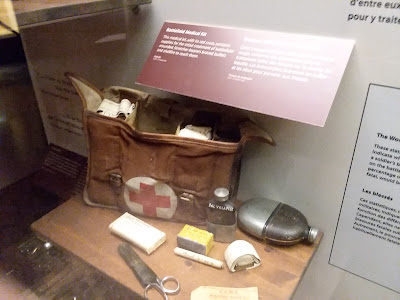
Battlefield medical supplies are seen here going back to the time of the First World War. 


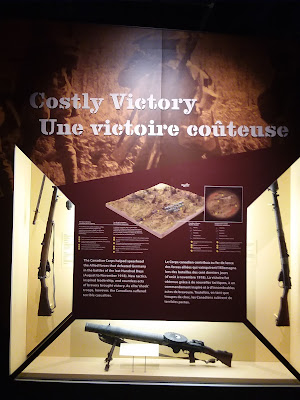
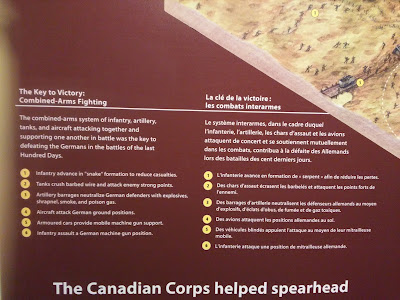
After four years of generals sending masses of men against opposing positions and modern technology and getting them slaughtered, finally in the last months of the war things changed. The Hundred Days marks the concluding battles of the war, with Allied forces adapting to use combined arms fighting to turn the tide and win the war. Simply put: coordinate all of your military assets on the field and work together- infantry, tanks, artillery, and air. This is what won the war. If only it had been learned earlier.


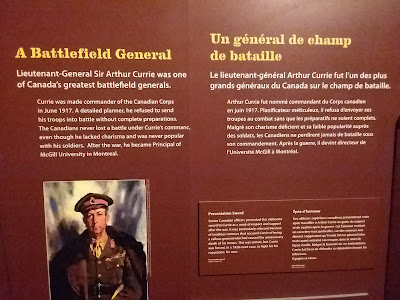
The senior Canadian general, Arthur Currie, would likely have ascended to command to all British empire forces had the war gone on. As it was, he was one of the best generals in Canadian history, a methodical commander whose efforts helped in bringing his men victories.


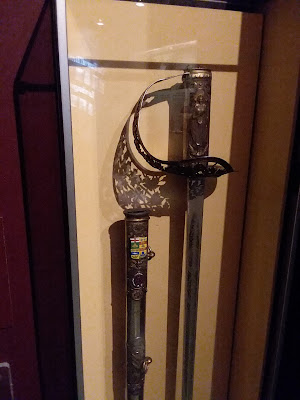
This ceremonial sword was presented to him by senior officers after the war out of respect to him.


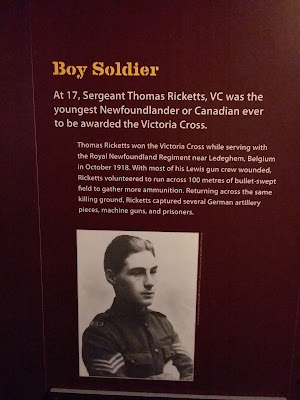
Thomas Ricketts won the Victoria Cross for extraordinary bravery in battle late in the war.


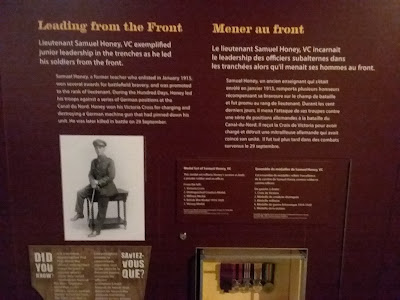
Lieutenant Samuel Honey won it too for his own courage in battle, though he would not live to see the end of the war.


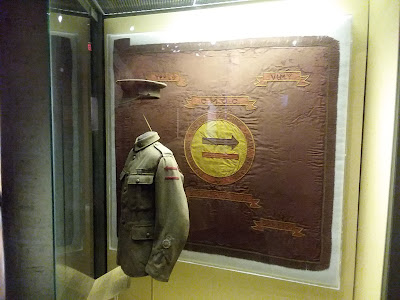
A uniform jacket and cap, along with regimental colours, is displayed here.


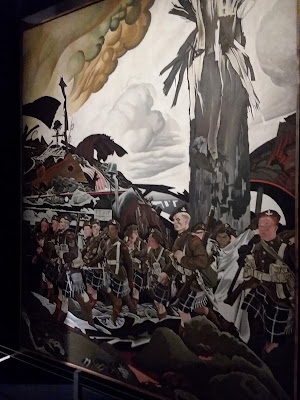
This unusual painting always catches my eye. The living march with their ghostly comrades in this painting titled The Conquerors.


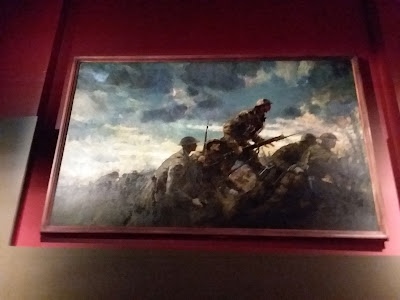
Another painting, one of the most dramatic in the Museum's collection, depicting a moment during the Hundred Days. Over the Top, Neuville-Vitasse shows men of the 22nd Battalion at a village at the front in late August 1918 pushing the attack against the Germans. Georges Vanier, who decades later would be the governor-general of the country, said that he was the officer seen in the painting holding his pistol.


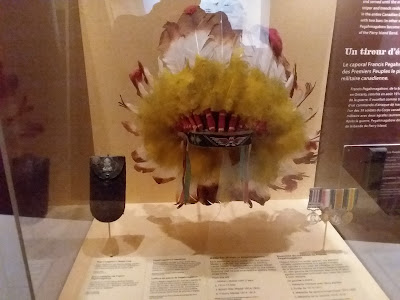
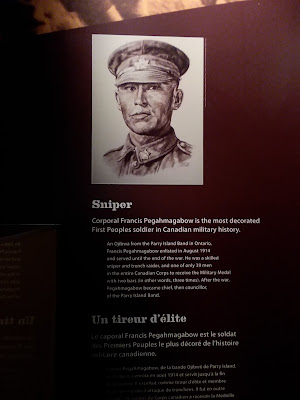
This is the ceremonial headdress of Corporal Francis Pegahmagabow, a sniper who is the most highly decorated Indigenous soldier in Canadian history. After the war he would be a chief of the Ojibwa.

Wednesday, January 5, 2022

Death At Home And At The Battlefield

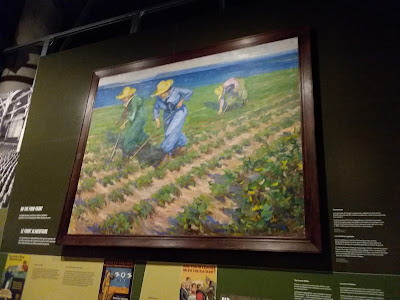
Land Girls Hoeing is the title of this painting by war artist Manly MacDonald, showing women at work on the home front.


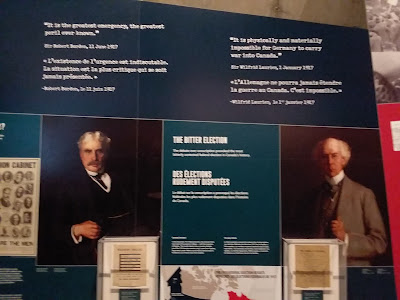
The debate arose about the issue of conscription as more and more men died during the war and there needed to be replacements. It would lead to divisions in the country, and a bitter election campaign between the sitting prime minister, Robert Borden, seen at left, and a former prime minister, Liberal leader Wilfred Laurier, seen at right.


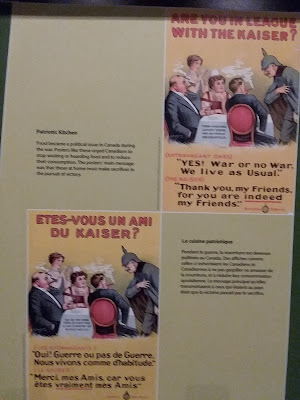
Propaganda posters at home are seen here; civilians were expected to make their own sacrifices and efforts as part of the war effort. 


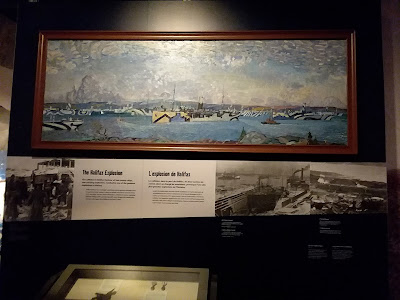
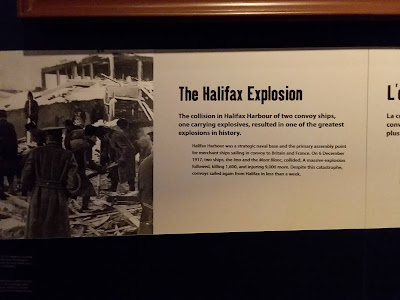
The Halifax Explosion occurred on December 6th, 1917, involving the collision of two ships in the harbour at Halifax. One was a munitions ship heading for Europe; the resulting explosion was one of the largest prior to the detonation of atomic bombs, with thousands of deaths and casualties. The painting at top is by Arthur Lismer, a member of the Group of Seven, who was a war artist during this period. It is titled Convoy In Bedford Basin.

 
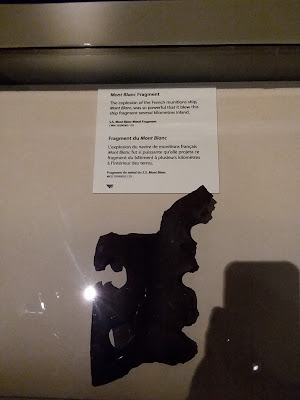
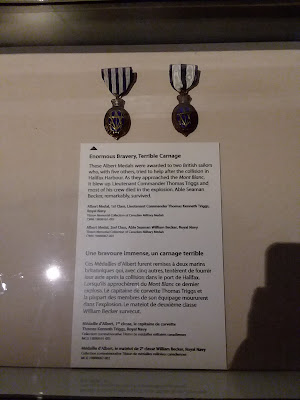
Shrapnel from one of the ships, and a pair of medals for bravery for sailors who tried to help after the collision.


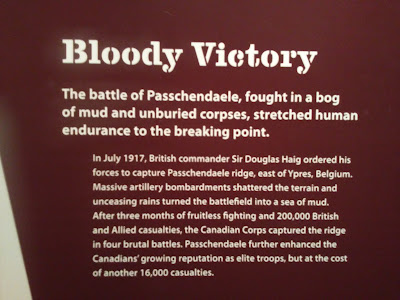
1917 would also see another battle of huge scale and cost for Canadians. Passchendaele would be fought for months and the ridge captured by Canadians, but the casualties were enormous. From all I've read of it, Passchendaele was one of those battles that rates as close as it comes to hell on earth.


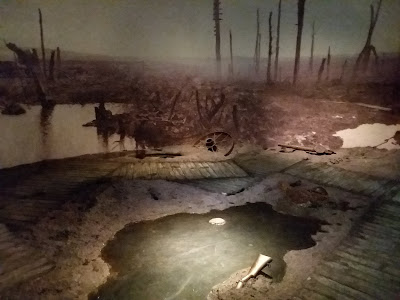
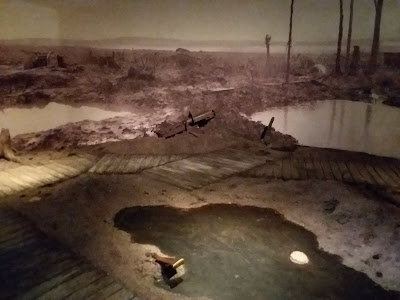
Always harrowing to see: a recreation of Passchendaele one can walk through, with a large scale photograph on the wall winding around you, and recreations of items in the mud, including a body. A century on, how many bodies are still out there, pounded deep into the earth of the western front?


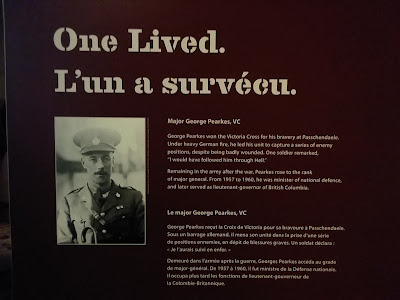
Two Canadians who fought at Passchendaele. George Pearkes won the Victoria Cross for his actions during the battle and survived the war.


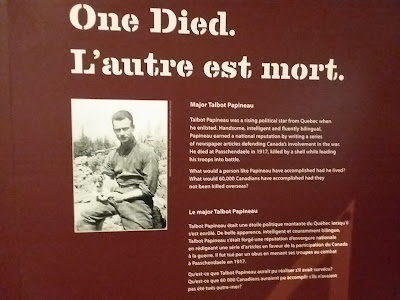
Another major, Talbot Papineau, was killed while leading his troops in battle.